
Need Installation?
Book a licensed install
Book a licensed EV charger install

Most businesses that offer free EV charging do it because it sounds like a good idea. Then the utility bill arrives.
The math on free charging breaks down fast. Electricity costs money. Demand charges, the fee your utility adds based on peak power draw, can represent nearly 75% of a commercial electricity bill. Add maintenance, network fees, and equipment depreciation, and you are running a service that costs real money every single session. Charging fees aren't a nicety. They're how you stay in business.
Here's the thing nobody tells you before you install chargers: the electricity itself is only part of the cost. Every session also draws against your peak demand allocation, which your utility measures monthly and bills at commercial rates regardless of how many cars actually plug in. That fixed exposure is why free charging works for Tesla and nobody else.
Beyond electricity, charging fees fund network development costs including 24/7 customer support, software updates, and infrastructure expansion. Without fee revenue, those services collapse. Free charging sounds like a customer perk, but it is actually a liability that grows with every new EV on the road.
The revenue upside is equally compelling. Charging fees generate new income on top of traditional parking revenue and can increase customer dwell time, which drives higher retail sales in adjacent businesses. A shopper who plugs in for 45 minutes spends more time in your store than one who parks and leaves in 10.
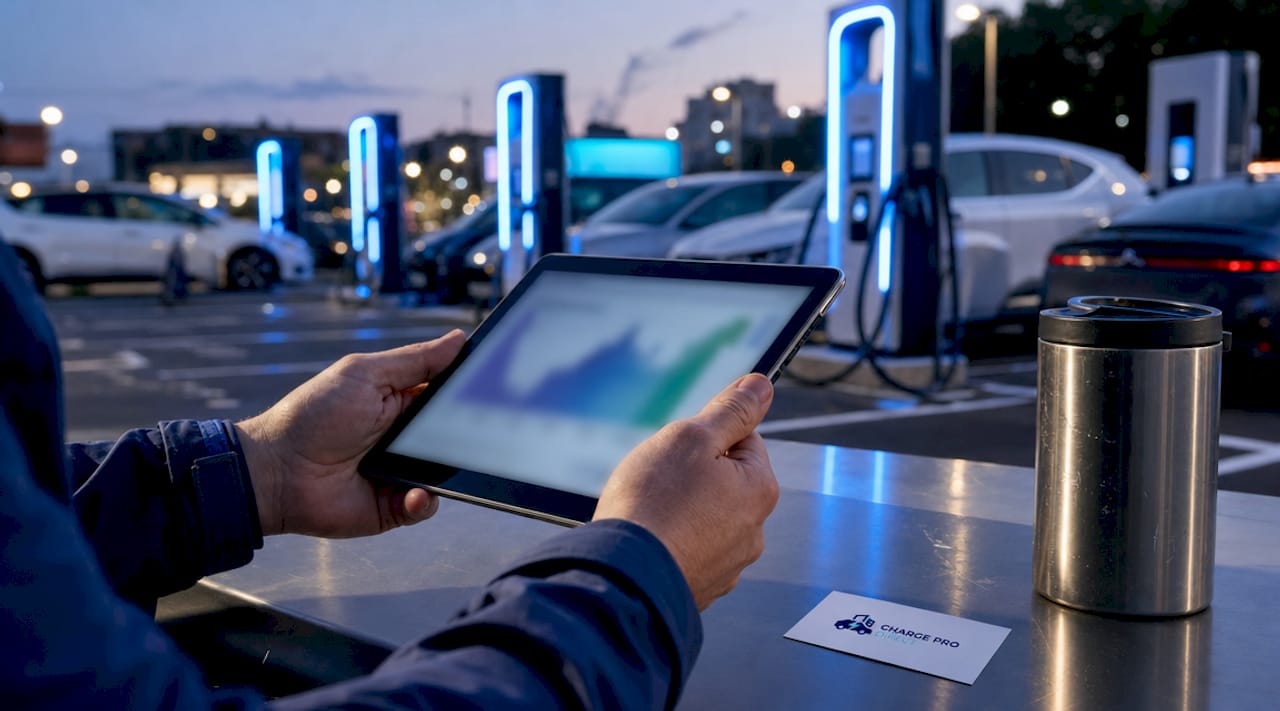
Before you can set a fee that covers your costs, you need to know what those costs actually are. Most operators underestimate this because they only think about the per-kWh rate. The real number includes three layers.

Energy and utility costs are the most visible. You pay per kWh consumed plus demand charges tied to peak power draw. Commercial solar systems can offset some of this, but most sites still carry significant utility bills.
Site and equipment costs include:
Network and administrative costs round out the picture:
IONITY's pricing model illustrates how these layers stack up. Their per-kWh rate covers energy costs including taxes, site expenses like maintenance and revenue sharing, and network development. Energy and related costs account for roughly half of total operational cost. The other half is infrastructure and network overhead. That split is a useful benchmark for any commercial operator building a pricing model.
Pro Tip: Before setting any fee, pull 12 months of utility bills and identify your peak demand months. Your demand charge exposure will likely surprise you and should anchor your minimum fee floor.
Tax treatment also matters. In the UK, public EV charging carries a 20% VAT rate compared to 5% for home electricity. U.S. commercial operators face similar asymmetries depending on state tax codes. Factor this into your pricing or you will underprice every session.
No single pricing model fits every facility. The right choice depends on your charger type, customer behavior, and revenue goals.
| Fee model | How it works | Best for | Key advantage | Key drawback |
|---|---|---|---|---|
| Per kWh | Billed by energy delivered | Sites with varied session lengths | Directly ties revenue to cost | Requires utility-grade metering |
| Per minute / session time | Billed by time connected | High-traffic retail or hospitality | Simple to communicate | Penalizes slow chargers unfairly |
| Flat session fee | Fixed charge per plug-in | Low-traffic or overnight facilities | Predictable revenue | Does not reflect actual usage |
| Subscription model | Monthly fee for unlimited or discounted access | Office buildings, fleets | Builds loyalty and recurring revenue | Requires CRM and billing infrastructure |
| Idle or overstay fee | Extra charge after charging completes | Busy urban garages | Improves charger turnover | Can frustrate drivers if poorly communicated |
Session and energy fees cover electricity and platform costs while idle fees discourage overstay and improve charger availability. That combination is the most common structure among parking garage operators today.
Revenue-sharing agreements lower your upfront installation costs but trade capital savings for a share of future charging revenue going to the network operator. This model works well for smaller facilities that lack the capital for full ownership but want to offer charging without absorbing all the financial risk.
Subscription models work particularly well for office campuses and hotels. Employees or guests pay a monthly or stay-based fee for guaranteed access. This creates predictable revenue and reduces the friction of per-session billing. You can explore how hotel EV charging programs structure these models for hospitality-specific guidance.
Pro Tip: Layer an idle fee on top of your primary pricing model from day one. Even a $0.10 per minute overstay charge after charging completes will free up chargers during peak hours without alienating drivers who move their cars promptly.
Utilization rate is the single most important variable in EV charging profitability. It measures how often your chargers are actively delivering power relative to total available time. A site at 5% utilization is nearly always loss-making, while profitability typically requires utilization between 18% and 30%. That range should inform both your pricing and your charger count decisions.
Here is how to think about utilization when setting fees:
Location shapes utilization more than most operators expect. A Level 2 charger in a suburban grocery store parking lot will see very different demand than the same unit in a downtown parking garage. Higher foot traffic and longer average dwell times both push utilization up, which spreads your fixed demand charges across more sessions and lowers your cost per session. Use the EV charging savings calculator to model how utilization shifts affect your bottom line before you commit to a pricing structure.
Getting your fee program right from the start saves you from repricing headaches later. Follow these steps in order.
Pairing your charging program with a commercial solar system can reduce your energy cost per kWh significantly, which gives you more pricing flexibility and improves your margin per session.
Charging fees for EV parking is the only financially viable path for commercial operators because electricity, demand charges, maintenance, and network costs make free charging an unsustainable model at any meaningful scale.
| Point | Details |
|---|---|
| Demand charges dominate costs | At nearly 74% of commercial electricity bills, demand charges require fee revenue to offset fixed costs. |
| Utilization drives profitability | Sites need 18 to 30% utilization to break even; pricing strategy must account for this threshold. |
| Fee model choice matters | Per-kWh pricing aligns revenue with actual cost; idle fees protect charger availability during peak hours. |
| Incentives reduce upfront risk | State and utility grants and rebates, where available, improve project economics. |
| Transparent pricing builds trust | Clear fee communication via apps and signage reduces driver friction and supports repeat usage. |
Free EV charging is one of those ideas that sounds generous until you run the numbers. What kills it isn't malice, it's math. Demand charges don't care how often your chargers get used. They charge you for peak capacity whether you fill it or not.
The fix isn't complicated. Price from your cost floor up, not from what feels politically comfortable. Pull your last 12 months of utility bills, find your demand charge exposure, add your network and maintenance costs, and set a minimum fee that covers all of it. Then add a margin.
Drivers aren't surprised by fees. They're surprised by hidden fees and blocked chargers. Transparent pricing and an idle fee that kicks in after charging completes solves both problems at once.
If you're at the stage of figuring out what makes sense for your property, that's where our commercial page comes in. Tell us your property type and situation, and we will point you to equipment options that fit. Start at our commercial EV charging page or reach out directly at support@chargeprodirect.com.
Businesses charge for EV parking because electricity, demand charges, maintenance, and network fees create real operational costs that free charging cannot recover. Demand charges alone can represent nearly 74% of a commercial electricity bill, making cost recovery through fees a financial necessity.
Per-kWh pricing combined with an idle or overstay fee is the most widely used structure for commercial EV parking. This approach ties revenue directly to energy delivered while discouraging chargers from being blocked by fully charged vehicles.
State and utility programs may offer grants and rebates for commercial EV charging. Amounts vary widely by state and utility, so check current programs before you budget.
A utilization rate between 18% and 30% is generally required for an EV charging site to cover its fixed and variable costs. Sites below 5% utilization are nearly always loss-making regardless of the fee structure in place.
Post your rate structure clearly on charger signage, in your facility's mobile app, and on your website. Transparent pricing via apps builds driver trust, reduces billing disputes, and encourages repeat use of your charging facility.