
Need Installation?
Book a licensed install
Book a licensed EV charger install

A home solar power system is a set of components, including photovoltaic panels, an inverter, mounting hardware, and optional battery storage, that converts sunlight into usable electricity for your home. Understanding how these parts work together is the fastest way to make a confident buying decision, avoid costly installation mistakes, and start calculating your real savings. Solar panels generate direct current electricity through silicon semiconductors reacting to sunlight. That raw DC power then flows to an inverter, which converts it into the AC electricity your appliances actually use. Add a monitoring system and optional battery backup, and you have a complete home energy solution.
A home solar power system explained simply is a chain of hardware that captures sunlight, converts it to electricity, and delivers it to your outlets. Each component in that chain has a specific job, and skipping or undersizing any one of them reduces your whole system’s output.
Here is what each part does:
Pro Tip: String inverters are cheaper but treat all panels as one unit. If one panel is shaded, the whole string underperforms. Microinverters, installed on each panel individually, eliminate that problem and are worth the extra cost on roofs with partial shading.
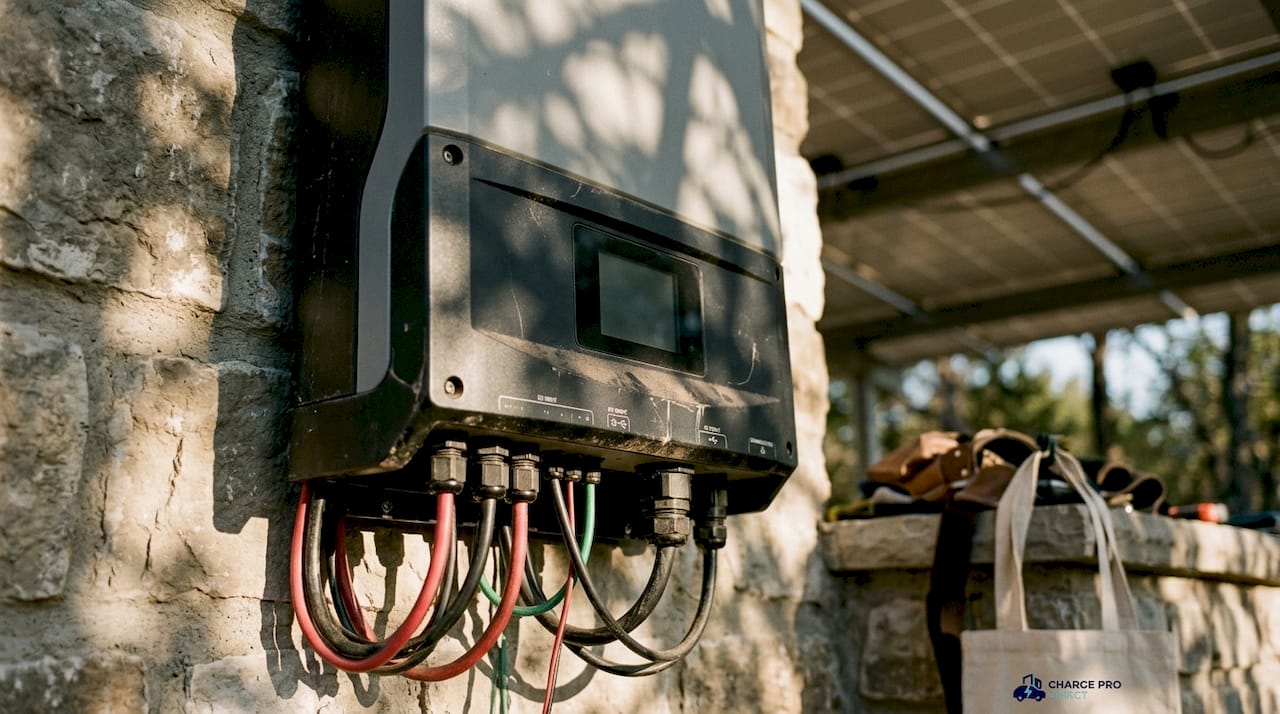
A typical residential solar system uses 15–25 panels rated at 400–550 watts each, totaling 6–12 kW of capacity. Installed cost varies widely by location, equipment, and installer, so get at least three itemized quotes before you commit.
The financial case for solar is strong over the long term. The average payback period for residential solar is 8–12 years, with net savings of $40,000–$65,000 over 25 years. That means most homeowners more than double their initial investment before the panels even reach the end of their rated lifespan.
| System Size | Estimated Panels | Estimated 25-Year Savings |
|---|---|---|
| 6 kW | 12–15 panels | $40,000–$48,000 |
| 8 kW | 16–20 panels | $48,000–$56,000 |
| 10 kW | 20–25 panels | $55,000–$65,000 |
| 12 kW | 24–30 panels | $60,000–$65,000+ |
Your location, roof orientation, and current electric bill all shift these numbers. Homeowners with monthly bills above $100, a south-facing roof, and plans to stay in their home for at least five years see the best financial return. If your bill is lower or your roof faces east or west, your payback period stretches, but the system still pays off.
Pro Tip: Use your last 12 months of utility bills to calculate your annual kilowatt-hour usage before sizing a system. Oversizing adds cost without proportional savings; undersizing leaves money on the table every month.
Three main system types exist for residential use, and each suits a different situation. Choosing the wrong type is one of the most common and expensive mistakes homeowners make.
| System Type | Battery Included | Outage Protection | Best For | Relative Cost |
|---|---|---|---|---|
| Grid-tied (no battery) | No | None | Low-outage areas, budget buyers | Lowest |
| Hybrid (grid-tied + battery) | Yes | Partial to full | Most homeowners, EV owners | Moderate to high |
| Off-grid | Yes (large bank) | Full independence | Rural properties, no grid access | Highest |
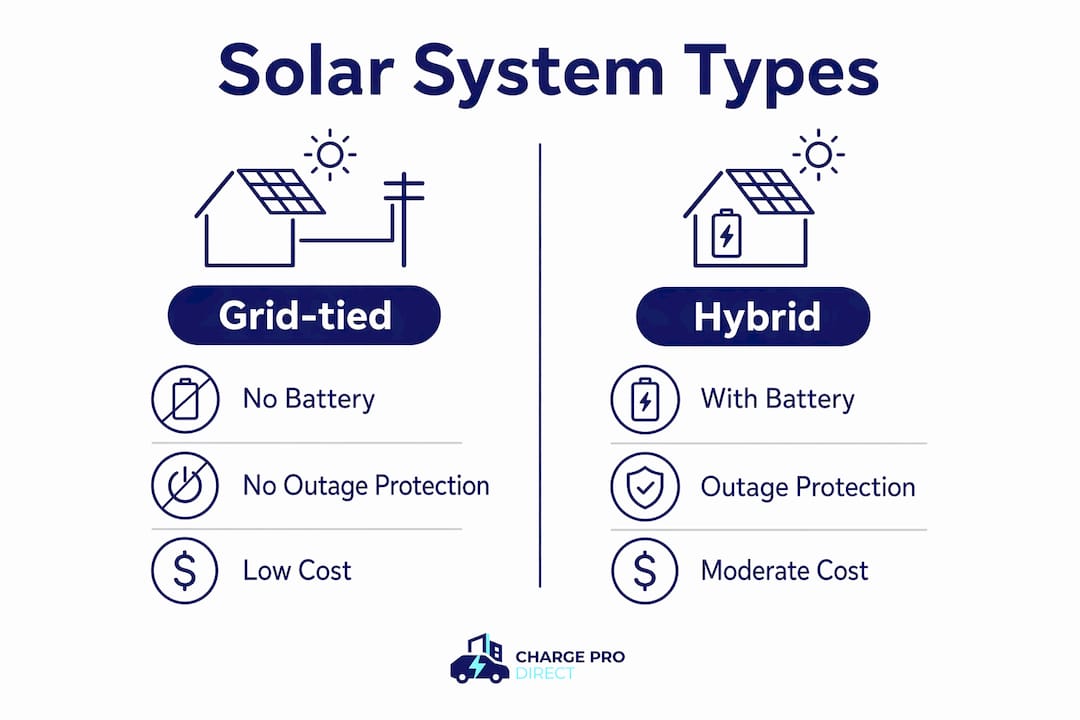
Grid-tied systems are the simplest and cheapest option, but they shut down during grid outages for safety reasons. That surprises many buyers who assume solar means uninterrupted power. Hybrid systems add battery storage and a hybrid inverter that manages power flows from the panels, the grid, and the battery simultaneously. That three-way management is what makes backup power possible during an outage. Off-grid systems require a much larger battery bank to cover multiple days without sun, which raises both cost and complexity significantly.
For most suburban homeowners, a hybrid system hits the right balance. You stay connected to the grid for reliability, you get backup power when the grid goes down, and you can store excess solar energy instead of sending it back to the utility at a low rate.
Pre-installation decisions determine whether your system performs as promised or underdelivers for years. Work through this checklist before you sign any contract.
Pro Tip: Ask every installer for a production guarantee in writing, not just a panel efficiency warranty. A production guarantee commits the installer to a specific annual kilowatt-hour output, which is the number that actually determines your savings.
Pairing solar with an EV charger is one of the smartest ways to maximize your solar investment. Solar plus Level 2 EV charging reduces overall home energy costs and cuts transportation emissions at the same time. The math is straightforward: a Level 2 charger running on solar power costs you nothing beyond the system you already paid for.
A typical U.S. household uses 10,000–12,000 kilowatt-hours per year. Adding an EV can increase that by 2,000–4,000 kilowatt-hours annually, depending on how much you drive. Sizing your solar system to cover both home consumption and EV charging from the start is far cheaper than adding panels later.
Here is what to consider when combining solar and EV charging:
Solar technology success depends more on local policies and realistic expectations than on hardware specs alone. Choosing the right inverter, the right battery, and the right charger for your specific situation matters more than chasing the highest-efficiency panel on the market.
A home solar power system pays back its cost in 8–12 years and delivers $40,000–$65,000 in net savings over 25 years when sized correctly for your home’s consumption and location.
| Point | Details |
|---|---|
| Core components matter | Panels, inverter, mounting, monitoring, and battery each play a distinct role in system output. |
| Cost factors | Installed cost varies by location, equipment, and installer; compare at least three itemized quotes. |
| System type drives backup capability | Grid-tied systems offer no outage protection; hybrid systems with battery storage do. |
| Pre-installation checks save money | Roof age, orientation, and net metering policy directly affect performance and payback period. |
| Solar plus EV charging multiplies savings | Sizing your array to cover EV charging from day one is cheaper than expanding the system later. |
Most homeowners focus almost entirely on panel brand and wattage. That is the wrong place to spend your attention. The inverter and battery selection determine how your system actually performs day to day, especially during outages and peak demand periods.
A budget string inverter on a partially shaded roof can cause even a large, expensive system to underperform. Smaller systems with microinverters and an unshaded south-facing roof can match or beat their production estimates. Hardware specs matter less than system design.
The other thing most articles get wrong is the leasing question. Leasing sounds attractive because the upfront cost is zero, but you give up ownership incentives, you do not build home equity, and you inherit a contract that can slow down or complicate a home sale. If financing is the concern, a solar loan at a reasonable rate almost always beats a lease on a 10-year horizon.
One more thing: do not skip the EV charging conversation when you size your system. If you own an EV or plan to buy one in the next three years, add that load to your array from the start. Retrofitting panels later costs more per watt than getting the sizing right the first time.
Solar is not complicated. It rewards homeowners who ask the right questions before signing, not after.
If you are ready to move from research to action, Chargeprodirect makes it straightforward. Our catalog is organized to help homeowners find the right solar components, whole-home battery backups, and Level 2 EV chargers based on their actual power situation, not a generic package.

Browse complete solar kits that bundle panels, inverters, and batteries into one tested system. If you drive an EV or plan to, the EVIQO 48A Level 2 charger is a hardwired, J1772-compatible unit built to run on solar power. Residential EV chargers ship free, and Chargeprodirect offers flexible payment plans, so the right setup is within reach regardless of your budget.
A home solar power system includes photovoltaic panels, an inverter, mounting hardware, a monitoring system, and optionally a battery bank. These components work together to convert sunlight into usable AC electricity for your home.
The average residential solar payback period is 8–12 years, depending on system size, local electricity rates, and available incentives. Most homeowners see $40,000–$65,000 in net savings over 25 years.
Yes. A solar-powered home with a Level 2 EV charger lets you charge your vehicle on clean energy at no additional fuel cost. Size your solar array to include your estimated annual EV charging load for the best financial outcome.
A grid-tied system connects only to the utility grid and shuts down during outages. A hybrid system adds battery storage and a hybrid inverter, providing backup power when the grid goes down.
Replace your roof before solar installation if it is older than 15–20 years. Removing and reinstalling panels for a roof replacement mid-system adds significant labor cost and disrupts your energy production.