
Need Installation?
Book a licensed install
Book a licensed EV charger install

A portable power station is a rechargeable, battery-powered device that delivers clean, silent electricity anywhere you need it. Unlike a fuel generator, it produces zero emissions, runs quietly, and fits in a backpack or truck bed. The most practical portable power station use case examples span emergency home backup, outdoor recreation, mobile professional work, and solar-assisted off-grid setups. Devices like the EcoFlow RIVER 2 Pro (768Wh) and the Growatt INFINITY 2000 PRO (2,048Wh) show just how wide the capacity range has become, making these units useful for everything from charging a phone to running a mini-fridge.
Portable power stations cover more ground than most people expect. The sections below break down the most common and practical applications, with real capacity numbers and device examples for each.
Emergency backup is the single most common reason people buy a portable power station. During an outage, you can power essential loads such as phone charging, laptops, LED lamps, and a Wi-Fi router without burning fuel or making noise. These are all low-wattage devices, which means even a 500Wh unit covers several hours of use.
Medical devices add a layer of complexity. A CPAP machine without a heated humidifier draws roughly 25–40W, so a 500Wh station covers about one full night. Add a heated humidifier and consumption climbs to 50–70W, pushing the required capacity to 1,000Wh or more. Matching wattage and runtime to the right unit is not optional. It is the difference between a device that works and one that cuts out at 2 a.m.
One critical detail most buyers miss: portable power stations are not true UPS devices. There is a brief transfer delay when grid power drops. For most electronics that delay is harmless, but medical devices require you to verify that the transfer timing does not interrupt operation before you depend on the unit.
Common devices you can run during an outage:
Pro Tip: List every device you plan to run, add up the wattages, and multiply by the hours you need. That total in watt-hours is your minimum capacity target. Add 20% buffer for battery efficiency losses.
Outdoor use is where portable power stations genuinely shine. Camping and tailgating setups commonly include phones, tablets, LED string lights, cameras, drones, and small 12V coolers or fridges. The quiet operation is a real advantage at campgrounds where noise rules apply and neighbors are close.
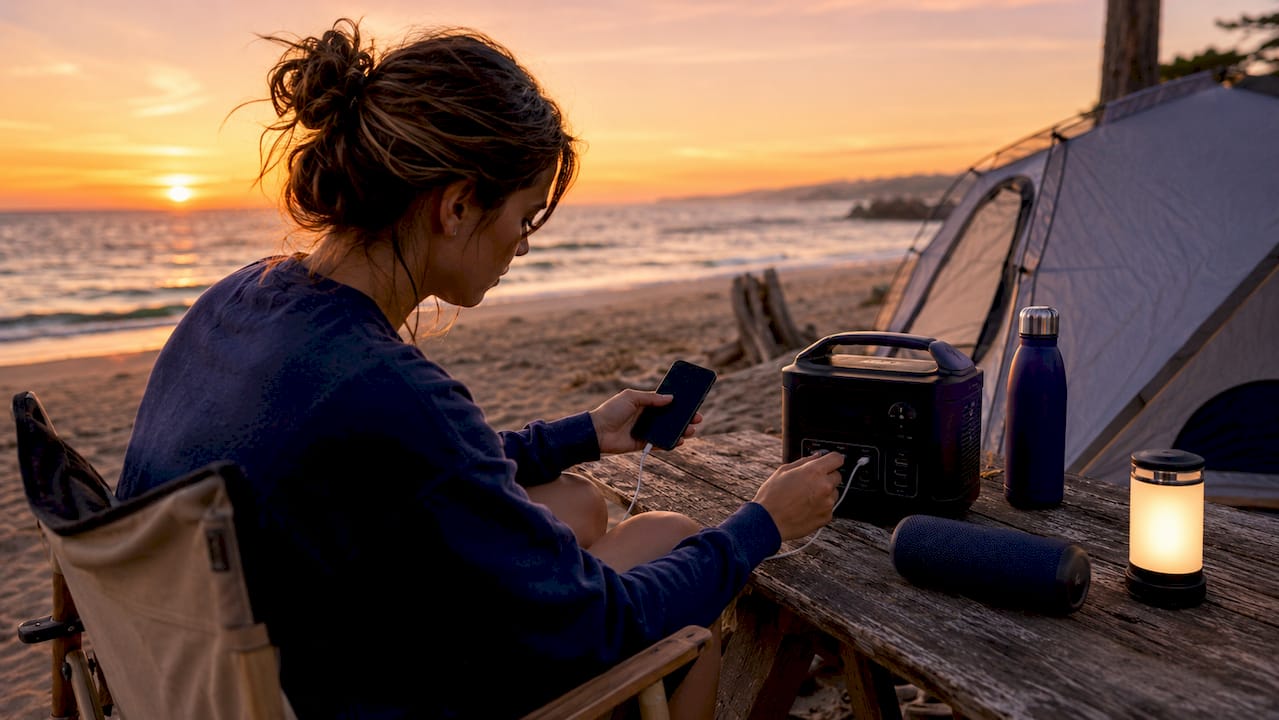
Capacity needs vary by trip length and load. A weekend camping trip with lights and phone charging fits comfortably in a 300–500Wh unit. Van life or extended RV use with a mini-fridge running overnight demands 1,000Wh or more. The key variable most people underestimate is the startup surge of a compressor fridge. Startup wattage can spike significantly above the running wattage, and your power station’s inverter must handle that peak or the fridge will not start.
Here is a practical breakdown of common outdoor loads:
Solar recharging extends every outdoor trip. Pairing a 200W solar panel with a mid-size station tops off the battery during daylight hours, keeping you off-grid indefinitely in sunny conditions. Weight is the real tradeoff. A 1,000Wh unit typically weighs 20–30 pounds, which matters on backpacking trips but is a non-issue in a vehicle.
Pro Tip: Always check the inverter’s continuous output rating, not just the battery capacity. A 1,000Wh station with a 1,000W inverter cannot run a 1,500W induction cooktop, even briefly.
Professional applications for portable power stations have grown quickly as remote work and outdoor events expanded. A mobile workstation running a laptop, external monitor, and webcam draws 100–200W total. A 500–1,000Wh station covers a full workday without recharging.
Field professionals including photographers, videographers, and construction crews rely on portable power for specific loads:
The advantage over a fuel generator is not just cleanliness. Portable power stations start instantly, require zero maintenance between uses, and can sit in storage for months without degrading. A generator left with old fuel causes problems. A lithium-based power station does not.
Pro Tip: Before a shoot or event, plug in every device you plan to use and run them simultaneously for 10 minutes. Confirm the inverter handles the combined load without triggering an overload shutoff.
Pairing a portable power station with solar panels creates a compact off-grid energy system. The EcoFlow RIVER 2 Pro, for example, can produce roughly 1.8 kWh per day with solar input and reduces annual carbon emissions by approximately 143kg when used daily. That is a meaningful environmental benefit for full-time van lifers or remote cabin users.
Vehicle charging via a 12V car outlet adds a second recharge path. It is slower than solar or AC, but it keeps the battery topped off during long drives. For off-grid satellite internet, Starlink Mini draws about 25–40W and a portable power station can deliver 22–35 hours of runtime depending on capacity. Size for constant draw, not average usage, because Starlink runs continuously.
| Load | Running Watts | 500Wh Runtime | 1,000Wh Runtime |
|---|---|---|---|
| Starlink Mini | 25–40W | 12–20 hours | 22–35 hours |
| CPAP (no humidifier) | 25–40W | 12–20 hours | 22–35 hours |
| 12V compressor cooler | 30–60W | 8–16 hours | 16–33 hours |
| LED camp lights | 10–15W | 33–50 hours | 66–100 hours |
| Laptop | 45–65W | 7–11 hours | 15–22 hours |
The Growatt INFINITY 2000 PRO at 2,048Wh handles multiple simultaneous loads and supports solar input for continuous off-grid use. For users who want to compare portable solar options against whole-home systems, the solar generator vs. whole-home battery comparison covers the key differences clearly.
Pro Tip: Use a battery monitor like the Victron BMV-712 to track state of charge accurately. Lithium batteries report voltage differently than lead-acid, and guessing the remaining capacity leads to unexpected shutoffs.
Portable power stations deliver the most value when you match capacity and inverter output to your specific device list before you buy.
| Point | Details |
|---|---|
| Emergency backup basics | Power phones, laptops, LED lights, and Wi-Fi routers on a 500Wh unit during outages. |
| CPAP sizing rule | Use 500Wh without a humidifier; step up to 1,000Wh or more when a heated humidifier is included. |
| Surge watts matter most | Size your inverter for appliance startup peaks, not just running wattage, especially for fridges. |
| Solar extends off-grid time | Pairing solar panels with a portable station enables indefinite off-grid use in sunny conditions. |
| Professional use requires testing | Run all devices simultaneously before field deployment to confirm the inverter handles the combined load. |
Most buyers focus on battery capacity in watt-hours and ignore the inverter’s continuous output rating. That is the wrong priority. A 2,000Wh battery paired with a 1,000W inverter cannot run a 1,500W induction cooktop. The battery is irrelevant if the inverter shuts down first. We recommend starting with your highest-wattage device and working backward from there.
The medical device category deserves extra caution. Correct wattage matching and transfer timing verification are non-negotiable before you rely on any power station for a CPAP or oxygen concentrator. Testing in a controlled setting before an actual outage is not optional. It is the only responsible approach.
Solar integration is where the technology is heading fastest. Charge times are dropping, solar input ratings are climbing, and LFP (lithium iron phosphate) battery chemistry is making units safer and longer-lasting. The EcoFlow RIVER 2 Pro charging in 70 minutes was a headline feature two years ago. That speed is becoming standard. For anyone buying in 2026, prioritize LFP chemistry, solar compatibility, and a continuous inverter rating that covers your peak load with room to spare.
Chargeprodirect carries a wide selection of portable power stations and solar generators suited for home backup, outdoor use, and mobile professional setups. Each product listing includes capacity, inverter output, and charging method details so you can match specs to your actual device list before purchasing.
For homeowners who need more than a portable unit can provide, Chargeprodirect also offers home battery backup systems, along with sizing guides to help you plan your setup. If you are also considering an EV charger alongside your energy setup, the EV charger finder helps you identify the right Level 2 EV charger for your vehicle and home wiring. Residential EV chargers ship free, and flexible payment plans are available at checkout.
A portable power station provides rechargeable, silent electricity for emergency home backup, camping, mobile work, and off-grid solar setups. Common loads include phones, laptops, LED lights, CPAP machines, and small appliances.
A weekend camping trip with lights and phone charging fits a 300–500Wh unit. Running a compressor cooler overnight requires 1,000Wh or more, with an inverter rated to handle the startup surge.
Yes. A CPAP without a heated humidifier draws 25–40W, and a 500Wh station covers roughly one full night. Using a heated humidifier raises consumption to 50–70W and typically requires a 1,000Wh unit.
Portable power stations are not true UPS devices, so there is a brief power transfer delay when grid power drops. Always verify transfer timing with your specific medical device before relying on the station during an outage.
Most units support AC wall charging, 12V vehicle charging, and solar panel input. Solar is the most practical off-grid option. The EcoFlow RIVER 2 Pro supports all four methods including USB-C, making it one of the most flexible units for remote use.