
Need Installation?
Book a licensed install
Book a licensed EV charger install

A solar generator is a portable, self-contained power system that pairs solar panels with a built-in battery, while a whole home battery is a permanently installed system wired directly into your electrical panel. Choosing between the two comes down to how much power you need, how long you need it, and whether you want a solution you can move or one that protects your entire house. Both use lithium-ion technology, but they serve very different roles in a home energy setup. This guide breaks down each system clearly so you can make the right call for your situation.
The core difference between these two systems shapes everything else: portability versus integration. Solar generators are portable photovoltaic power systems that function like giant rechargeable battery packs. They include four main components: solar panels, a charge controller, a battery, and an inverter. You plug devices directly into the unit’s outlets, just like a power strip with a built-in battery. Whole home batteries, by contrast, are wired into your home’s electrical panel through a transfer switch, allowing them to power circuits throughout your house automatically when the grid goes down.
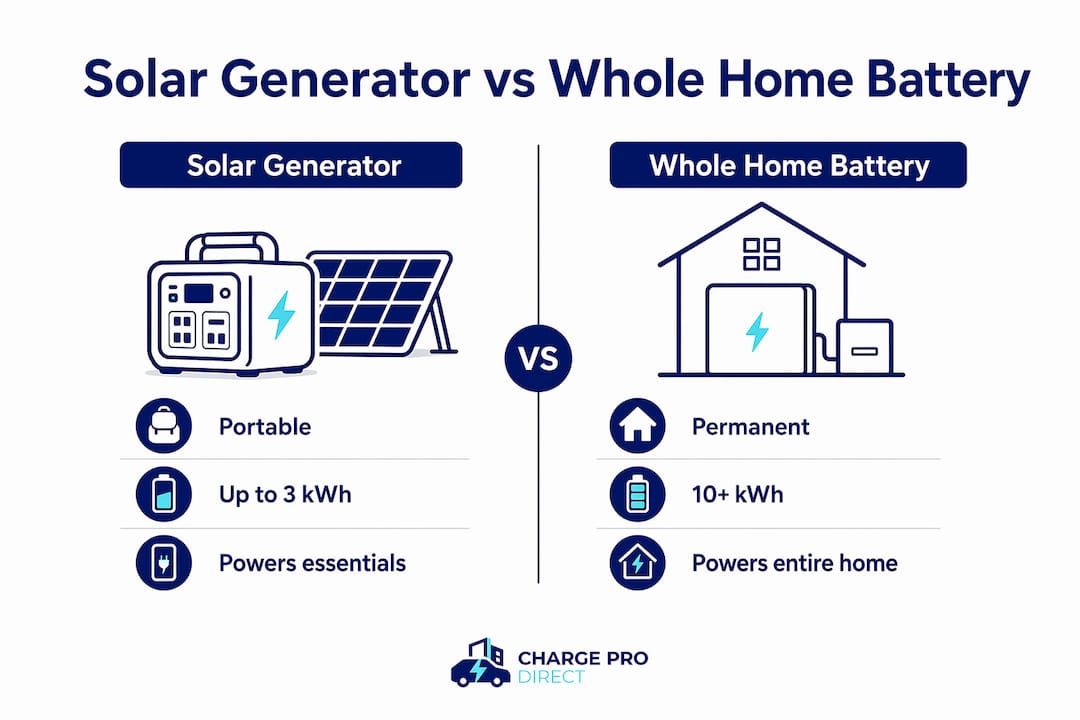
This architectural difference has real consequences. A solar generator powers selected devices. A whole home battery powers your home. That distinction matters most during a multi-day outage when you need your refrigerator, HVAC, and medical equipment running without manually plugging in each device.
A portable solar generator charges its internal battery from solar panels, a wall outlet, or a car adapter. The inverter converts stored DC power to AC power so you can run standard household devices. Most units weigh between 10 and 70 pounds, making them genuinely portable for camping, job sites, or moving between rooms during an outage.
Here is what you get with a typical solar generator setup:
The Anker Solix C300, a well-reviewed model in the 288Wh class, recharges in just over 4 hours with a 100W solar panel on a clear day. That recharge time increases significantly on cloudy days or with smaller panels. Adding a second panel cuts the time but does not eliminate the weather dependency.
Solar generators work well for essential medical and communications equipment. Programs like the Virgin Islands Energy Office VIRG initiative have deployed portable battery units paired with 400W solar panels specifically to keep vulnerable residents’ critical devices running for up to one day during outages. That real-world use case defines the sweet spot for solar generators: targeted, short-duration backup for specific devices.
Pro Tip: If you plan to recharge a solar generator during an outage, check the weather forecast first. A string of cloudy days can cut your solar input by 50% or more, leaving you with far less power than expected.
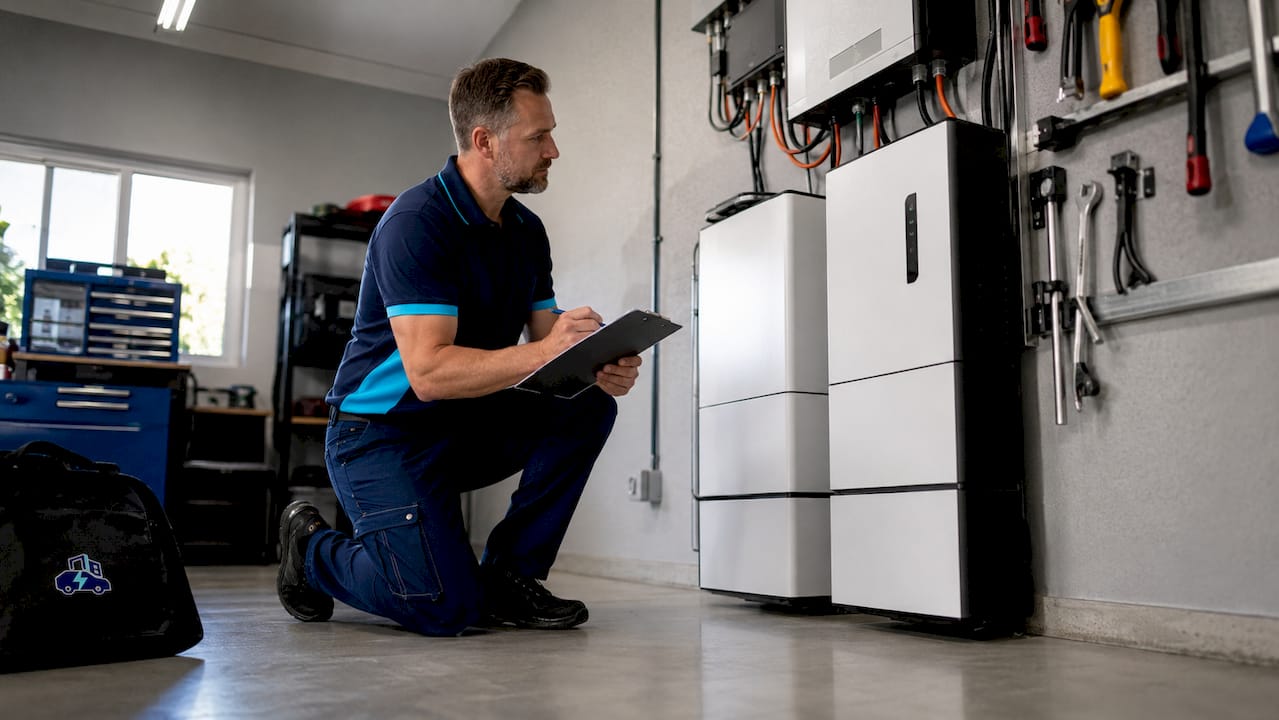
A whole home battery system is a permanently installed lithium-ion battery bank wired into your home’s main electrical panel. It charges from rooftop solar panels, the grid, or both. When the grid fails, a transfer switch automatically disconnects your home from the utility and switches to battery power. Your lights, refrigerator, and outlets keep working without you touching anything.
Key specs and concepts to understand before sizing a system:
The DoD concept is where most buyers get surprised. Usable kWh after DoD is more important than the advertised battery size for planning reliable backup. A 13.5 kWh battery with 90% DoD gives you roughly 12 kWh of real power. That number drops further when you factor in a 10 to 20% safety reserve. A 10 kWh battery, for example, cannot run a 4-ton AC unit for two days. Sizing limits are real, and marketing numbers rarely reflect actual runtime.
Pro Tip: Always calculate your backup needs using usable kWh, not nameplate capacity. Multiply your essential load wattage by your target backup hours, then divide by 0.85 to account for DoD and efficiency losses.
| System size | Best for | Estimated usable capacity |
|---|---|---|
| 10 kWh | Essential loads only (lights, fridge, phone charging) | 8 to 9 kWh |
| 20 kWh | Essential loads plus one HVAC zone | 17 to 18 kWh |
| 30 to 40 kWh | Whole home backup for 24 to 48 hours | 25 to 36 kWh |
Here is a side-by-side look at the factors that matter most for homeowners:
| Feature | Solar generator | Whole home battery |
|---|---|---|
| Portability | Yes, carry or wheel anywhere | No, permanently installed |
| Capacity | 200Wh to 3,000Wh | 10 kWh to 40+ kWh |
| Powers whole home | No, selected outlets only | Yes, via transfer switch |
| Installation required | None | Professional installation |
| Recharge during outage | Yes, via solar panels | Yes, if properly configured |
| Noise and emissions | Silent, zero emissions | Silent, zero emissions |
| Upfront cost | $200 to $3,000 | $8,000 to $25,000+ installed |
| Maintenance | Minimal | Minimal |
Battery backup systems handle outages quietly with limited capacity, while traditional gas generators provide longer runtime if fuel is available but require maintenance and produce noise and emissions. Whole home batteries and solar generators share the silent, emissions-free advantage over gas generators. Where they diverge is capacity and scope.
A solar generator handles a CPAP machine, a few lights, and phone charging for a night or two. A whole home battery system keeps your refrigerator, internet router, select lighting, and even a mini-split AC running for 24 to 48 hours or longer with solar recharging. The power gap between these two categories is not incremental. It is roughly 10 to 100 times the capacity.
Surge load handling is another real difference. Failing to account for surge load leads to insufficient backup performance even when the battery has adequate stored energy. A refrigerator compressor starting up can draw 3 to 5 times its running wattage for a fraction of a second. Whole home battery inverters are sized to handle these surges. Many portable solar generators are not, which is why running a full-size refrigerator on a small solar generator often trips the inverter.
Choosing the right system starts with knowing your actual power needs. Work through these steps before you spend a dollar:
Pro Tip: For a 72-hour outage goal, the battery should cover at least 36 hours of essential load independently, with solar covering the rest plus a 20% safety margin. Never plan on solar covering 100% of your needs during a multi-day storm.
Getting this decision wrong is expensive. These are the mistakes buyers make most often:
Verify your system’s outage solar recharge capability before installation, not after. Ask your installer specifically: “Will my solar panels charge the battery if the grid is down?” The answer depends entirely on your inverter and transfer switch configuration.
Choosing between a solar generator and a whole home battery comes down to capacity, portability, and how much of your home you need to protect during an outage.
| Point | Details |
|---|---|
| Capacity gap is significant | Solar generators offer up to 3 kWh; whole home batteries start at 10 kWh and scale to 40+ kWh. |
| Usable kWh beats nameplate | Always plan with usable capacity after DoD and reserves, not the marketed battery size. |
| Solar recharge is not automatic | Outage solar recharging requires specific inverter and gateway configurations; verify before buying. |
| Portability vs. integration | Solar generators suit renters and targeted backup; whole home batteries suit homeowners needing full coverage. |
| Surge load matters | Size your inverter to handle appliance startup wattage, not just running wattage, to avoid tripped circuits. |
Two buying mistakes come up again and again. Some homeowners buy a high-end solar generator expecting it to cover the whole house during a hurricane. Others pay for a whole home battery when a portable unit would have met every need they had. Neither mistake is about intelligence. Both come from not matching the tool to the actual job.
Solar generators are genuinely excellent products. They are silent, portable, and require zero installation. For a renter, a remote worker, or someone who needs to keep a CPAP and a few lights running, they are the right answer. The problem starts when people treat them as whole-home solutions. They are not, and no amount of extra solar panels changes that fundamental capacity ceiling.
Whole home batteries deliver something solar generators cannot: automatic, whole-house protection that you never have to think about. When the grid goes down at 2 a.m., your home keeps running. That peace of mind has real value, especially for families with medical needs or in regions with frequent multi-day outages. The cost is real, but so is the energy independence that comes with a properly sized system paired with rooftop solar.
Our recommendation: if you own your home and experience outages longer than 12 hours, invest in a whole home battery. If you rent or need portable power for specific devices, a solar generator is a smart, affordable starting point. And if you are not sure, start by calculating your essential load wattage. That number will tell you more than any product review.
Whether you are leaning toward a portable solar generator or a permanently installed whole home battery, Chargeprodirect has the products and buying guides to match your actual power needs.
Browse the full solar generator collection for portable backup options ranging from compact 200Wh units to high-capacity 3,000Wh stations. If you are ready to protect your whole home, explore the whole home battery backup lineup for permanently installed systems sized for real outage resilience. For a turnkey approach, Chargeprodirect also offers complete solar kits that bundle panels, inverters, and batteries for efficient installation. Not sure where to start? Our Build Your System guide walks you through sizing before you buy, and flexible payment plans are available at checkout.
A solar generator is a portable unit that powers selected devices through its own outlets, while a whole home battery is permanently wired into your electrical panel to power circuits throughout your house. The capacity difference is significant: solar generators typically store 200Wh to 3,000Wh, while whole home batteries start at 10 kWh.
No. Most solar generators lack the capacity and inverter output to power a full home. They work best for essential devices like phones, lights, a CPAP machine, or a small refrigerator for short-duration outages.
Runtime depends on your essential load wattage and usable battery capacity after depth of discharge. A 20 kWh system powering essential loads of 500W can last roughly 30 to 34 hours before needing a recharge from solar or the grid.
Not automatically. Solar power typically stops during grid outages unless your system includes a backup gateway or islanding configuration. Confirm this capability with your installer before purchasing any whole home battery system.
A solar generator is the better fit for renters because it requires no installation, no permits, and moves with you. Whole home battery systems require professional installation and are permanently attached to the home’s electrical infrastructure.