
Need Installation?
Book a licensed install
Book a licensed EV charger install

Battery backup reduces grid dependence by storing electricity locally and supplying it when the grid is unavailable, expensive, or unreliable. Known in the industry as behind-the-meter storage, these systems give homeowners and small business owners direct control over when and how they consume power. Systems like the LG RESU and EcoFlow DELTA Pro can store kilowatt-hours of electricity from the grid or solar panels, then discharge that power on your terms. In 2026, with time-of-use electricity rates rising and grid outages becoming more frequent, understanding why battery backup reduces grid dependence is no longer optional knowledge. It’s practical self-defense for your energy bill and your peace of mind.
Battery backup systems work by charging during periods when electricity is cheap or abundant, then discharging when you need power most. Think of it like filling a water tank when pressure is high and drawing from it when the main supply cuts off. A home battery charges from the grid during off-peak hours or from solar panels during the day, then supplies your home automatically when the grid goes down or when peak pricing kicks in. That single behavior is the core mechanism behind reducing reliance on the electric grid.
Here is how the charging and discharging cycle actually works:
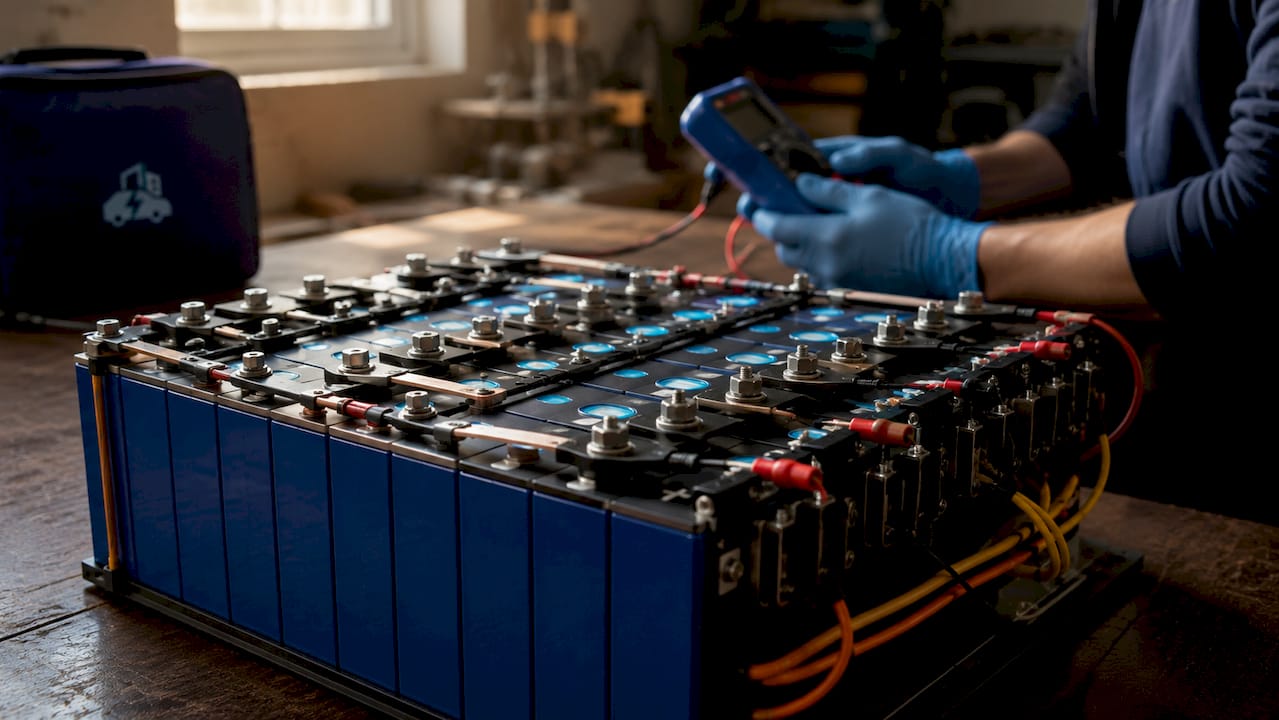
The technology inside most modern home batteries is either lithium-ion NMC or lithium iron phosphate (LiFePO4). LiFePO4 chemistry, used in systems like the EcoFlow DELTA Pro Ultra and Bluetti AC300, is safer, lasts longer (often 3,500 or more cycles), and handles deep discharges better. That durability matters because battery systems and energy independence go hand in hand only when the battery actually survives years of daily cycling.
Pro Tip: If your utility offers time-of-use rates, program your battery to charge between 11 PM and 6 AM. That single habit can pay for a significant portion of your system over time.
Not all battery configurations reduce grid dependence equally. The system architecture you choose determines how much protection and independence you actually get.
| System Type | Grid Dependence | Outage Backup | Cost Range | Best For |
|---|---|---|---|---|
| Grid-tied battery | Moderate reduction | Limited without transfer switch | $8,000 to $15,000 | Bill savings, minimal outage risk |
| Hybrid system | Significant reduction | Full islanding capability | $12,000 to $25,000 | Outage resilience and bill savings |
| Off-grid system | Full independence | Complete backup | $20,000 to $50,000+ | Remote locations, maximum independence |
Grid-tied battery systems are the most affordable entry point, but they come with a critical limitation. Anti-islanding protection requires a backup gateway or transfer switch to supply power during outages. Without that hardware, a grid-tied battery shuts down the moment the grid goes down, leaving you in the dark despite having stored energy sitting right there.
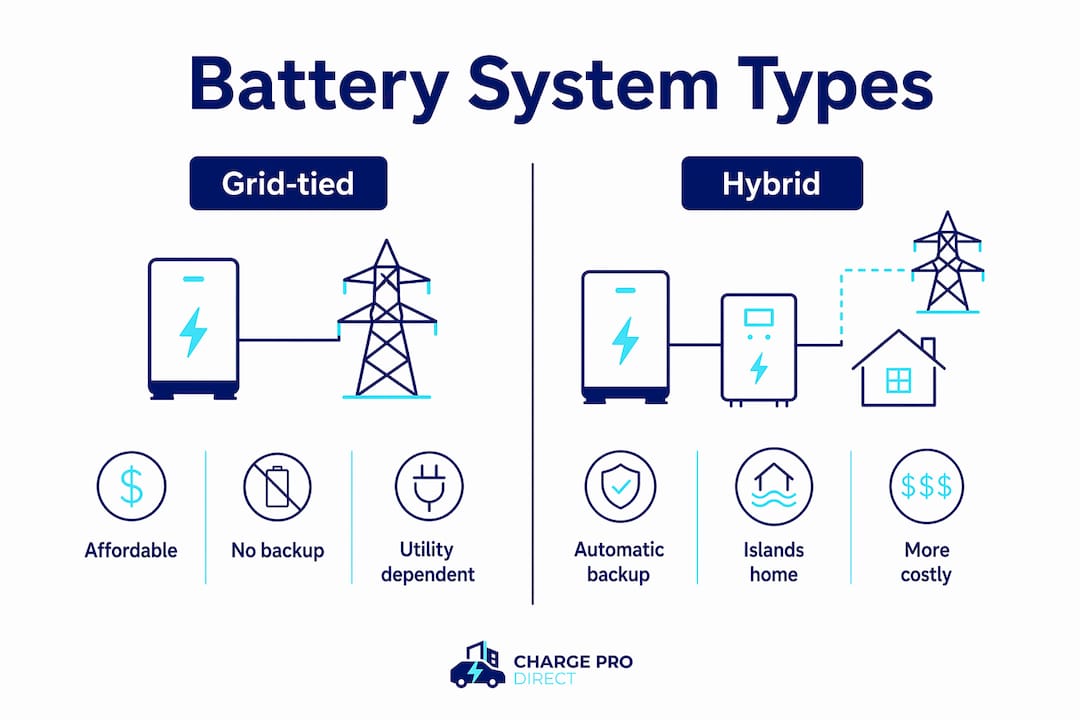
Hybrid systems solve that problem. A hybrid inverter with a built-in transfer switch automatically islands your home during an outage, cutting the connection to the grid and running entirely on battery power. System topology critically impacts outage power availability, and hybrid systems deliver true islanding while grid-tied systems do not unless specifically upgraded. For most homeowners and small businesses, hybrid is the sweet spot between cost and real independence.
Off-grid systems go all the way. They require no utility connection at all, pairing large battery banks with solar arrays and sometimes backup generators. The advantages of off-grid systems are real, but so are the costs and complexity. You need to size everything for worst-case scenarios, including cloudy weeks in winter, which drives up both battery capacity and expense. Off-grid makes the most sense for rural properties where grid connection costs are prohibitive or for buyers who want absolute energy independence regardless of price.
The financial case for battery backup is stronger than most people realize. Time-of-use rate optimization with battery storage can save homeowners approximately $840 annually by shifting load from peak to off-peak electricity pricing. That works out to roughly $70 per month, which is real money that compounds over the 10 to 15 year lifespan of a quality battery system.
The benefits of battery backup extend well beyond the monthly bill:
One scenario worth understanding: a 10 kWh battery paired with a modest solar array can power a typical home’s essential loads (refrigerator, lights, phone charging, Wi-Fi, and a few outlets) for 12 to 24 hours during an outage. Add solar recharging and that window extends indefinitely on sunny days. Without solar, a standalone battery acts as a one-time power reserve and needs the grid to restore before it can recharge. That distinction matters when you are sizing your system.
Here is something most homeowners never hear: your battery does not just help you. When thousands of home batteries are coordinated through a virtual power plant (VPP), they function as a collective grid asset. Aggregated behind-the-meter batteries reduce peak demand and allow utilities to delay expensive grid capacity investments, delivering load shifting and peak shaving at 40% to 60% less cost than building new generation capacity.
The real-world results are already documented. Green Mountain Power’s community battery fleet delivers 34 MW of dispatchable capacity, avoids $3.2 million in annual transmission costs, and improves outage resilience across its service territory. That is not a future concept. It is operating today in Vermont.
The mechanism behind this is called a Distributed Energy Resource Management System (DERMS). Utilities use DERMS software to coordinate thousands of individual home batteries, dispatching them collectively during peak demand events. The dispatchability of battery storage enables them to function as key grid assets, alleviating peak load and delaying infrastructure investments that would otherwise raise everyone’s rates.
Pro Tip: Check whether your utility offers a VPP incentive program. Some utilities pay homeowners a monthly credit in exchange for occasional access to their battery’s stored energy during peak demand events. You keep control and earn money.
Choosing the right battery system requires more than picking the biggest capacity you can afford. Getting the sizing wrong is the most common and most expensive mistake buyers make.
Battery backup systems reduce grid dependence by storing electricity locally, supplying power during outages and peak pricing periods, and integrating with solar to create a continuously rechargeable energy buffer.
| Point | Details |
|---|---|
| Core mechanism | Batteries charge at low-cost times and discharge during outages or peak pricing, cutting grid consumption. |
| System type matters | Hybrid systems provide true outage islanding; grid-tied systems require a transfer switch to do the same. |
| Financial return | Time-of-use optimization can save homeowners approximately $840 per year in regions with variable rate pricing. |
| Solar pairing is key | A battery without solar is a one-time reserve; adding panels creates a continuously rechargeable backup. |
| Grid-level impact | Aggregated home batteries in virtual power plants reduce peak demand and defer costly utility infrastructure upgrades. |
Many buyers choose a battery system for the wrong reason or in the wrong size. Most buyers focus entirely on outage backup and ignore the economic case. That is backwards. The bill savings from time-of-use optimization often deliver a faster return on investment than the insurance value of outage protection, especially in states with aggressive TOU rate structures like California, Texas, and New York.
Another common misconception: people assume a battery alone equals energy independence. It does not. A standalone battery without solar is a finite reserve. Once it depletes, you are back on the grid waiting for a recharge. True grid independence solutions require solar plus storage, sized correctly for your actual consumption and your local weather patterns.
One trend worth watching is the convergence of home batteries and bidirectional EV charging. A vehicle like the Ford F-150 Lightning or the Nissan Leaf with V2H capability can store 70 to 100 kWh, far more than most home batteries. When that vehicle is parked and connected, it becomes the largest battery in your home energy system. That combination, home battery plus solar plus bidirectional EV, is where real household grid independence is heading.
The buyers who will get the most value from battery systems in the next five years are the ones who design their systems with that future in mind today. Do not buy a battery that cannot integrate with solar or an EV charger later. The upfront flexibility is worth more than the short-term savings on a simpler setup.
Chargeprodirect makes it straightforward to find the battery backup system that fits your home or business, without the guesswork. Whether you need a standalone backup battery for outage protection or a full hybrid setup paired with solar, the product selection covers both.

Browse the full range of whole-home battery backup systems to find options sized for your critical loads and budget. For homeowners ready to go further, Chargeprodirect also offers complete solar kits that bundle inverters, batteries, and panels into one integrated package. Our Build Your System guide and detailed product information help you choose the right system the first time.
A battery backup system stores electricity during off-peak hours or from solar panels, then supplies that stored power during outages or high-cost peak periods. This reduces the amount of electricity you draw from the utility grid, lowering both your bill and your exposure to grid failures.
No, but pairing solar with your battery significantly increases its value. A battery without solar acts as a one-time power reserve and must recharge from the grid after depletion, while a solar-paired battery recharges continuously and provides longer-term grid independence.
A hybrid system includes a transfer switch that automatically islands your home during an outage, running entirely on battery power. A grid-tied battery system requires a separate backup gateway or transfer switch to do the same thing. Without that hardware, a grid-tied battery cannot supply power when the grid goes down.
Time-of-use rate optimization with battery storage can save homeowners approximately $840 per year by charging at off-peak rates and discharging during peak pricing hours. Actual savings depend on your local utility’s rate structure and your household’s energy consumption.
Yes. When coordinated through virtual power plants, aggregated residential batteries reduce peak demand events and help utilities avoid costly infrastructure upgrades. Green Mountain Power’s battery fleet, for example, delivers 34 MW of dispatchable capacity and avoids $3.2 million in annual transmission costs.