
Expert Support
Mon–Fri, 9AM–6PM EST
Available: Mon–Fri, 9AM–6PM EST
Mon–Fri, 9AM–6PM EST
Available: Mon–Fri, 9AM–6PM EST

A home energy audit for EV charging is the process of evaluating your home’s electrical system and overall energy use to confirm safe, efficient, and cost-effective charger installation. Think of it as a health check for your house before adding a major new electrical load. About 70% of homeowners can install a 40A Level 2 charger without a panel upgrade, but you need the numbers to prove it. This guide walks you through every step, from reading your panel to cutting your charging costs with Time-of-Use rates.
Your electrical panel is the starting point for any EV charging home evaluation. Panel sizes in American homes typically fall into three categories: 100A, 150A, and 200A service. A 200A panel gives you the most headroom; a 100A panel may require closer scrutiny before adding a charger.
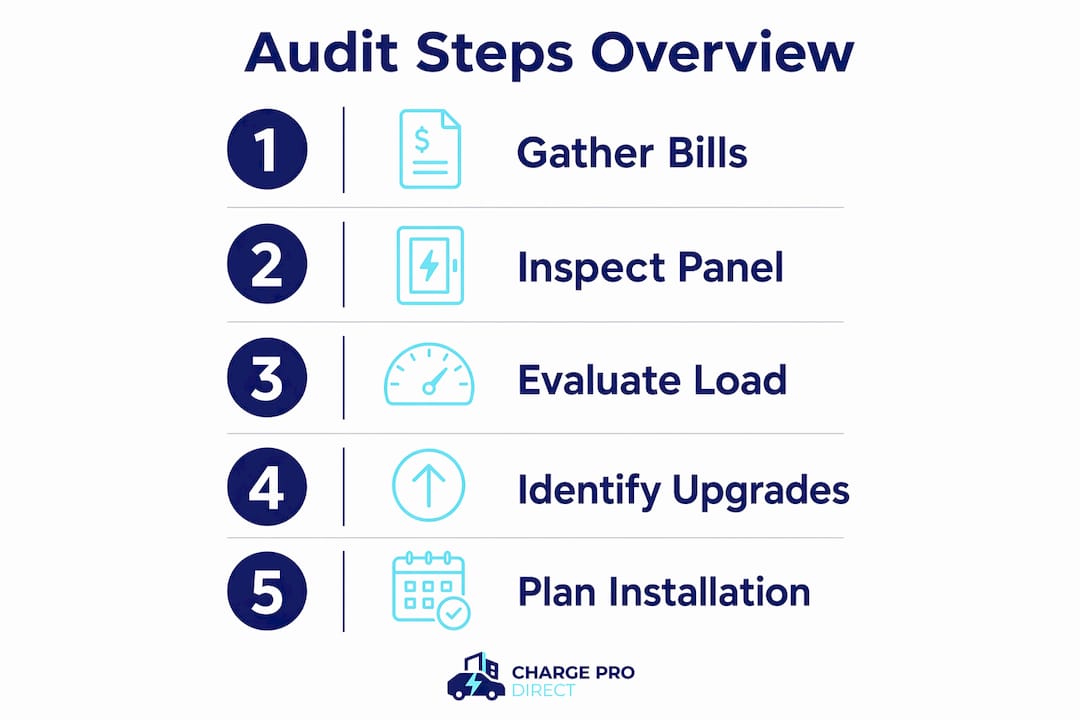
Here is how to work through the assessment step by step:
Pro Tip: Before calling an electrician, pull your last 12 months of utility bills and note your peak monthly kilowatt-hour usage. This gives the electrician real data to work with instead of estimates.
Panel upgrades are expensive and take time to schedule. Load-management devices can dynamically reduce EV charging speed when other large appliances are running, which often eliminates the need for an upgrade entirely.
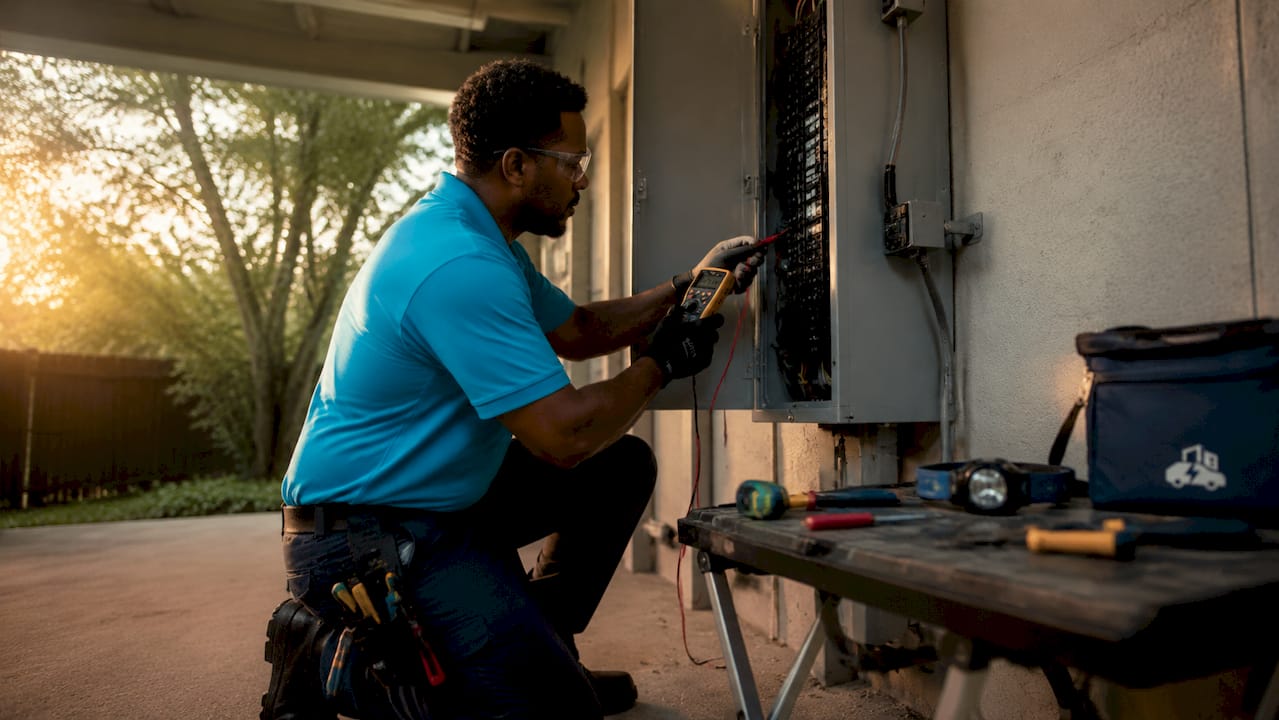
A professional energy assessment typically lasts about one hour and covers your home room by room. The auditor uses specific diagnostic tools to find where your home wastes energy and where your electrical system has room to grow.
Key tools and checks in a thorough audit include:
The electrical capacity check is the piece most relevant to EV charging readiness, but the whole-home view matters. Reducing your base electrical load through insulation and HVAC improvements can free up capacity for your charger without touching the panel.
Pro Tip: Many utilities offer no-cost virtual or in-person audits. Call your utility before paying for a private auditor. You may qualify for a free assessment that also unlocks rebates on efficiency upgrades.
A professional audit also helps you qualify for utility rebates and low-interest financing on upgrades. That financial benefit alone often justifies the time investment.
Improving your home’s energy efficiency does two things at once: it lowers your monthly electricity bill and it frees up electrical capacity for your EV charger. These two benefits compound each other.
Your base electrical load is the total power your home draws before the EV charger is added. Every watt you cut from that base load is a watt available for charging. Auditors recommend checking insulation and HVAC alongside electrical capacity because the savings stack up quickly.
Practical efficiency improvements that directly support EV charging include:
TOU rates deserve special attention. Your utility charges less per kilowatt-hour at night because grid demand is low. Pairing a Level 2 charger with a scheduled charging window means you pay a fraction of the daytime rate. Most modern Level 2 chargers include scheduling features built into their apps. Enrolling in TOU pricing is one of the most overlooked opportunities for homeowners to cut EV charging costs.
Level 2 EV charging installation typically costs between $500 and $1,500, depending on your region and the complexity of the electrical work. That range covers the charger hardware, labor, and materials for a straightforward installation where the panel already has capacity.
| Cost Item | Typical Range |
|---|---|
| Level 2 charger installation (labor + materials) | $500–$1,500 |
| Electrical permit | $150–$300 |
| Panel or service upgrade | $1,500–$4,000 |
| Smart load management device | ~$450 |
| Professional energy audit (private) | $200–$600 |
Permit costs average $150–$300 and scheduling typically takes one to two weeks. Skipping the permit is a serious mistake. Unpermitted 240V circuit work can void your homeowner’s insurance and create liability issues if something goes wrong. It can also complicate a home sale.
Pro Tip: Always hire an electrician with documented EV charger installation experience. Ask for references and confirm they will pull the permit on your behalf. The permit protects you, not just the contractor.
If your panel needs an upgrade or the charger location requires trenching through a garage floor or exterior wall, costs climb toward the higher end of the range. Getting two or three quotes from licensed electricians gives you a realistic number before you commit.
Your audit results will show two critical numbers: your current calculated load and your panel’s remaining capacity. The gap between those two numbers tells you what charger amperage you can safely support.
Use your results to make these decisions:
Understanding your EV charger installation costs before you buy the hardware prevents the most common and expensive mistake: purchasing a charger that does not match your home’s actual capacity.
A home energy audit for EV charging is the most reliable way to confirm your panel can handle a Level 2 charger safely and to identify cost-saving opportunities before installation day.
| Point | Details |
|---|---|
| Panel capacity first | Use NEC 220.82 to calculate your real load before choosing a charger amperage. |
| Continuous load rule | NEC 625.42 requires sizing breakers at 125% of charger amperage, so a 40A charger needs a 50A breaker. |
| Efficiency frees capacity | Improving insulation and HVAC reduces base load, creating headroom for EV charging without panel upgrades. |
| TOU rates cut costs | Charging off-peak (9 pm to 6 am) can reduce electricity costs by 50–70% on TOU rate plans. |
| Permits protect you | Unpermitted 240V work can void insurance and complicate home sales; always pull a permit. |
People ask me all the time which charger they should buy. My honest answer is always the same: I do not know yet, and neither do you, until you look at your panel.
The most common mistake I see is homeowners buying a 48A hardwired charger because it sounds powerful, then discovering their panel cannot support it without a $3,000 upgrade. A 40A plug-in unit would have worked perfectly on the existing service. That is not a charger problem. That is a sequencing problem.
The second mistake is ignoring the vehicle side of the equation. The lowest-capacity component in the charging chain sets the speed limit. If your car’s onboard charger tops out at 7.2 kW (32A), a 48A charger delivers zero additional benefit. You are paying for capacity that physically cannot reach your battery.
What I find genuinely underused is the combination of a professional energy audit and TOU rate enrollment. Most homeowners do one or the other. Doing both together, cutting your base load through efficiency upgrades and then shifting charging to off-peak hours, produces the largest reduction in total electricity costs. The audit pays for itself faster than people expect.
My practical advice: get the audit first, even a free utility audit. Then buy the charger. The 30 minutes you spend reviewing your panel capacity will save you from a decision you cannot easily undo.
Clarissa
Once your audit confirms your panel capacity, the next step is matching that capacity to the right Level 2 charger. Chargeprodirect carries a full range of residential Level 2 chargers, including the EVIQO 40A plug-in charger for homes with standard capacity and the EVIQO 48A hardwired charger for homes with greater headroom.

Chargeprodirect’s team helps you match charger amperage to your vehicle’s onboard charger limits and your panel’s real capacity, so you buy exactly what your home needs. Free shipping and flexible payment plans make it straightforward to move from audit results to a working charger in your garage. Browse the Level 2 home charger collection and reach out with your panel specs for a personalized recommendation.
A home energy audit for EV charging is a structured evaluation of your home’s electrical system and energy consumption to confirm it can safely support a Level 2 charger. It covers panel capacity, existing load calculations using NEC 220.82, and overall energy efficiency.
About 70% of homeowners can install a 40A Level 2 charger without a panel upgrade by running an NEC 220.82 load calculation. Homes with tight panels can often use a smart load management device for around $450 instead of a $1,500–$4,000 upgrade.
Private professional audits typically cost $200–$600, but many utilities offer no-cost virtual or in-person assessments. A utility audit can also help you qualify for rebates on efficiency upgrades.
Your charger amperage depends on your panel’s spare capacity after the NEC 625.42 continuous load calculation and your vehicle’s onboard charger limit. A 40A charger (50A breaker) covers most residential needs; a 48A charger (60A breaker) suits homes with larger panels and vehicles that can accept higher input.
Skipping a permit for a new 240V circuit is a serious risk. Unpermitted work can void your homeowner’s insurance, create resale complications, and expose you to liability. Permit fees average $150–$300 and the protection they provide is worth every dollar.