
Need Installation?
Book a licensed install
Book a licensed EV charger install

A smart EV charger connects to your home network and uses real-time data to control when, how fast, and at what cost your vehicle charges. Unlike a conventional charger that simply pushes power the moment you plug in, a smart charger reads signals from the grid, your utility’s pricing schedule, and your own energy usage before it starts. The result is a charging session timed to save you money and protect your home’s electrical system at the same time.
The core role of a smart EV charger comes down to three things: automation, communication, and optimization. Here is what that looks like in practice:
Taken together, these features transform your EV from a passive electricity consumer into a managed energy asset.
The technology behind a smart charger is more layered than it looks from the outside. Understanding the flow helps you get the most out of the hardware you install.
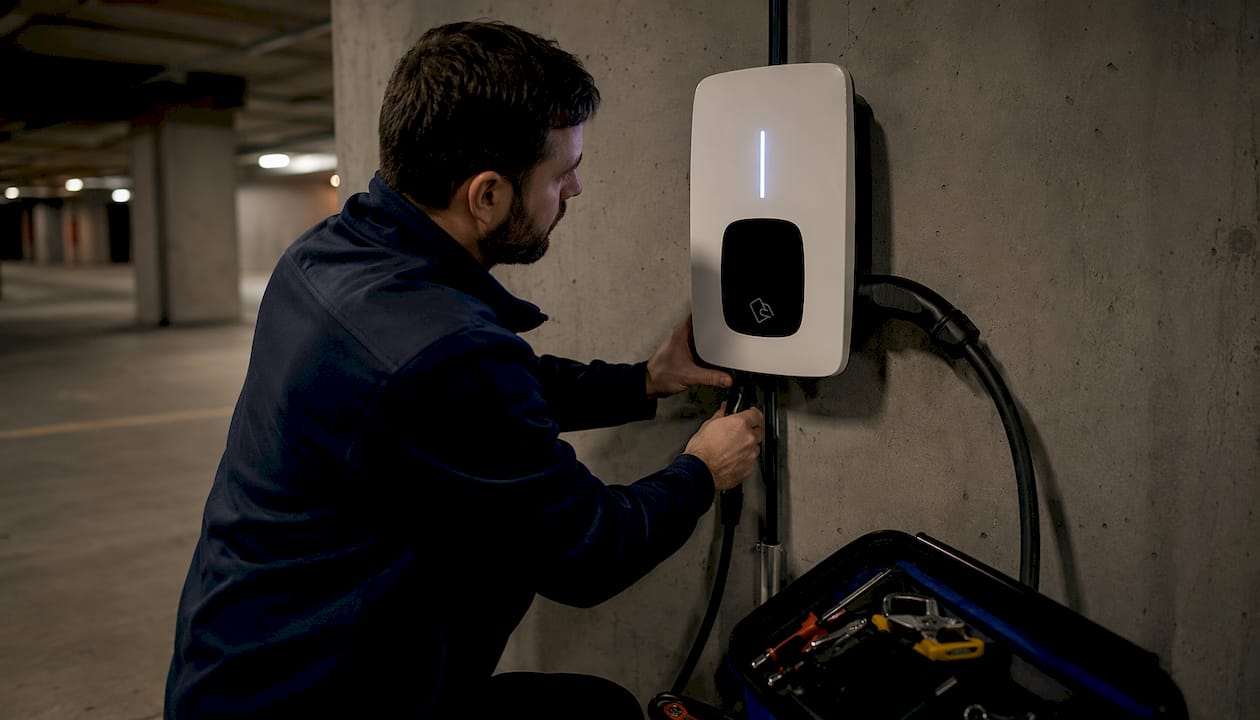
Hardware and software working together
Every smart charger has a power delivery unit (the physical box on your wall or pedestal) paired with onboard firmware that handles communication. That firmware connects to a cloud-based management platform, which is where scheduling logic, pricing data, and usage analytics live. The charger is essentially a networked device, closer in concept to a smart thermostat than to a standard outlet.
The data flow
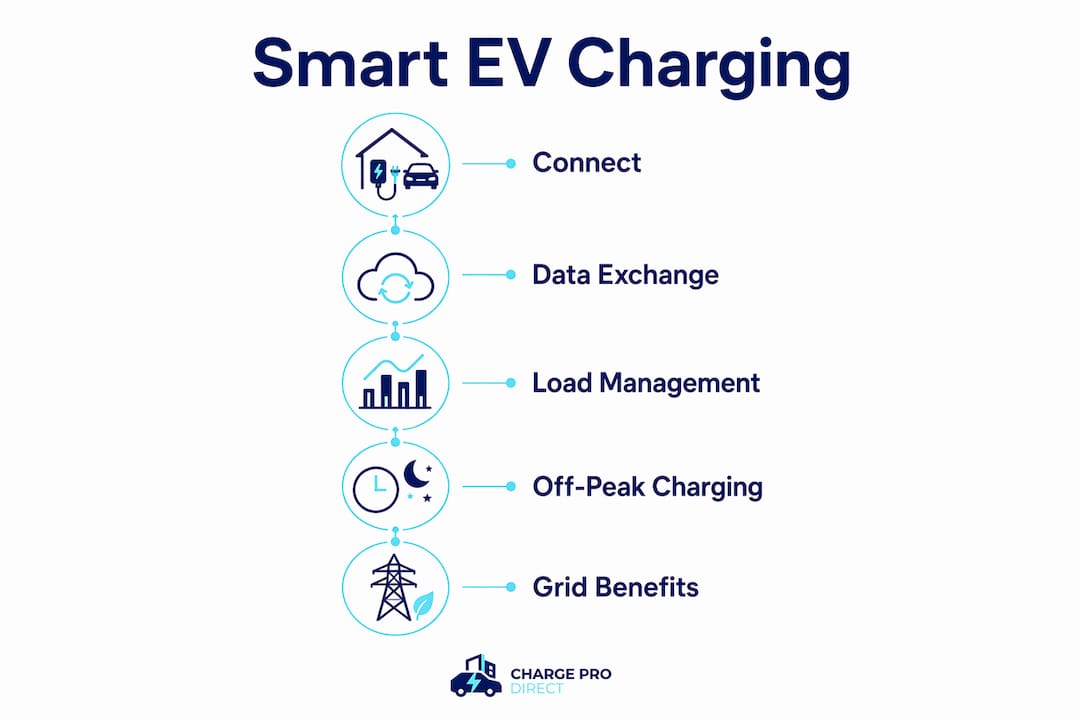
When you plug in, the charger and vehicle exchange information through the charging cable. Protocols like ISO 15118 allow the car to share its battery state of charge, target charge level, and departure time directly with the charger. That data travels up to the cloud platform, which cross-references it with your utility’s time-of-use (TOU) rate schedule and your home’s current load. The platform then sends back a charging plan: start at 11:00 PM, run at 7.2 kW, stop at 90% by 6:00 AM.
Dynamic load management in action
Dynamic load management is the feature that distributes available power across multiple EVs and building loads simultaneously, reducing the need for expensive electrical panel upgrades. If you have two vehicles plugged in and your HVAC kicks on, the charger automatically splits available amperage between them rather than tripping your main breaker. For fleet operators, this capability is what makes large-scale EV adoption feasible without rebuilding electrical infrastructure from scratch.
Key capabilities at a glance:
Pro Tip: Before buying, confirm the charger supports OCPP 1.6 or higher. That single standard determines whether your unit can participate in utility demand response programs and integrate with third-party energy management systems down the road.
The financial case for smart charging is straightforward. Automating off-peak charging cuts long-term charging costs by 30–50% compared to uncontrolled plug-in charging, depending on your utility’s rate structure. For a driver charging at home every night, that difference adds up to hundreds of dollars per year. You can estimate your specific savings using Chargeprodirect’s EV charging savings calculator.
The grid-level benefits are just as real. Smart charging reduces peak load on electrical grids, easing infrastructure pressure that would otherwise require expensive utility investment. A global study by RAP and the ICCT found that in the French region of Essonne, smart charging could reduce power line reinforcements by 23% and transformer reinforcements by 37% by 2040 compared to uncontrolled charging. Those avoided costs translate into lower electricity bills for everyone on the grid, not just EV drivers.
Key benefits for drivers:
Key benefits for the grid:
The bottom line on cost savings: Smart charging automates off-peak charging sessions, cutting long-term charging costs by 30–50% depending on your electricity plan.
Smart charging technology pays off differently depending on how and where you use it. Here are the most common scenarios and what actually works in each.
Home overnight charging
This is the most common use case in the US, and the one with the clearest payoff. Most utilities offer TOU rates with overnight windows (typically 9:00 PM to 6:00 AM) priced significantly lower than daytime rates. Set your charger’s departure time to match your morning schedule, and the unit handles the rest. Smart chargers manage home load dynamically, preventing circuit overloads by balancing power between your EV and other appliances running overnight.
Solar panel integration
If you have rooftop solar, a smart charger can shift charging to midday when your panels are producing excess power. This reduces your reliance on grid electricity and maximizes the value of your solar investment. Understanding how net metering policies like NEM 3.0 affect your export credits is worth doing before you set your charging schedule, since the economics of selling back versus self-consuming power vary by state.
Fleet and workplace charging
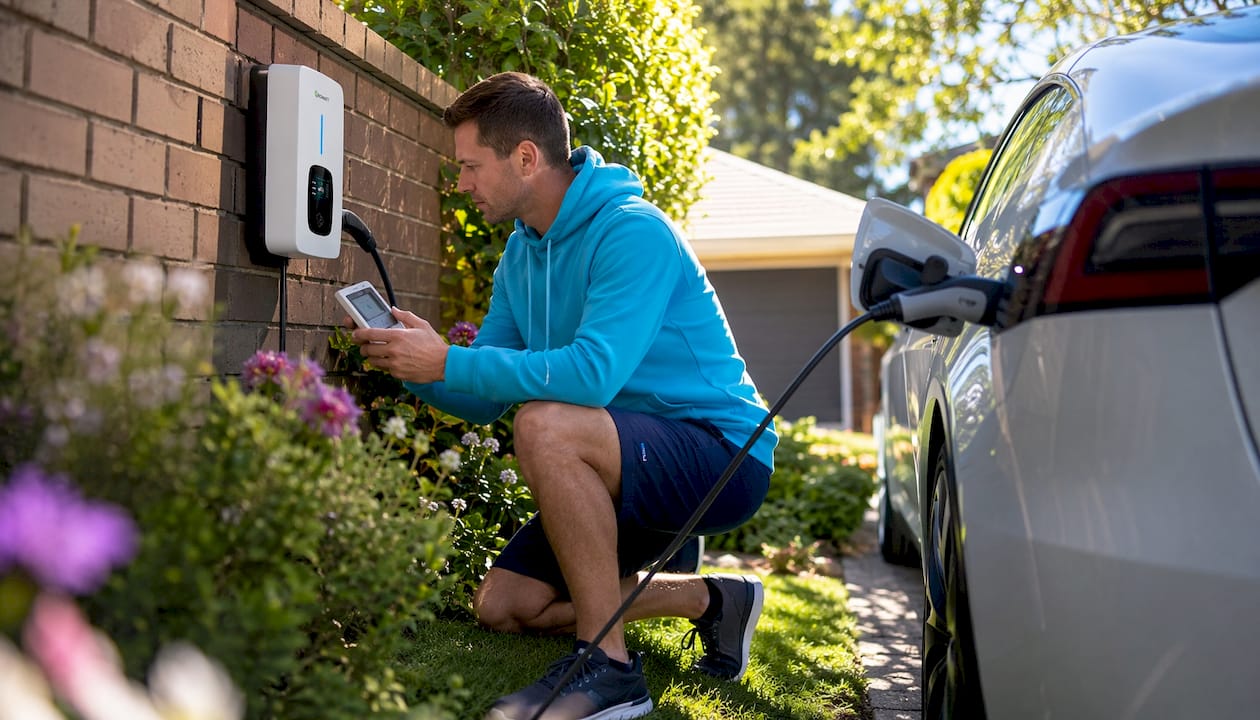
For businesses running multiple EVs, smart charge management schedules each vehicle’s session based on departure time, battery state, and available site capacity. This avoids demand charge spikes on your commercial electricity bill and eliminates the need for costly panel upgrades when adding more chargers. A commercial-grade unit like the Autel AC Single 50A handles high-capacity fleet charging with the flexibility smart management requires.
Best practices for any setup:
Pro Tip: Don’t set your charge limit to 100% every night unless you need a full battery the next morning. Charging to 80–90% regularly reduces long-term battery wear and keeps the charger’s session shorter, which further lowers cost during TOU windows.
What exactly does a smart EV charger do that a regular charger doesn’t?
A regular charger delivers power the moment you plug in, with no control over timing or rate. A smart charger connects to your network, reads pricing and grid data, and automates the session to charge at the lowest-cost time while protecting your home’s electrical system.
Can you leave a smart charger plugged in all the time?
Yes. Smart chargers are designed for permanent connection. The unit monitors battery state and stops charging once your target level is reached, then waits for the next scheduled session rather than cycling on and off unnecessarily.
What are the pros and cons of smart charging?
The main advantages are lower electricity costs, home circuit protection, and grid-friendly behavior. The primary limitations are the need for a reliable Wi-Fi connection (most smart features require internet access), a higher upfront cost than basic chargers, and the importance of keeping firmware updated to address cybersecurity vulnerabilities.
Is a smart EV charger worth the investment?
For most US homeowners on a TOU rate plan, the answer is yes. The 30–50% reduction in charging costs typically offsets the price premium within one to two years, and the load management features can help you avoid a panel upgrade that would cost far more.
How does smart charging work with home solar?
The charger monitors your solar system’s output and shifts charging to periods of excess generation, reducing how much power you pull from the grid. Paired with a TOU rate, this combination delivers the lowest possible per-mile energy cost.
The expert consensus on smart EV charging is clear: it benefits consumers, utilities, and grid operators simultaneously. Smart charging creates a win-win scenario where grid operators reduce peak costs, utilities maintain supply stability, and drivers pay less per charge.
A 2025 global analysis by the Regulatory Assistance Project (RAP) and the International Council on Clean Transportation (ICCT) quantified the US opportunity specifically. Modeling the state of Colorado, the study found that optimizing the charging of light-duty and medium-to-heavy-duty electric vehicles could save between $300 million and $900 million through reduced investment in generation, transmission, and distribution infrastructure. Residential charging accounts for roughly two-thirds of that potential.
The distinction between dynamic load management and broader smart charging is worth understanding. Dynamic load management specifically balances power across EVs and building loads, which is critical for avoiding infrastructure upgrades. Smart charging as a whole also includes scheduling, demand response participation, renewable integration, and bidirectional energy flow. Fleet operators in particular benefit from the full stack: real-time data communication automates charging sessions, maximizes vehicle uptime, and extends hardware longevity by avoiding repeated high-power cycles.
For anyone planning a home or fleet charging setup, Chargeprodirect’s managed EV charging guide walks through how to match charger capabilities to your specific energy situation.
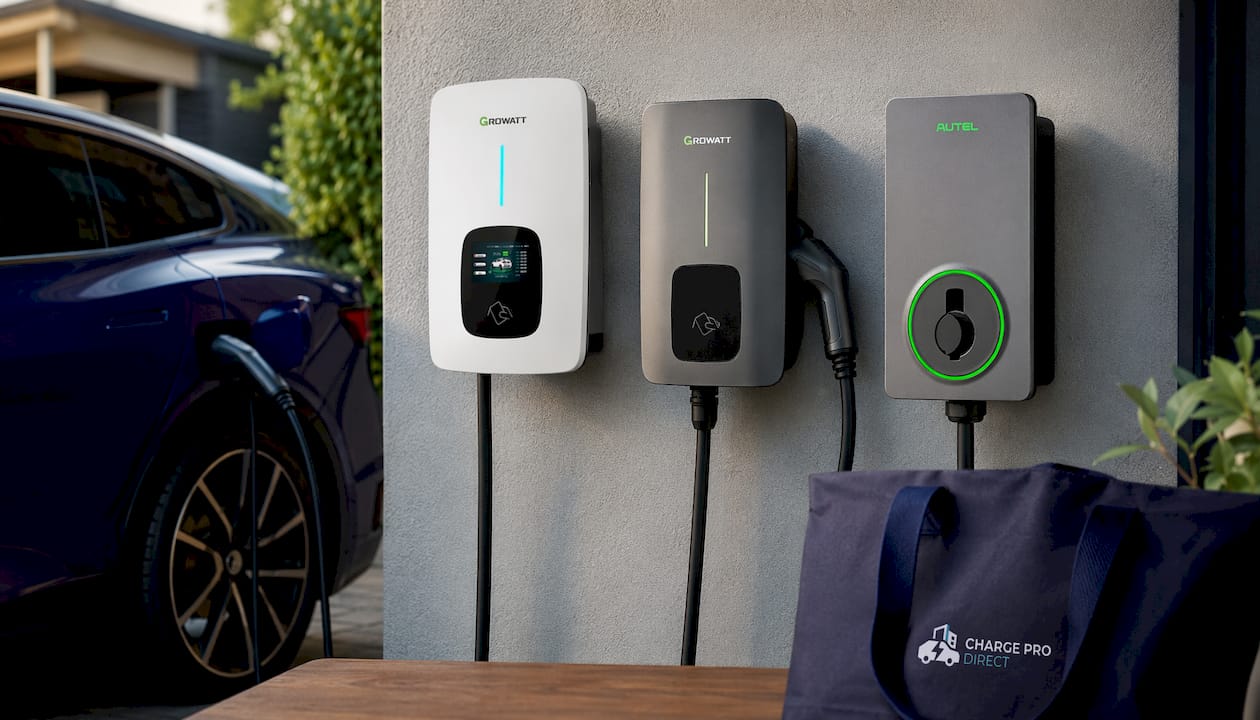
Chargeprodirect carries a range of smart AC chargers built for both home and commercial use, and our buying guides help you choose the right unit before you buy. Residential EV chargers ship free.
Not sure which fits your setup? Our EV Charger Finder helps you match the charger to your panel capacity, EV model, and energy goals before you order.
Smart EV chargers reduce long-term charging costs by 30–50% by automating off-peak sessions while simultaneously protecting home circuits and supporting grid stability through dynamic load management and demand response participation.
| Point | Details |
|---|---|
| Cost savings are measurable | Automating off-peak charging cuts long-term costs by 30–50% depending on your utility’s rate plan. |
| Load management prevents upgrades | Dynamic load management balances power across EVs and appliances, often eliminating the need for a panel upgrade. |
| Grid benefits are real | Smart charging reduces peak load on electrical grids, easing infrastructure pressure at the utility level. |
| Solar integration multiplies savings | Aligning charging with solar generation reduces grid draw and maximizes the value of on-site renewable energy. |
| OCPP is the key standard | OCPP compliance determines whether your charger can participate in demand response programs and third-party platforms. |
A smart EV charger connects to your network and uses real-time data to automate charging during off-peak, lower-cost periods while balancing your home’s electrical load. It gives you remote control, energy monitoring, and scheduling through a companion app.
Yes. Smart chargers stop automatically once your target charge level is reached and resume only at the next scheduled session, so leaving the car plugged in is safe and efficient.
The main advantages are lower electricity bills, circuit protection, and grid-friendly behavior. The main limitations are the need for a stable internet connection and a higher upfront cost compared to basic chargers.
For most homeowners on a time-of-use rate, yes. The 30–50% reduction in charging costs typically recovers the price premium within one to two years, and load management can help you avoid a costly panel upgrade.