
Need Installation?
Book a licensed install
Book a licensed EV charger install

Four main types of solar generators serve residential needs in the US: portable, home backup, off-grid, and hybrid systems. Each one fits a different situation, and knowing which category you need makes the rest of the decision much easier.
Brands like Renogy and Growatt appear across these categories. Renogy is well known for portable and off-grid panel and battery solutions, while Growatt’s inverters, including the Growatt 10kW hybrid inverter, are popular for home backup and hybrid grid-tie setups.
A solar generator is not a generator in the traditional sense. It is a rechargeable battery station with a built-in inverter, charge controller, and output ports. Solar panels are an optional charging source, not the power source itself. The battery stores energy; the inverter converts that stored DC power into the AC electricity your appliances use.
Key insight: Solar recharge depends on panel wattage, available sunlight, shade, and the unit’s maximum solar input limit. Relying solely on solar to recharge a large battery during a multi-day outage is risky without a wall outlet or fuel generator as a backup charging source.
Most units accept three charging inputs: a standard wall outlet, solar panels, and sometimes a 12V vehicle port. The wall outlet is the fastest and most reliable way to top off before a storm. Solar extends runtime when the grid stays down for days.
Pro Tip: Check the unit’s surge wattage, not just its continuous wattage. A refrigerator compressor can draw two to three times its running wattage at startup. If your inverter cannot handle that starting surge demand, the unit will shut down the moment the fridge kicks on.
Key functional differences across types:
Portable units are the entry point for most homeowners. They run quietly with zero emissions, making them safe for indoor use, unlike gas generators. A well-sized unit in the 1,000–2,000Wh range can sustain essential loads like medical devices, refrigeration, and basic lighting for 12–24 hours during an outage.
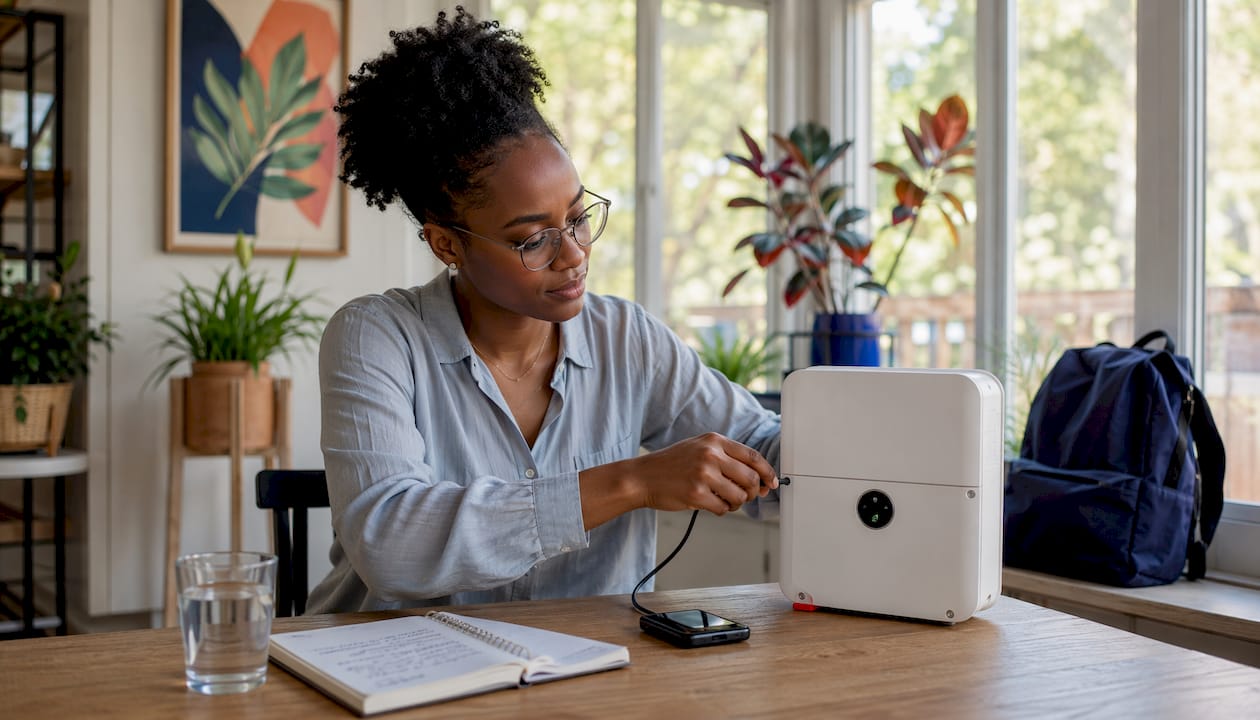
The tradeoff is capacity. Portable units are a poor fit for central HVAC, electric water heaters, or any sustained high-power load. They shine for camping, travel, and the short 6–24 hour outages that represent the majority of residential power failures. Renogy offers portable panel and battery bundles well suited to this category.
Advantages: No installation, no permits, reusable for outdoor activities, silent operation under 30dB. Disadvantages: Limited capacity, 120V output only on most models, not practical for whole-home backup.
Home backup units are the most capable plug-and-play solar generators available. High-capacity systems with 240V output can power large appliances like dryers, well pumps, and HVAC systems, and the best models include zero-millisecond UPS switching so your computers and medical equipment never lose power during a grid transition.
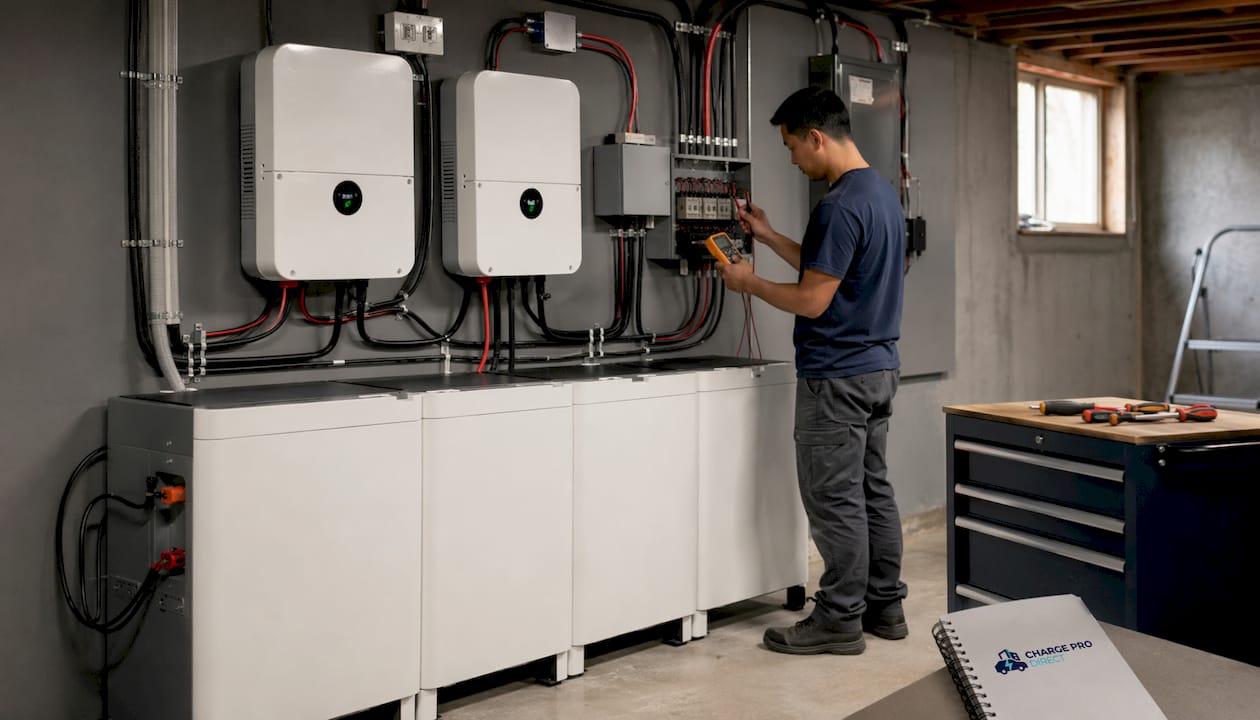
These systems typically weigh several hundred pounds and stay in one location, though they remain technically portable. Cost ranges from several thousand dollars for capable mid-range units to higher amounts for whole-home class systems. Installation is minimal since they plug into existing outlets or connect via a transfer switch.
Advantages: Whole-home or critical-load coverage, 120V/240V output, UPS protection, no installation permits in most cases. Disadvantages: High upfront cost, heavy, solar recharge alone rarely covers full daily consumption.
Off-grid systems are modular inverter setups, not plug-and-play boxes. You build them from separate components: an inverter, external battery bank, charge controller, and solar array. This approach requires more technical knowledge but delivers scalability and long-term cost savings that sealed units cannot match.
These systems are the right choice for cabins, rural properties, or homeowners who want true energy independence. Installation typically requires an electrician and may need permits depending on your state. Growatt’s grid-tie and hybrid inverters, including the Growatt 7.6kW grid-tie inverter, are widely used in residential off-grid and hybrid builds across the US.
Advantages: Unlimited expandability, lower long-term cost, component-level repairability, designed for sustained daily use. Disadvantages: Complex installation, requires technical knowledge, higher upfront planning effort.
Hybrid systems blend solar charging with grid power, allowing you to draw from the grid when solar is insufficient and export excess solar energy back to the utility. They are the most flexible option for homeowners who want to reduce their electric bill while maintaining grid access as a safety net.
A hybrid inverter sits at the center of these setups, managing power flow between solar panels, a battery bank, and the grid automatically. Growatt’s hybrid inverter line is a strong example of this category, with models designed specifically for US residential voltage standards. For homeowners in areas with time-of-use electricity rates, hybrid systems can shift load to off-peak hours and meaningfully cut monthly bills.
Advantages: Grid backup available, bill reduction through solar export, flexible power management. Disadvantages: More complex than portable units, requires professional installation, grid-dependent for full functionality.
| Type | Typical Capacity | Output Voltage | Installation | Best For |
|---|---|---|---|---|
| Portable | 500–2,000Wh | 120V | None | Camping, short outages, essentials |
| Home backup | 2,000–10,000Wh+ | 120V and 240V | Minimal to moderate | Critical loads, whole-home backup |
| Off-grid modular | 5,000Wh+ | 120V and 240V | Professional required | Full energy independence |
| Hybrid | Varies | 120V and 240V | Professional required | Bill reduction, grid-tied backup |
Picking the right system comes down to three questions: How much power do you actually need? How long do you need it to last? And how much installation complexity are you willing to take on?
List your critical loads first. Most homeowners overestimate whole-house backup needs. Start with the essentials: medical devices, refrigerator, lights, phone chargers, and Wi-Fi router. A 1,000–2,000Wh unit covers these for 12–24 hours.
Check surge wattage on every appliance. A refrigerator, sump pump, or window AC unit draws significantly more power at startup than during normal operation. Your inverter must handle that peak, or it will trip off at the worst moment.
Decide on 120V vs. 240V. If your home has an electric dryer, well pump, or electric range, you need a system with 240V output. Most portable units top out at 120V, which leaves those appliances dark during an outage.
Match battery capacity to outage length. For 6–24 hour outages covering essentials, 1,000–2,000Wh is practical. For multi-day outages or whole-home coverage, look at 5,000Wh and above with solar panel input to extend runtime.
Consider your lifestyle. Do you camp or travel? A portable unit pulls double duty. Do you want permanent off-grid capability? A modular inverter system is the better long-term investment.
Factor in installation. Portable and home backup units require no permits in most cases. Off-grid and hybrid systems typically need a licensed electrician and may require utility approval for grid-tie configurations.
Review safety certifications. Look for UL listing or ETL certification on any unit you bring indoors. These certifications confirm the unit meets US electrical safety standards.
Set a realistic budget. Entry-level portable units start at lower prices, mid-range home backup systems are more costly, and whole-home and off-grid systems can be quite expensive to install. A home backup setup guide can help you map costs to your specific load requirements before you buy.
Think about expandability. Sealed plug-and-play units have fixed capacity. Modular systems let you add batteries and panels as your needs grow, which matters if you plan to add an EV or expand your home.
Pro Tip: Run your refrigerator on a kill-a-watt meter for 24 hours before you shop. Real-world consumption is often lower than the nameplate rating, and knowing your actual daily watt-hours lets you size a battery with confidence instead of guessing.
Solar generators are not zero-maintenance, even though they are often marketed that way. Battery degradation occurs after hundreds to thousands of charge cycles, and most sealed units offer no component replacement when that happens. Knowing this upfront helps you plan for the long term.
Battery care basics:
Usage tips:
Safety guidance:
Pro Tip: If longevity matters to you, consider a modular inverter system over a sealed unit. Modular systems allow component replacement and can extend system life well beyond the typical lifespan of sealed solar generators, making them more cost-effective over a decade or more.
Choosing between a portable unit, a home backup system, and a full off-grid or hybrid setup is not always straightforward. Our Build Your System guide is built for exactly this decision, helping homeowners understand their actual power needs before they spend a dollar.
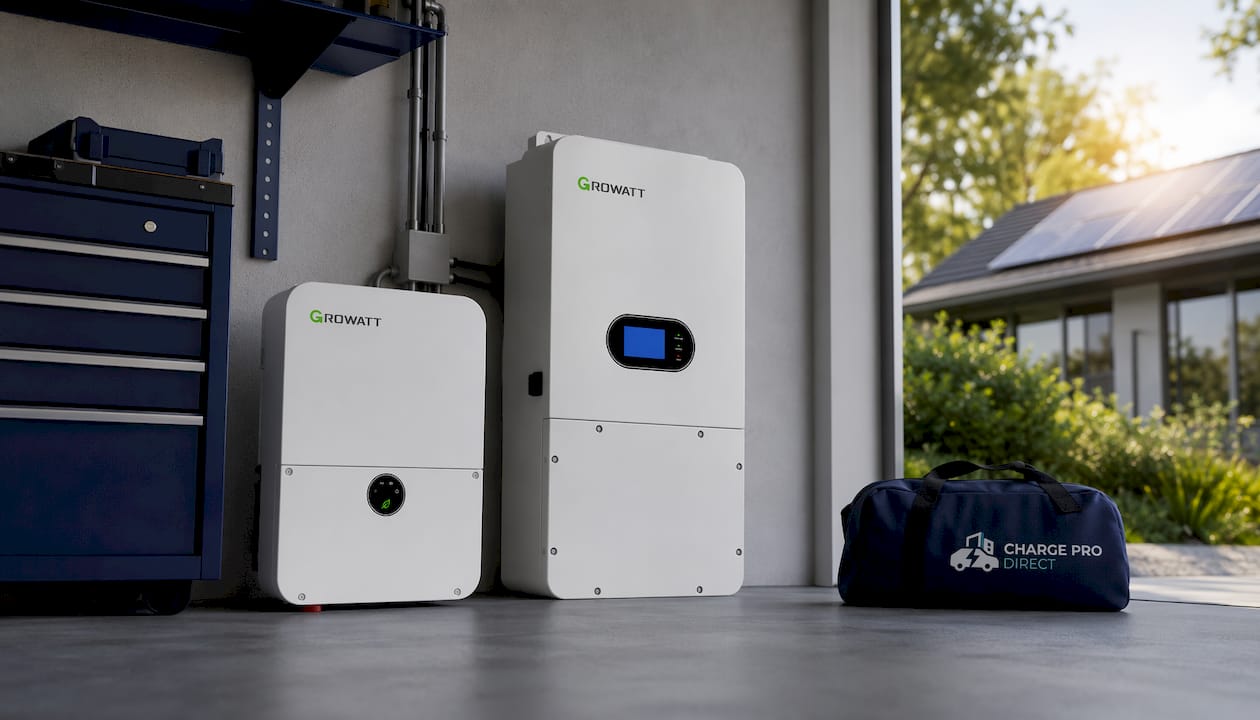
Chargeprodirect’s catalog covers solar generators and off-grid power solutions alongside home battery backup systems, with trusted brands including Growatt for hybrid and grid-tie inverter applications. Our guides focus on helping you avoid the most common pre-purchase mistakes: undersizing the inverter for surge loads, overlooking 240V requirements, and choosing a sealed unit when a modular system would serve you better long-term.
Key resources and benefits available through Chargeprodirect:
Pro Tip: Before you shop, write down your three most critical appliances, their wattage (running and surge), and how many hours per day you need them running during an outage. That single piece of preparation cuts the selection process in half.
Most homes cannot run entirely on a portable solar generator. For critical loads like a refrigerator, lights, medical devices, and phone chargers, a 1,000–2,000Wh unit covers 12–24 hours. Whole-home backup including 240V appliances requires a system of at least 5,000Wh capacity and 240V output.
The best option depends on your load requirements. For whole-home backup with 240V appliances, a high-capacity home backup system with dual-voltage output and UPS switching is the strongest choice. For essentials-only backup, a 1,000–2,000Wh portable unit is practical and cost-effective.
The biggest limitation is capacity. Solar generators have finite battery storage, and solar recharge alone is unreliable during cloudy weather or extended outages. Most sealed units also offer no component replacement when the battery degrades after years of cycling.
A large home backup system with 240V output can power most or all of a home’s circuits for a limited time, but it cannot match the sustained output of a natural gas standby generator running continuously. For multi-day whole-home coverage, a modular off-grid or hybrid system with significant battery and solar capacity is the more realistic path.
Yes. Solar generators produce zero emissions and typically operate under 30dB, making them safe for indoor or garage use. This is one of their key advantages over gas generators, which must always be operated outdoors due to carbon monoxide risk.
Portable solar generators cover essential home loads for about a day, while home backup and off-grid systems with 240V output are required for whole-home coverage of high-draw appliances.
| Point | Details |
|---|---|
| Four main types | Portable, home backup, off-grid modular, and hybrid systems each serve different needs and budgets. |
| Size to critical loads | A 1,000–2,000Wh unit sustains essentials like refrigeration and medical devices for 12–24 hours. |
| Surge wattage matters | Appliances like refrigerators draw significantly more power at startup; your inverter must handle that peak. |
| 240V is a key dividing line | Dryers, well pumps, and electric ranges require 240V output, which most portable units do not provide. |
| Modular systems last longer | Component-replaceable inverter systems outlast sealed solar generators and cost less over a decade of use. |