
Need Installation?
Book a licensed install
Book a licensed EV charger install

Solar generators are battery-based power systems that capture sunlight through solar panels, store it in a built-in battery, and deliver clean electricity to your home when you need it most. Understanding why homeowners choose solar generators comes down to three clear advantages: no fuel costs, no exhaust fumes, and no noise. Unlike gas generators, solar units from brands like Jackery, EcoFlow, and Bluetti run silently, produce zero emissions, and are safe for indoor use. They also last 10–25 years, making them a long-term investment in home energy resilience. If you want reliable backup power without the hassle of gas cans or carbon monoxide risks, solar generators are worth a serious look.
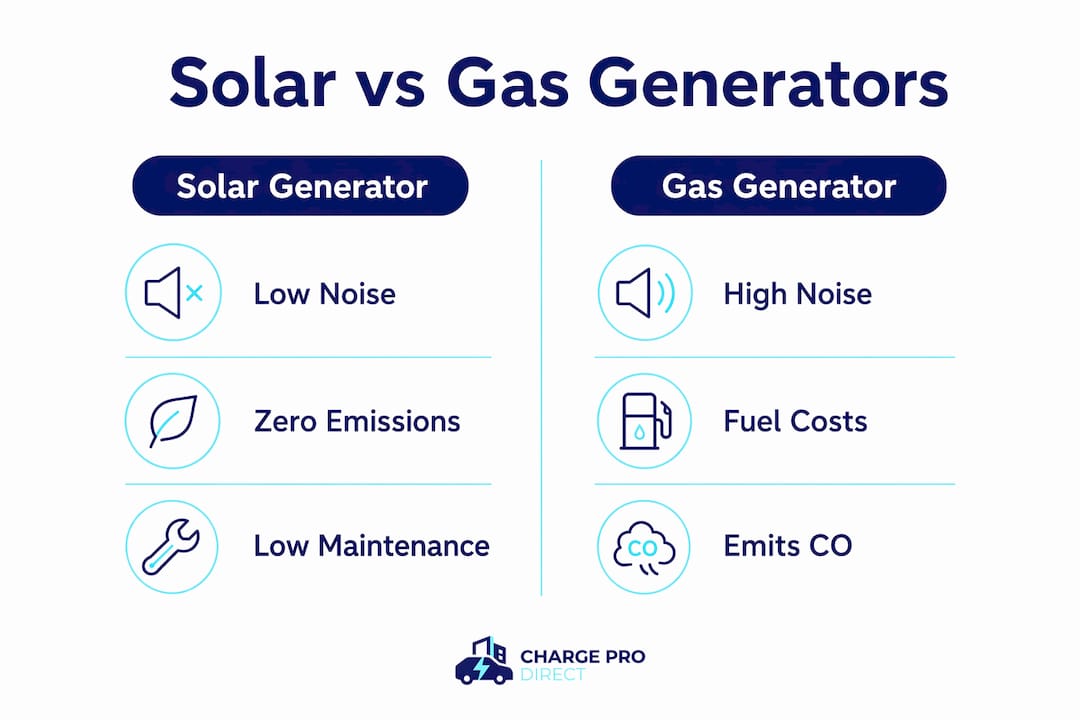
Gas generators have one major problem: they burn fuel constantly, costing you $3–$5 per hour in fuel alone, according to 2026 comparison data. That adds up fast during a multi-day outage. Solar generators eliminate that recurring cost entirely once you own the unit.
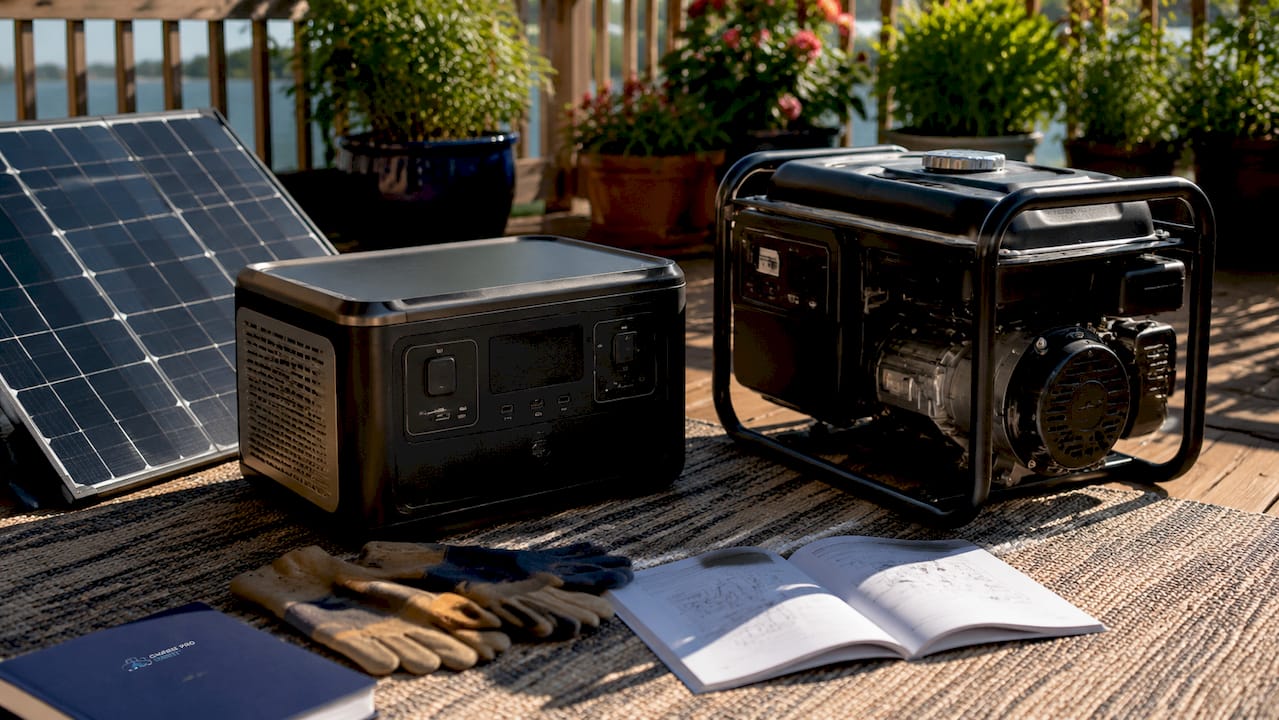
The safety difference is just as significant. Gas generators produce carbon monoxide, a colorless and odorless gas that kills quickly in enclosed spaces. Solar generators carry no such risk. You can run one in your living room, bedroom, or garage without cracking a window. That single fact changes how and where you use backup power.
Noise is another dividing line. Gas generators typically run at 65–80 decibels, roughly the volume of a lawnmower. Solar generators operate at under 30 decibels, quieter than a normal conversation. That matters if you live in a neighborhood with noise ordinances, or if you simply want to sleep during an outage.
| Feature | Solar generator | Gas generator |
|---|---|---|
| Noise level | Under 30 dB | 65–80 dB |
| Fuel cost | $0 (sunlight) | $3–$5 per hour |
| Indoor use | Yes, safe | No, carbon monoxide risk |
| Lifespan | 10–25 years | 5–10 years |
| Maintenance | Panel cleaning, battery checks | Oil changes, spark plugs, fuel lines |
| Emissions | Zero | High |
Pro Tip: If you live in a townhouse or apartment complex, check your HOA rules. Gas generators are banned in many dense communities. Solar generators face no such restrictions and can be used on a balcony or indoors.
The upfront cost of a solar generator is real, but the long-term math favors solar. Some states and utilities also offer rebates for solar and battery storage, which can lower the upfront cost further.
Once your system is running, the savings compound. Solar-plus-storage systems reduce residential electricity bills by 40–70%, depending on your usage and system size. For a household paying $200 per month in electricity, that means saving $80–$140 every single month. Over ten years, that is $9,600–$16,800 back in your pocket.
Utility-scale solar now costs approximately 6.1 cents per kilowatt-hour, compared to 18.2 cents for new coal power plants. That gap keeps widening as solar technology improves. The global solar PV cost fell another 12% between 2022 and 2023, and that trend continues to push residential prices down.
Key financial benefits of choosing solar generators:
For a deeper look at how solar fits into your home’s financial picture, the home solar power guide at Chargeprodirect walks through sizing and costs in plain language.
Solar generators require almost no maintenance. Battery health checks and panel cleaning are the only regular tasks. There are no oil changes, no spark plug replacements, no carburetors to clean after sitting unused for six months. You store a solar generator in your garage, and it is ready to go when you need it.
Setup is straightforward. Most portable solar generators connect to panels via a single cable. You do not need an electrician for basic portable use. Plug your devices directly into the unit’s AC outlets, USB ports, or DC outputs. The learning curve is minimal compared to installing a whole-home standby generator.
Modern solar generators also include built-in safety protections. Overload protection, short circuit prevention, and temperature management are standard features on current portable units. These protections make solar generators genuinely safe for non-technical homeowners to operate without supervision.
Pro Tip: Clean your solar panels every 2–3 months, or after heavy dust, pollen, or bird activity. Dirty panels can reduce charging efficiency by 15–25%. A soft cloth and water is all you need.
Solar generators and whole-home battery systems serve different purposes. A portable solar generator is best for targeted backup: keeping your refrigerator, phone, CPAP machine, or router running during a short outage. A whole-home battery system, like the LG 16H Prime at 16 kWh, powers your entire house for extended periods.
Experts from Aurora Solar and Good Energy Solutions recommend hybrid solar-plus-storage strategies for most homeowners. The idea is simple: use solar-plus-storage for daily savings and shorter outages, and keep a backup generator for prolonged grid failures lasting several days. This approach gives you the best of both worlds without over-investing in any single solution.
Grid independence is a growing priority for American homeowners. Understanding how battery backup reduces grid dependence helps you plan the right system size for your actual outage patterns and daily energy needs.
| Use case | Best solution | Typical capacity |
|---|---|---|
| Short outage, essential devices | Portable solar generator | 500 Wh–3 kWh |
| Overnight backup, key circuits | Solar generator or small battery | 3–10 kWh |
| Whole-home backup, 1–3 days | Whole-home battery system | 10–32 kWh |
| Extended outage, full home | Hybrid solar-plus-storage plus backup | 32+ kWh |
For a detailed comparison of portable versus whole-home options, the solar generator vs whole-home battery guide at Chargeprodirect breaks down the tradeoffs clearly.
Solar installations increase home resale value at a level comparable to kitchen renovations. A Berkeley National Laboratory study confirms that buyers pay a premium for homes with solar power systems already in place. Solar is no longer a niche feature. Home buyers in 2026 actively seek properties with renewable energy infrastructure, and solar generators contribute to that appeal.
Beyond resale value, the environmental benefits are concrete. Solar generators produce zero emissions during operation. Every kilowatt-hour generated from sunlight is one less kilowatt-hour pulled from a coal or natural gas plant. For homeowners who care about their carbon footprint, that is a meaningful and measurable impact.
Key reasons solar generators add value beyond energy savings:
Solar generators are the most practical home backup power choice for homeowners who prioritize safety, low maintenance, and long-term cost savings over raw power output.
| Point | Details |
|---|---|
| Safety advantage | Solar generators produce zero emissions and are safe for indoor use, unlike gas alternatives. |
| Cost savings | Solar-plus-storage reduces electricity bills by 40–70%, with no fuel to buy. |
| Minimal maintenance | Only battery checks and panel cleaning are required, with no mechanical upkeep. |
| Home value impact | Solar installations increase resale value, comparable to major home renovations per Berkeley research. |
| Hybrid strategy works best | Combining solar-plus-storage with a backup generator covers both daily savings and extended outages. |
A common mistake among homeowners: they buy a gas generator after one bad storm, store it in the garage, and forget about it until the next outage. Then they discover the fuel has gone stale, the carburetor is gummed up, and the thing will not start when they actually need it.
Solar generators do not have that problem. You can leave one plugged in and topped off for months. When the lights go out, it is ready immediately. That reliability factor is underrated in most buying guides, and it is often the reason homeowners who try solar generators do not go back to gas.
The one honest caveat: solar generators are not the right tool for powering an entire house through a week-long winter outage. For that scenario, a whole-home battery system or a hybrid setup is the correct answer. But for the vast majority of outages, which last hours to a day or two, a quality solar generator handles the job cleanly, quietly, and without any drama.
The technology has also matured significantly. Units available in 2026 charge faster, hold more capacity, and cost less per watt-hour than models from just three years ago. If you looked at solar generators before and found them underwhelming, the current generation is worth a second look. The trend toward solar replacing grid reliance is not hype. It is a practical shift driven by better hardware and lower costs.
Our recommendation: match the generator size to your actual outage needs, not your worst-case fears. Start with a portable unit that covers your essential devices. Add whole-home battery storage when your budget allows. That path gives you real energy resilience without overspending on day one.
Choosing the right solar generator means matching capacity to your real power needs, not just picking the biggest unit on the shelf. Our buying guides are designed to help with exactly that.

The Chargeprodirect solar generator collection includes portable units for essential backup, whole-home battery systems for extended outages, and complete solar kits that bundle inverters, batteries, and panels together. Flexible payment plans are available at checkout. If you are also exploring whole-home storage options, the backup power collection covers larger systems designed for full-house coverage. Our sizing guides help you choose the right system before you buy, so you avoid the most common and costly pre-installation mistakes.
A solar generator is a portable battery system that stores electricity captured from solar panels and delivers it through standard AC outlets, USB ports, and DC connections. It requires no fuel and produces no emissions.
Solar generators handle essential devices like refrigerators, phones, routers, and medical equipment well. For whole-home backup lasting several days, a larger whole-home battery system is the better fit.
Solar generators typically last 10–25 years, significantly longer than gas generators, which average 5–10 years. Battery cells degrade gradually over hundreds of charge cycles.
Yes. Solar generators produce no exhaust or carbon monoxide, making them completely safe for indoor use. This is one of their biggest advantages over gas-powered alternatives.