
Need Installation?
Book a licensed install
Book a licensed EV charger install

Off-grid energy solutions are self-sufficient power systems that let you produce, store, and use electricity without any connection to a utility grid. The advantages of off-grid energy go well beyond simple cost savings. You gain full control over your power supply, protect yourself from outages, and reduce your environmental footprint at the same time. For homeowners in remote areas or anyone serious about energy independence, these systems represent a practical path to long-term sustainability. This article breaks down the top off-grid energy solution benefits so you can decide if this approach fits your property and goals.
Off-grid power systems eliminate your monthly utility bill entirely. A standard 5-kilowatt solar setup can save up to $1,800 annually by cutting out utility delivery and demand charges. That works out to $75–$150 per month back in your pocket, every month, for the life of the system.
Solar systems also cost far less to run than diesel or gasoline generators. Generator power costs $0.30–$1.00 per kWh once you factor in fuel, transport, and maintenance. Off-grid solar drops well below that threshold after installation. Over a 10-to-25-year system lifespan, that gap adds up to tens of thousands of dollars.
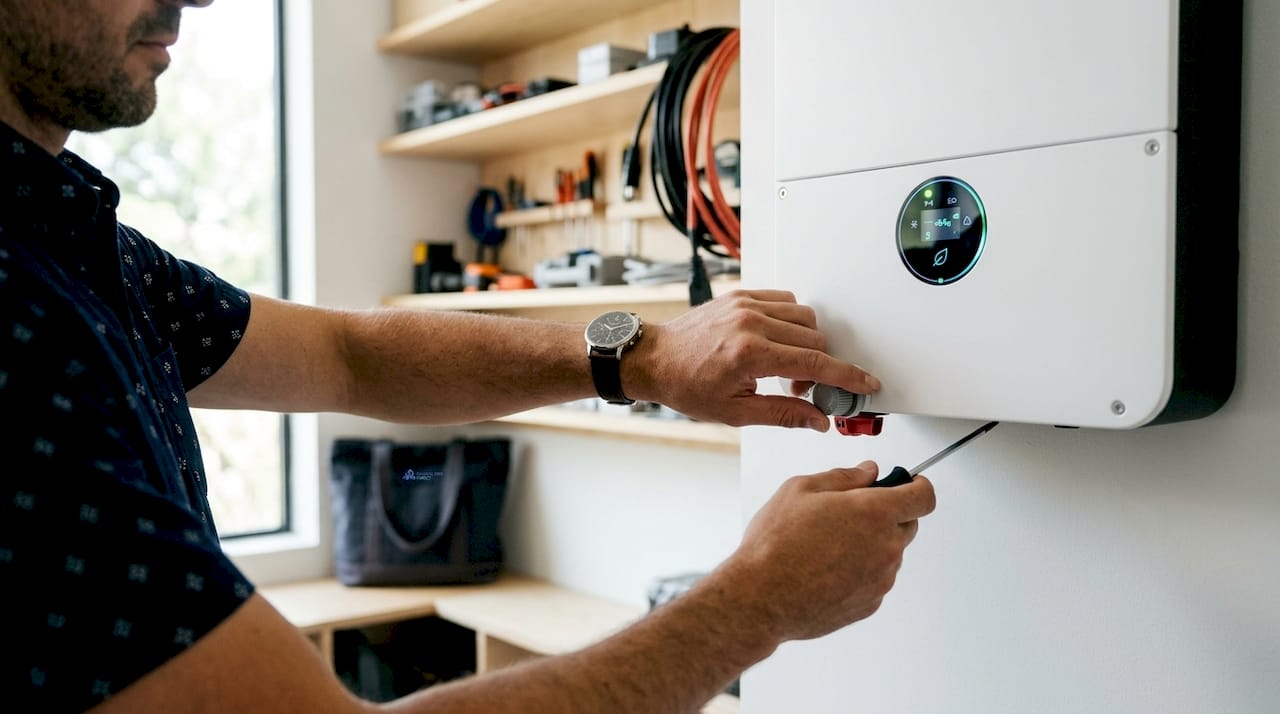
Pro Tip: Reducing your household energy load by 30% through efficiency upgrades like LED lighting and Energy Star appliances can cut your system costs by 25–30%. Smaller load means smaller battery bank and fewer panels, which lowers your upfront investment significantly.
Off-grid systems give you complete autonomy from the utility grid. You generate, store, and deliver power entirely on your own terms, with no utility company involved. Rate hikes, grid maintenance windows, and billing disputes simply stop being your problem.
This independence is especially valuable for homeowners in rural or remote locations. If the nearest power line is miles away, connecting to the grid may not even be a realistic option. Off-grid solar gives those properties a reliable, permanent power source without waiting on a utility company.
Grid-tied homes go dark when the utility grid fails. Off-grid homes do not. Your battery bank keeps the lights on, the refrigerator running, and your medical devices powered regardless of what happens to the grid around you.
This resilience matters most during severe weather events, which are becoming more frequent across the United States. A well-sized battery system provides multi-day backup without any fuel runs or generator noise. For families with health-dependent equipment or home-based businesses, that reliability is not a luxury. It is a necessity.
“Most off-grid system failures trace to design errors, not equipment quality. Accurate load audits and proper component sizing are the single most important steps to ensuring your system delivers power when you need it most.”
Off-grid solar systems produce zero local emissions during operation. A typical residential solar setup offsets approximately 3 metric tons of CO2 per year, which is the equivalent of planting over 70 trees annually. That reduction happens every year the system operates.
Replacing a diesel generator with solar also eliminates fuel combustion, noise pollution, and the risk of fuel spills on your property. Solar energy draws from an abundant, renewable source that does not deplete over time. For homeowners committed to sustainable energy solutions, off-grid solar is one of the most direct ways to reduce your household’s climate impact.
Key environmental advantages include:
Diesel and gasoline generators are common backup power tools, but their running costs are high. Fuel prices fluctuate, transport to remote areas adds cost, and engines require regular maintenance. Off-grid solar systems have no moving parts in the panels themselves, and modern LiFePO4 batteries last 10 or more years with minimal upkeep.
LiFePO4 (lithium iron phosphate) batteries dominate off-grid installations in 2026 because of their long cycle life and lower lifetime cost compared to older lead-acid batteries. You pay more upfront, but you replace them far less often. The math favors solar over generators for any property that needs power year-round.
Grid extension costs exceed $20,000 per kilometer in many rural areas. For a property located several kilometers from the nearest line, connecting to the grid can cost more than the off-grid system itself. Off-grid solar makes the decision straightforward in those cases.
Properties that benefit most from off-grid systems include:
For these situations, off-grid is not just a preference. It is often the only practical option.
Off-grid systems are not one-size-fits-all. You can start with a basic setup and add capacity as your needs grow. A stackable inverter like the Growatt 3kW off-grid inverter supports parallel connection, meaning you can add units later without replacing your existing hardware.
This modularity matters for homeowners who want to phase their investment over time. You might start with enough capacity for lighting and essential appliances, then expand to cover heating, cooling, and EV charging as your budget allows. The system grows with you rather than locking you into a fixed configuration from day one.
Utility electricity rates in the United States have risen steadily over the past decade. Grid-tied homeowners absorb every rate increase automatically. Off-grid homeowners do not. Once your system is paid off, your cost per kilowatt-hour drops to near zero for the remaining lifespan of the equipment.
This rate immunity becomes more valuable over time. A system installed today protects you from rate increases for the next 20-plus years. That is a financial hedge that no utility contract can match.
Off-grid systems carry real trade-offs that you need to understand before committing. Battery banks represent 30–50% of total installation costs, making off-grid systems 2–3 times more expensive upfront than grid-tied alternatives. That gap narrows over time through savings, but the initial investment is significant.
A typical US off-grid family home requires 10–15 kW of solar array and 50–80 kWh of battery storage for reliable year-round operation. Sizing must account for your lowest-solar month, not your average. Undersizing the battery bank is the most common design error and the most expensive to fix after installation.
Off-grid systems are also ineligible for net metering, which means you cannot sell excess power back to the grid. Hybrid systems retain that option. If you have reliable grid access and want to keep that financial flexibility, a hybrid setup may serve you better.
Pro Tip: Adding extra days of battery autonomy raises costs by 30–50% per additional day of storage. Size your autonomy days carefully based on your location’s longest typical cloudy stretch, not worst-case scenarios.
Off-grid energy solutions deliver the strongest financial and practical value for homeowners in remote locations or those who prioritize long-term energy independence over lower upfront costs.
| Point | Details |
|---|---|
| Annual savings potential | A 5 kW system can save up to $1,800 per year by eliminating utility delivery charges. |
| Upfront cost reality | Battery banks add 30–50% to total costs, making off-grid 2–3x pricier than grid-tied upfront. |
| Environmental impact | A typical system offsets 3 metric tons of CO2 annually, equal to planting 70+ trees. |
| Design accuracy matters | Load audits and correct battery sizing prevent the most common and costly off-grid failures. |
| Best-fit scenarios | Off-grid beats grid extension when utility line costs exceed $20,000 per kilometer. |
Many homeowners get excited about the benefits of renewable energy and then underestimate what it actually takes to design a reliable off-grid system. The financial case is real. The environmental case is real. But the planning side is where most people stumble.
The biggest mistake we see is treating battery sizing as an afterthought. Your solar panels generate power when the sun shines. Your battery bank is what keeps you running at night, through cloudy weeks, and during winter when solar production drops. If you size the battery for average conditions instead of your worst month, you will run out of power at exactly the wrong time.
Our recommendation: do a thorough load audit before you buy anything. List every appliance, its wattage, and how many hours per day you use it. Then reduce that load as much as you can through efficiency upgrades. That step alone can shrink your system cost by 25–30%, which is money you keep in your pocket.
Off-grid living is a great fit for remote properties, resilience-focused households, and anyone who wants genuine energy independence at home. For suburban homeowners with solid grid access, a hybrid system often delivers better financial returns while still giving you backup power. Know which category you fall into before you commit.
Choosing the right equipment is just as important as choosing the right system design. Chargeprodirect carries a curated selection of off-grid inverters, solar generators, and whole-home battery backups built for homeowners who want reliable, long-term performance.
The Growatt 3kW stackable inverter is a strong starting point for smaller off-grid setups, with parallel-ready design for future expansion. For whole-home power needs, the Sol-Ark 15K bundle pairs a high-capacity inverter with 32 kWh of battery storage. Our Build Your System guide helps you size your system correctly from the start, and flexible payment plans are available at checkout.
The primary benefits are energy independence, protection from grid outages, elimination of utility bills, and a reduced carbon footprint. A 5 kW system can save homeowners up to $1,800 per year in energy costs.
Off-grid systems cost roughly 2–3 times more upfront than grid-tied systems because battery storage adds 30–50% to total installation costs. The payback period depends on your location, energy use, and whether grid extension was a realistic alternative.
Off-grid solar is best suited for remote properties where grid extension is too costly or unavailable. Homeowners with reliable grid access often get better financial returns from a hybrid system that combines solar storage with net metering eligibility.
A typical US family home needs 10–15 kW of solar panels and 50–80 kWh of LiFePO4 battery storage for reliable year-round operation. Sizing must account for your lowest-production winter month, not your annual average.
Most off-grid failures result from undersized battery banks or mismatched components, not from equipment defects. A detailed load audit and professional system design are the most effective ways to prevent these problems.