
Need Installation?
Book a licensed install
Book a licensed EV charger install

EV charging for apartments is the process of installing and managing electric vehicle charging infrastructure in multi-unit residential buildings to meet residents’ daily charging needs within shared building constraints. Whether you live in a high-rise condo or a smaller apartment complex, you have more options than most people realize. Level 1 and Level 2 charging both work in apartment settings, and right-to-charge legislation in many regions now prevents building managers from refusing reasonable installation requests. This guide walks you through every option, from plugging into an existing outlet to coordinating a building-wide charging program.
Apartment residents have three practical charging paths: Level 1, portable Level 2, and hardwired Level 2. Each comes with different costs, speeds, and installation requirements.
Level 1 charging uses a standard 120V outlet, the same kind that powers a lamp or phone charger. Level 1 adds roughly 3–5 miles of range per hour. That rate sounds slow, but most drivers cover fewer than 40 miles per day, so overnight charging on Level 1 is often enough. Standalone Level 1 units typically cost $150–$400 CAD. The real advantage is simplicity: if your parking spot has an outlet nearby, you may already have everything you need.

Portable Level 2 chargers plug into a NEMA 14-50 outlet, the same 240V receptacle used for electric dryers. Portable Level 2 units cost $200–$400 CAD and deliver roughly 30–40 km (about 18–25 miles) of range per hour. That is a meaningful upgrade over Level 1. The catch is that NEMA 14-50 outlets are not common in parking garages, so you may need to request one from building management.
Hardwired Level 2 chargers are permanently wired into the building’s electrical system by a licensed electrician. They deliver the fastest home charging speeds and are the most reliable long-term solution. Installation costs run $1,000–$3,000 or more depending on how far the wiring must run from the electrical panel to your parking stall. Reviewing a detailed installation cost breakdown before you commit helps you budget accurately.
Pro Tip: Before requesting a new outlet or circuit, check your parking area for any existing 240V outlets. Dryer-style receptacles sometimes appear in older garages and could save you hundreds in electrical work.
Your building’s electrical panel is the single biggest factor in whether and how you can charge. Older apartment buildings often have panels sized for basic lighting and appliances, with little headroom for EV charging loads. A licensed electrician or a panel capacity assessment will tell you exactly how much capacity is available before you spend anything.
Distance from the main electrical panel is a major cost driver. A parking stall 50–100 feet from the panel requires significant conduit runs, and costs rise sharply beyond that. Trenching through concrete or running conduit through finished walls adds both labor and materials costs. Knowing this distance upfront prevents budget surprises.
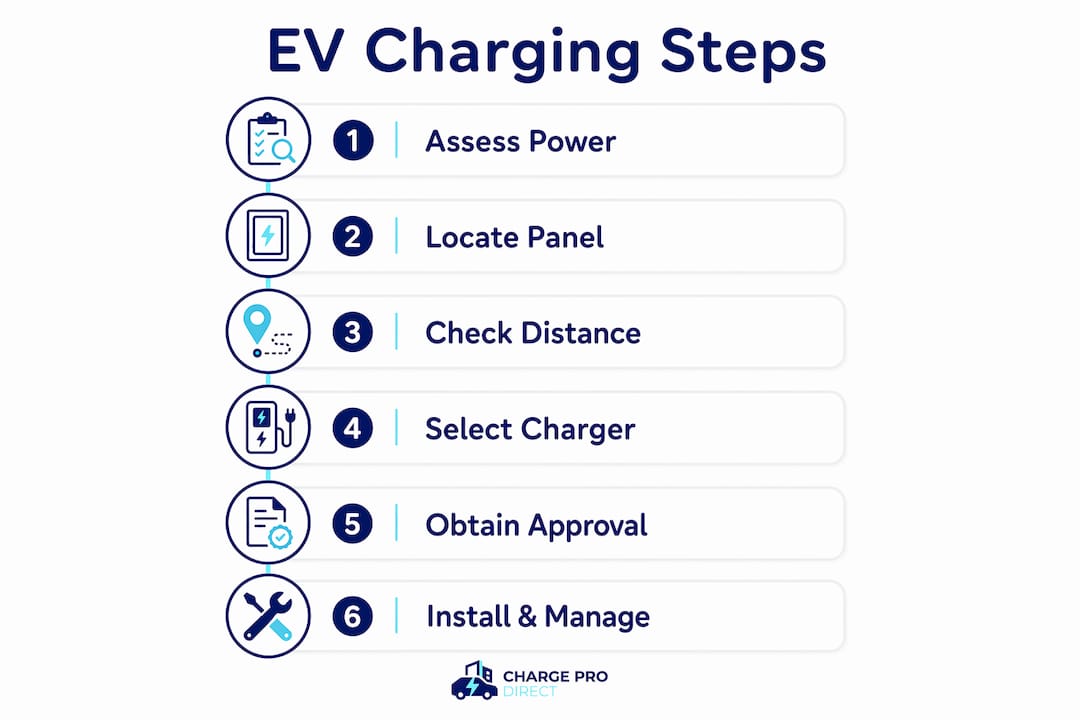
The table below summarizes the key infrastructure factors and their impact on your project:
| Factor | Impact on installation |
|---|---|
| Panel capacity | Limits total number of chargers without an upgrade |
| Distance to panel | Longer runs increase conduit and wiring costs significantly |
| Conduit through concrete | Adds trenching cost, often the largest single expense |
| Submetering | Enables fair billing by tracking each resident’s energy use |
| Load management software | Allows more chargers without upgrading the main panel |
Load management software is not optional in shared buildings. It dynamically throttles charging power based on total building demand, preventing the main breaker from tripping when multiple residents charge at once. Think of it as a traffic controller for electricity. Without it, adding more than a few chargers to a shared panel is genuinely risky.
Submetering pairs with load management to handle billing fairly. Each charging station tracks its own energy consumption, so residents pay only for what they use. This removes the common objection from building managers who worry about electricity costs being absorbed into shared operating expenses.
Pro Tip: Ask your building’s property manager for the electrical room location before you do anything else. If your parking stall is on the opposite side of the building from the panel, a hardwired solution may cost far more than a portable charger with a negotiated outlet arrangement.
Right-to-charge laws are the most important legal development for apartment EV owners in recent years. These laws prevent condo boards and HOAs from unreasonably denying an installation request, provided the resident covers all costs and the work meets local electrical code. Right-to-charge legislation is now active in several U.S. states and Canadian provinces, and the trend is expanding in 2026.
Getting approval still requires a process. Here is the typical sequence for requesting an EV charger installation in an apartment or condo building:
Condo boards stall EV projects most often because no one has presented a clear framework covering demand, capacity, funding, and system design. A well-prepared proposal that answers all four questions moves the process forward faster than any legal argument.
Two funding models work well for multi-unit buildings. Owner-funded projects typically require 10–20 residents to share costs, making the per-unit expense manageable. Vendor-financed models are viable with as few as 5 interested residents, where a third-party provider installs and maintains the infrastructure in exchange for a per-use fee. Knowing which model fits your building’s size and resident interest helps you frame the proposal correctly from the start.
Managers often worry about liability and the impact on shared electrical infrastructure. A permit-ready plan prepared by a licensed electrician addresses both concerns directly and is the single most effective tool for gaining approval.
Load management is the technology that makes building-wide EV charging practical without requiring a full electrical upgrade. Dynamic load management systems throttle each charger’s output in real time based on how much power the building is consuming at that moment. When demand is low, chargers run at full speed. When the building load spikes, the system reduces charging power automatically. No breakers trip, and no one loses power.
This approach unlocks capacity that already exists in the building. A panel that appears “full” on paper often has significant headroom during off-peak hours, typically overnight. Load management software captures that headroom and puts it to work for EV charging. You can learn more about how this works in practice through Chargeprodirect’s managed EV charging guide.
Shared infrastructure can be set up in several ways:
Retrofitting older buildings presents the biggest challenge. Concrete parking structures with no existing conduit runs require significant civil work. In these cases, a commercial EV assessment helps building owners understand true costs before committing to a specific architecture. Wireless load management systems, which communicate between chargers without new data cabling, reduce retrofit complexity considerably.
Charging in apartment buildings must be managed as a shared utility, not as a collection of individual installations. Buildings that treat it this way from the start avoid the most common and costly mistakes.
Start with what you already have. Check whether your parking stall has any outlet nearby, even a standard 120V receptacle. Using an existing outlet with a negotiated monthly fee avoids the cost of dedicated wiring entirely and is a practical first step for many apartment residents. Agree on a flat monthly amount with your building manager, or propose a submetered arrangement where you pay exactly for what you use.
If your building has NEMA 14-50 outlets in the garage, a portable Level 2 charger is your fastest path to faster charging. These units plug in like an appliance and can be unplugged and taken with you when you move. They are the most flexible residential EV charging option available.
For residents who want a permanent solution, map the distance from your parking stall to the electrical room before requesting a hardwired installation. A stall close to the panel may cost $1,000–$1,500 to wire. A stall far away could cost $3,000 or more. That single piece of information shapes your entire budget conversation with building management.
Pro Tip: Combine home charging with a public charging network for longer trips. Charging at home overnight for daily commutes and using public DC fast chargers for road trips gives you the best of both worlds without needing the fastest or most expensive home setup.
EV charging in apartments is achievable at every budget level, from a negotiated outlet arrangement to a full building-wide networked system with load management.
| Point | Details |
|---|---|
| Level 1 works for most commuters | A standard 120V outlet adds 3–5 miles per hour, enough for average daily driving. |
| Portable Level 2 is the flexible upgrade | A NEMA 14-50 plug-in charger delivers 18–25 miles per hour without permanent wiring. |
| Panel distance drives installation cost | Stalls far from the electrical panel can cost $3,000 or more to wire for hardwired Level 2. |
| Load management unlocks shared capacity | Dynamic load management software lets buildings add chargers without upgrading the main panel. |
| Right-to-charge laws protect residents | Most right-to-charge statutes require boards to approve requests when residents cover all costs and meet electrical code. |
The projects that stall almost always share one trait: the resident or board tried to skip the assessment phase. They went straight to “how many chargers can we install?” without first answering “how much capacity do we actually have?” That sequence never works. The buildings that move quickly are the ones that start with an honest electrical audit and a clear count of interested residents.
Residents often underestimate how much a well-prepared proposal matters. A one-page request with no electrical data gets tabled indefinitely. A proposal with a licensed electrician’s letter, a load management plan, and a funding model gets a decision at the next board meeting. The content of the proposal signals that you have done the work and that approval carries low risk for the building.
The other thing worth saying plainly: load management technology has changed the math on apartment charging. Buildings that seemed electrically “full” five years ago can now support meaningful charging programs without panel upgrades. That shift is real, and it means residents in older buildings should not assume the answer is no before getting a proper assessment.
Apartment residents need chargers that fit their specific situation, whether that means a portable plug-in unit or a hardwired station for a permanent stall.

Chargeprodirect carries both. The EVIQO 40A NEMA 14-50 plug-in charger is built for apartment dwellers who have access to a 240V outlet and want faster charging without a permanent installation. For residents coordinating a hardwired setup with building management, the EVIQO 48A hardwired Level 2 charger delivers maximum home charging speed. Our EV Charger Finder helps you match a unit to your building’s electrical setup. Residential EV chargers ship free, and flexible payment options are available.
Level 1 charging through an existing 120V outlet is the simplest starting point. It requires no new wiring and adds enough range overnight for most daily commutes.
Yes, building approval is required for any new electrical work. Right-to-charge laws in many regions require boards to approve reasonable requests when the resident covers all costs and the installation meets local electrical code.
Costs range from $1,000 to $3,000 or more depending on the distance from the electrical panel to the parking stall. Longer conduit runs are the primary cost driver in retrofit projects.
Load management software dynamically adjusts each charger’s power output based on total building demand. It prevents breaker trips and allows more chargers to operate on an existing panel without expensive electrical upgrades.
Yes, if your garage has a NEMA 14-50 outlet. Portable Level 2 chargers plug into this 240V receptacle and deliver roughly 18–25 miles of range per hour, making them a practical option for apartment dwellers who want faster charging without a permanent installation.