
Need Installation?
Book a licensed install
Book a licensed EV charger install

Yes, you can schedule your EV to charge automatically in the cheapest off-peak window, and departure-time scheduling is the best way to do it. Set a “ready-by” time in your vehicle app, smart charger app, or third-party app, then pair it with your utility’s off-peak plan. Get those three pieces working together and you lower your electricity cost while easing strain on the grid during peak demand hours.
TL;DR:
- Using a departure time to schedule EV charging maximizes savings by starting the charge as late as possible while still finishing before departure.
- The optimizer calculates start time based on battery capacity, current charge level, charger power, and efficiency, typically allowing overnight charging to complete during off-peak hours.
- Most utilities’ off-peak hours occur between midnight and 7 a.m., but it is essential to verify your specific utility’s schedule and seasonal shifts to avoid higher rates.
- Level 2 chargers with higher power output, such as 9.6kW or 11.5kW, are recommended for longer or more complex charging requirements, especially if off-peak windows are short.
- If scheduled charging fails, checking connectivity, using override options, and contacting your utility can resolve most issues without disrupting savings.
Most drivers set a fixed start time and call it done. That works, but it leaves savings on the table. A departure time is smarter because the vehicle or charger calculates backward from when you actually need the car, so it starts as late as possible while still finishing before you walk out the door.
Here’s how to set it up tonight:
Departure-time scheduling also tends to net more savings than a static start time because it can factor in preconditioning and shifting rate windows, according to the EV Charging Schedule Optimizer from ChargeCalcs.
The math behind any good scheduling tool is simpler than it looks. It runs backward from your departure time using four inputs:
The formula: energy needed divided by charger power equals charging duration. Subtract that duration from your departure time, and you get your start time.
Here’s a real-world example. A 75 kWh battery charging from 30% to 80% on an 11.5 kW charger needs roughly 3 hours and 37 minutes of wall energy once efficiency losses are factored in. If your off-peak window opens at 11 p.m. and you leave at 7 a.m., the optimizer has plenty of room to start late and still finish early.
Quick reference: most Level 2 chargers deliver somewhere around 25 to 30 miles of range per hour, which is why a modest overnight window covers most daily driving without touching peak rates.
Off-peak hours vary by utility, but many run from roughly midnight to 7 a.m., according to research on residential EV charging patterns. You cannot assume your off-peak window without checking, because it changes by provider and sometimes by season.
To find and enroll in a time-of-use plan:
PG&E, for example, offers EV2-A and EV-B rate plans with clearly defined off-peak and peak hours built specifically for EV owners. If your utility changes its peak window seasonally, you’ll need to nudge your departure time or finish-by setting to match, or you’ll spill into more expensive hours without realizing it.
Pro Tip: Set a calendar reminder every six months to recheck your utility’s TOU schedule. Rate windows shift more often than people expect, and a forgotten schedule update can quietly erase months of savings.
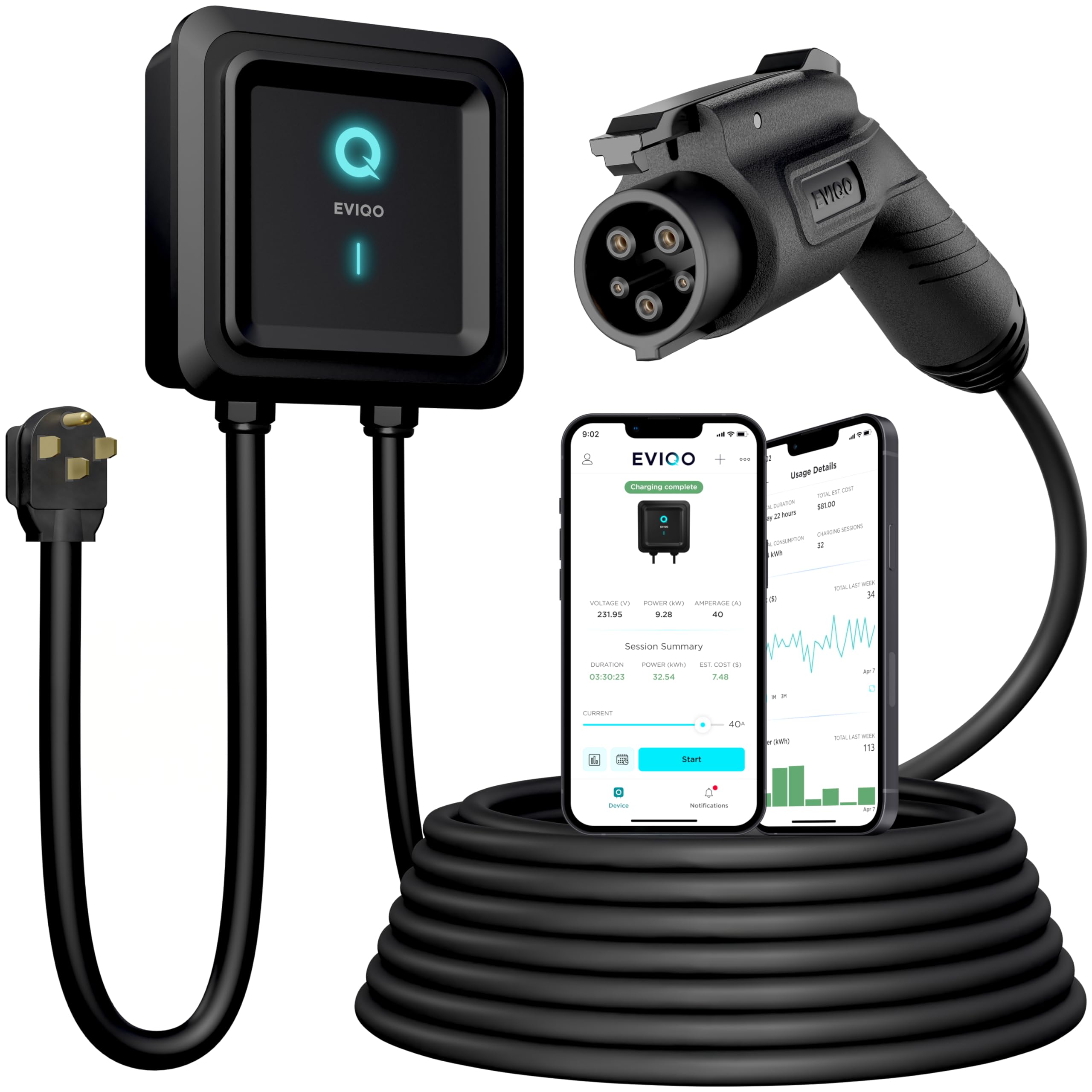
Level 1 charging, using a standard household outlet, typically adds only a few miles of range per hour. That’s fine if you drive under 30 miles a day and have all night to charge. But if your commute runs long or your off-peak window is short, Level 1 often can’t finish before peak rates kick back in.
Level 2 charging changes the math entirely:
Installation involves a dedicated 240V circuit, and code considerations fall under NEC Article 625, so it’s worth consulting a licensed electrician before you commit to a plug type or amperage, especially for a hardwired installation. Chargeprodirect’s EVIQO Level 2 chargers cover the range from 40A plug-in units for cost-conscious upgrades to 48A hardwired units for households that want maximum overnight throughput.
Not everyone has a driveway and a breaker panel to work with, and scheduling still matters even without a private Level 2 setup.
If your home generates midday solar surplus, schedule charging to run then rather than waiting for overnight off-peak rates. You’re using power you’ve already paid for through your solar investment instead of buying it back from the grid later.
If you don’t have solar, overnight TOU charging is almost always your cheapest option.
A missed schedule is usually a small glitch, not a big problem.
Pro Tip: *If your plug-in time is shorter than the charge actually needs, most optimizers just start as soon as you connect.
Some EV charging platforms help homeowners match charger amperage to their household’s actual driving needs and utility rate structure, not just whatever unit happens to be in stock. The goal is a setup where your off-peak window and your charger’s speed actually line up. For sizing or installation questions, the EV Charger Placement guide and installation resources are good starting points before you buy.
An advantage of specialized EV charger retailers is providing Level 2 units sized to actual off-peak windows and battery sizes instead of guessing at amperage and hoping the charger finishes before peak rates hit. A 9.6kW or 11.5kW charger closes the gap between a short overnight window and a full charge, which a standard Level 1 outlet usually cannot do.
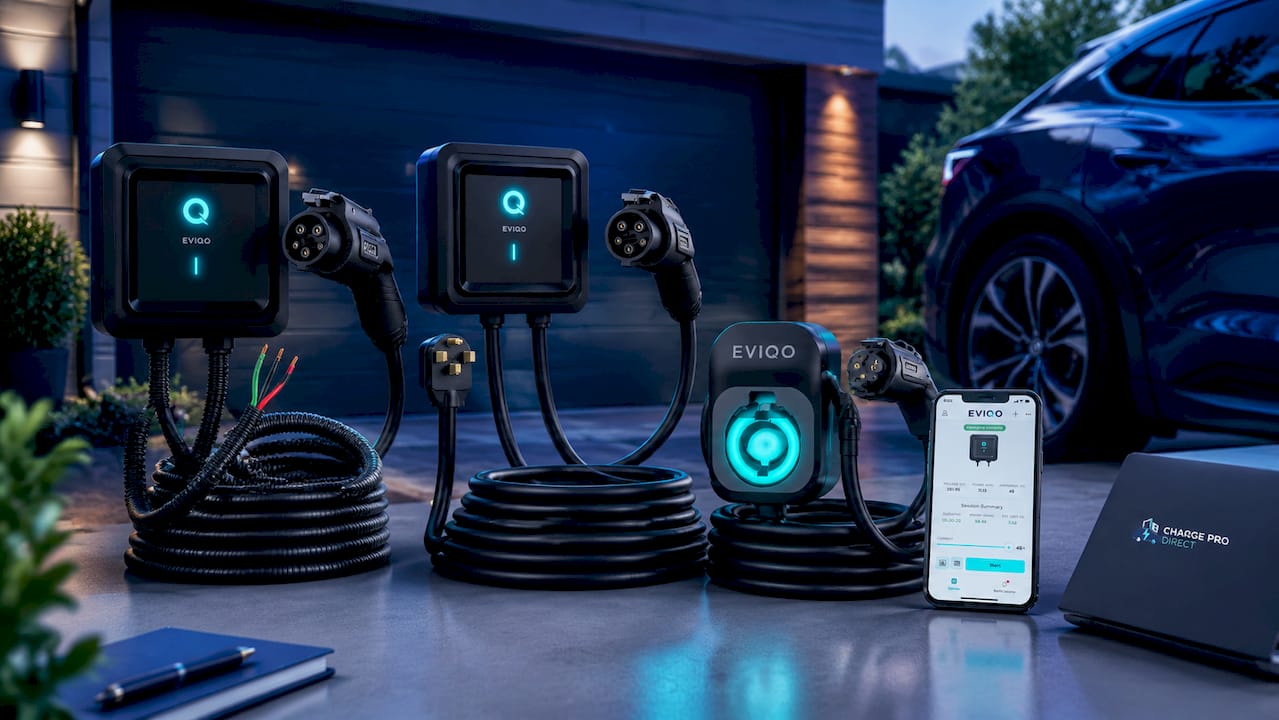
If your commute or battery size means Level 1 keeps spilling into peak hours, the EVIQO Level 2 EV Charger, 48A Hardwired delivers maximum throughput for a permanent install. Want a plug-in option instead? The EVIQO 48A NEMA 14-50 charger gives you more flexibility. On a NEMA 14-50 outlet, set it to 40A. The full 48A requires hardwiring on a 60A circuit. For households balancing cost against speed, the EVIQO 40A Level 2 charger still cuts charging time dramatically versus a standard outlet. Browse the full Level 2 home charger lineup and check installation cost expectations before you order, so you know exactly what to expect from quote to plug-in.
Yes. Nearly every modern EV and Level 2 smart charger supports scheduled charging through a vehicle app, charger app, or third-party app, with departure-time scheduling as the most efficient option.
Yes, Tesla vehicles let you set both a departure time and a manual start time directly in the vehicle app, and departure-time scheduling generally delivers better off-peak savings.
Yes, plugging in nightly is fine and recommended, since your schedule can only start charging when the vehicle is connected, and most EV batteries handle daily partial charging better than deep discharge cycles.
Off-peak EV charging means charging during the hours your utility charges the lowest electricity rate, often overnight between midnight and 7 a.m., though exact windows vary by provider and season.