
Expert Support
Mon–Fri, 9AM–6PM EST
Available: Mon–Fri, 9AM–6PM EST
Mon–Fri, 9AM–6PM EST
Available: Mon–Fri, 9AM–6PM EST

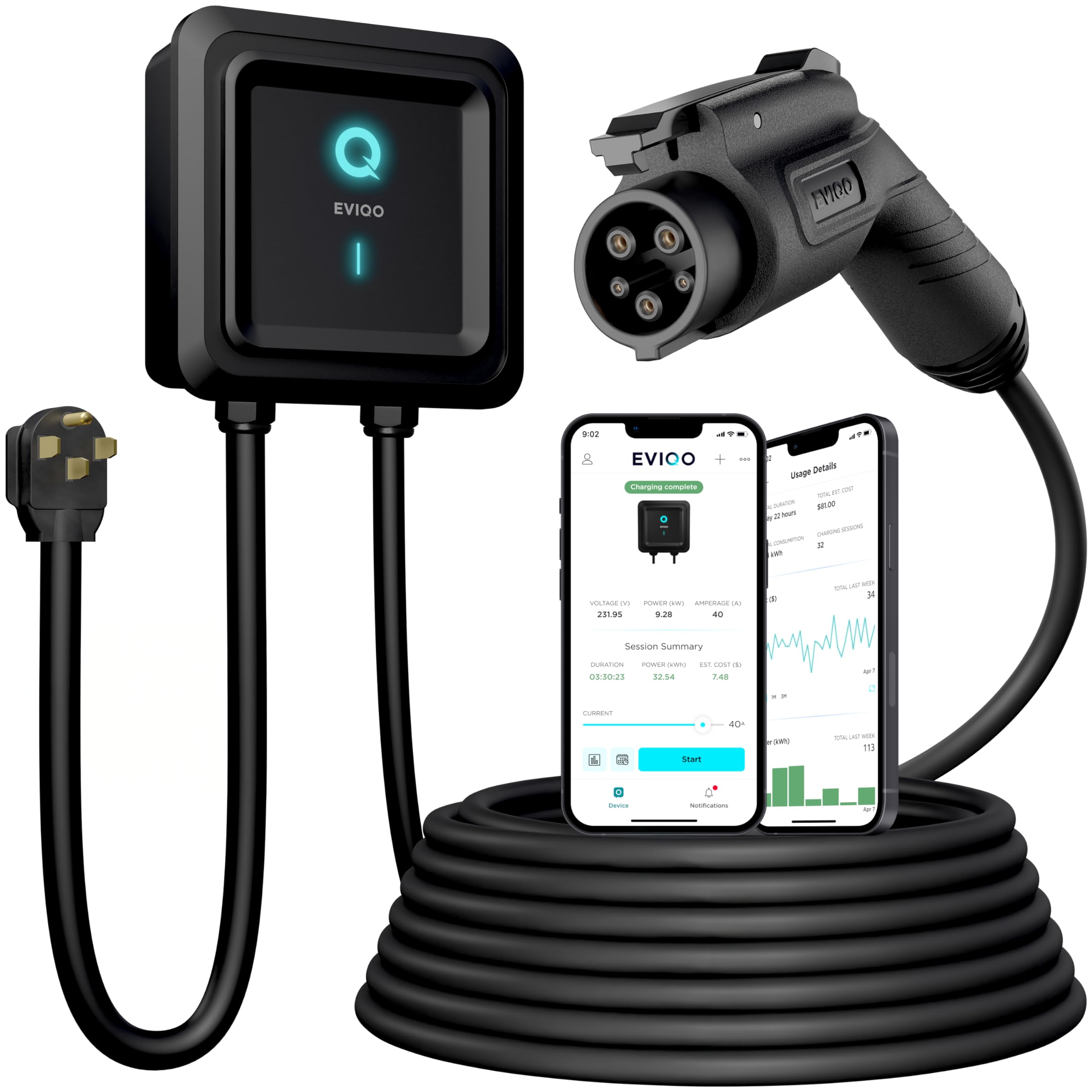
If you want a single answer: the EVIQO Level 2 EV Charger, 48A (11.5kW), NEMA 14-50 Plug-In is the best home EV charger for most homeowners in 2026, thanks to its no-electrician-required install, strong output, and J1772 compatibility with virtually every non-Tesla EV on the road.
If you already have an existing 240V outlet or want maximum flexibility to take your charger with you if you move, that plug-in 48A model is your pick. If you’re building new and want the cleanest, most permanent setup, the hardwired 48A EVIQO charger is the better long-term investment. And if your panel is older or you’re pairing your charger with solar and battery storage, the 40A (9.6kW) plug-in EVIQO paired with load-management features avoids costly upgrades while still charging most EVs fully overnight.
All three use the standard J1772 connector, so compatibility with non-Tesla EVs isn’t a question you need to research further.
Picking the right charger isn’t really about finding “the best” in the abstract. It’s about matching amperage, installation type, and smart features to your car, your panel, and your budget. That’s the filter Chargeprodirect built its EVIQO lineup around, and it’s the same filter you should run every option through before you buy.
Here’s a quick way to sort yourself into the right pick:
Every one of these picks uses the SAE J1772 connector, the industry standard for non-Tesla EVs in the United States, so you’re not locking yourself into a compatibility gamble no matter which one you choose.
Here’s the breakdown you actually came for: what each unit does, where it shines, and where it doesn’t.
This is the workhorse for anyone building new or doing a full panel and wiring overhaul. It hardwires directly into a dedicated 240V circuit, which means no plug, no NEMA outlet dependency, and generally the cleanest look on a garage wall.
Pros: No plug to wear out, cleanest install for new builds, top-tier output for fast overnight charging. Cons: Requires a licensed electrician every time, less flexible if you move or rearrange your garage. Best for: New construction, remodels, or homeowners who never plan to relocate the charger.
This is the charger most first-time buyers should start their search with. It plugs into a standard NEMA 14-50 outlet, the same style used for RV hookups and some electric dryers, so if you already have one, installation can be as simple as an electrician confirming the circuit and you plugging in.
Pros: Lower installation cost, easier to pair with older panels, portable if you move. Cons: Slightly slower charging than the 48A models under heavy daily use. Best for: Homeowners with existing 14-50 outlets, older electrical panels, or anyone prioritizing simplicity over maximum speed.
Think of this as the sweet spot between the hardwired unit’s power and the 40A model’s convenience. You get near-maximum output without an electrician needing to open your panel and run new wire to a hardwired junction.
Pros: High output with plug-in convenience, portable, strong daily charging speed for most EV battery packs. Cons: Draws more continuous current than the 40A version, so panel capacity still matters. Best for: Homeowners who want the fastest home charging speed without a full hardwired install.
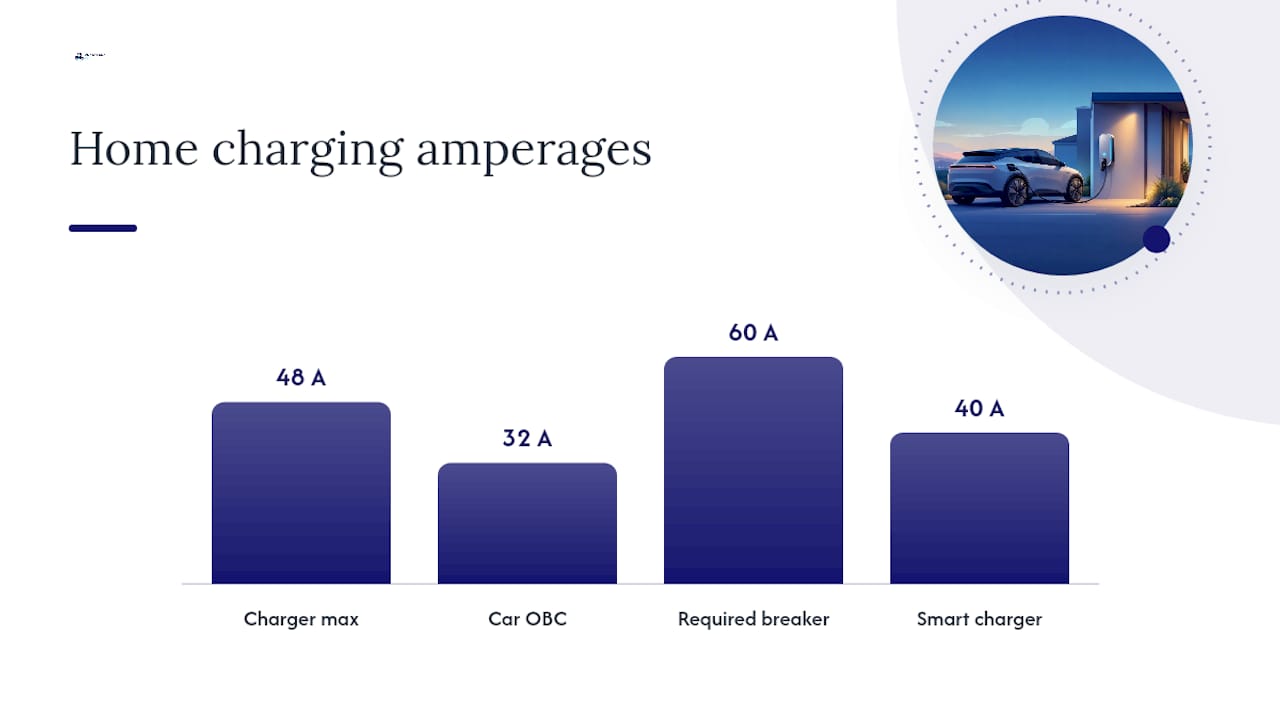
Pro Tip: Before you buy, check your car’s onboard charger (OBC) rating in the owner’s manual. If your EV maxes out at 32A or 40A, paying for a 48A charger won’t speed up your charging time. It just gives you headroom for a future EV with a higher OBC.
A charger doesn’t operate in isolation if you’re building toward energy independence. Several Chargeprodirect components matter here:
None of these are required to run an EVIQO charger. They matter if your goal extends beyond “charge my car” into “reduce my electric bill” or “keep the lights on during a storm.”
Specs sheets are full of numbers that don’t mean much until you translate them into real driving terms. Here’s the translation.
Amps and kW determine your miles per hour, not your total charge time. A 40A (9.6kW) charger typically adds somewhere in the range of 20 to 30 miles of range per hour, depending on your EV’s onboard charger and battery chemistry. A 48A (11.5kW) charger pushes that figure higher, assuming your car’s OBC can actually accept that rate. The Department of Transportation’s charging speed guidance is the clearest neutral resource for understanding these conversions without marketing spin attached.
A practical baseline: Expert reviews commonly point to roughly 9.6 kW (about 40 to 48A) as the sweet spot for future-proofing a home charger, since it comfortably covers the onboard charger limits of most EVs sold today and for the next several years.
Cable length and diameter matter more than most buyers expect. A thicker gauge cable handles higher amperage without excess heat buildup, and a shorter, stiffer cord can be a genuine headache if your charger isn’t mounted near your parking spot. Outdoor-rated enclosures (look for a NEMA 4 rating or better) matter if your charger lives outside, exposed to rain or snow. Reviewers at Car and Driver consistently flag these physical details as differentiators between otherwise similar chargers.
Hardwired versus plug-in installation also shapes your flexibility. A hardwired unit is permanent. If you sell your home, it typically stays. A plug-in charger comes with you if you move, but it depends on having (or adding) the right outlet.
Run through these four steps before you commit to a model.
When you talk to an electrician, ask direct questions: Does this installation require a permit? Will you pull one? Is the unit UL or ETL listed? Will my current panel support this without an upgrade? A contractor who brushes off permit requirements or can’t confirm certification marks is a red flag, not a shortcut.
Pro Tip: If your household runs multiple high-draw appliances (electric dryer, electric range, central air), prioritize load management over raw amperage. A 40A charger with smart load balancing often serves a busy household better than a 48A charger that occasionally trips your main breaker.
A plug-in installation is usually the faster path if you already have a compatible NEMA 14-50 outlet nearby. An electrician confirms the circuit is properly rated, and you’re charging within a day. A hardwired installation typically takes longer, since it involves running new wire, installing a dedicated breaker, and mounting the unit permanently.
Cost ranges vary widely depending on your home’s existing wiring:
For a detailed breakdown by scenario, Chargeprodirect’s EV Charger Installation Costs guide walks through each cost tier, and the panel capacity guide helps you figure out which tier applies to your home before you call an electrician.
If you’re integrating solar or battery storage alongside your charger, expect additional planning time. Pairing a Growatt 10kW Hybrid Inverter with your charging setup usually means coordinating solar installers and electricians together, which can extend your timeline but often pays off through reduced charging costs. If your roof is a candidate for solar, reviewing strategic rooftop PV planning before installation helps you avoid conflicts between panel placement and charger wiring routes.
Buying a home EV charger sight unseen is a real risk. Wrong amperage, incompatible connector, or a panel that can’t handle the load are the most common pre-installation errors homeowners run into. Chargeprodirect built its tools specifically to prevent those mistakes before you spend a dollar.
The EV Charger Finder asks about your vehicle, panel, and budget, then narrows the EVIQO lineup down to your actual best fit. Pair that with the site’s homeowner guides, like the types of home EV chargers overview and the J1772 installation guide, and you’ve got a research path that doesn’t require guessing.
Chargeprodirect’s core philosophy is straightforward: understand a customer’s actual power situation first, then match the equipment to that reality, rather than pushing the highest-margin unit regardless of fit.
For most homeowners, the EVIQO 48A plug-in charger hits the right balance of speed, convenience, and future-proofing. If your panel can’t support that load without an upgrade, the 40A plug-in version with load management is the smarter, cheaper path.
The most useful home EV charger is one sized correctly to your panel, your car’s onboard charger, and your realistic daily driving, not the model with the highest amperage on the shelf.
| Point | Details |
|---|---|
| Match amps to your OBC | A 48A charger charges no faster than your car’s onboard charger allows, so check that spec first. |
| Panel capacity drives cost | Many 48A chargers need a dedicated 60A breaker, which can trigger a panel upgrade on older homes. |
| Plug-in offers flexibility | NEMA 14-50 plug-in models install faster and travel with you if you move. |
| Certifications are non-negotiable | Only buy chargers with visible UL or ETL listing, meeting NRTL safety standards. |
| Chargeprodirect fits multiple scenarios | EVIQO’s 40A and 48A models, both hardwired and plug-in, cover budget, solar, and high-speed use cases. |
Most buying guides fixate on max amperage as the single deciding factor, and that’s a mistake. The research is consistent on this: reviewers at MotorTrend and Car and Driver keep circling back to cable diameter, app usability, and certification marks as the details that separate a charger you’re happy with from one you regret. A 48A charger with a stiff, short cord that won’t reach your parking spot is a worse daily experience than a 40A unit with a longer, flexible cable.
The other blind spot is panel capacity. Homeowners chase the highest-output charger available, then get hit with a panel upgrade quote that dwarfs the charger’s price. That’s backwards. Start with what your panel can support and what your EV’s onboard charger can actually use, then buy accordingly. Load management deserves far more attention than it gets. If your panel is anywhere near capacity, a smart, load-balanced 40A charger will serve you better than a 48A unit that forces an upgrade you didn’t budget for.
— Clarissa
Chargeprodirect gives you something most retailers skip entirely: guidance that starts with your panel and your car, not with whatever charger has the biggest sticker number.
If you’ve read this far, you already know that an EVIQO 48A plug-in charger fits most homes, and a 40A version fits older panels or budget-conscious buyers. What you don’t have yet is a confirmed fit for your specific house. That’s exactly what the EV Charger Finder solves. Answer a few questions about your vehicle, panel, and goals, and you’ll land on the exact EVIQO model built for your situation, whether that’s the plug-in convenience of the 40A model or the top-tier output of the 48A hardwired unit. If solar or backup power is part of your plan, browse the inverter collection while you’re at it. Run the finder now and get a straight answer instead of another spec sheet to decode.
For most homeowners, the EVIQO 48A plug-in (11.5kW) charger offers the best combination of speed and simple installation, since it plugs into a NEMA 14-50 outlet without requiring hardwiring.
Buy based on your car’s onboard charger rating and your panel’s available capacity first, then choose between hardwired and plug-in installation based on whether you want permanence or flexibility.
Yes, for daily EV owners. A Level 2 charger delivers roughly 20 to 30 or more miles of range per hour depending on amperage, compared to a standard outlet that can take over a day for a full charge.
A Level 1 charger uses a standard 120V household outlet and works fine for drivers with short commutes, but most homeowners who drive daily find Level 2 charging (240V) far more practical for a full overnight charge.
No. Plug-in models like the EVIQO 40A and 48A units connect to a NEMA 14-50 outlet, giving you Level 2 speeds without hardwiring, as long as you have or install that outlet.