
Need Installation?
Book a licensed install
Book a licensed EV charger install

For most U.S. homeowners with solar panels and short outages, a home battery is the stronger choice. For multi-day outages or whole-home coverage without solar, a fueled standby generator usually wins. Census data confirms that power outages affect communities across the country at meaningful rates, so having a plan matters more than ever.
Here is the quick version before you dig into the details:
Neither option is universally better. The right answer depends on your load size, outage history, fuel access, and budget. The sizing and cost sections below will help you verify which scenario fits your home.
For most U.S. homeowners, a home battery is the better long-term value when paired with solar, while a standby generator remains the practical choice for multi-day outages or whole-home coverage without solar.
| Point | Details |
|---|---|
| Battery vs generator cost | Installed costs overlap: $13,000–$19,000 for a 13.5 kWh battery vs $11,000–$17,500 for a 22 kW generator. |
| Runtime is the key difference | Generators run indefinitely on fuel; batteries are limited by stored kWh and need solar or grid recharging. |
| State and utility incentives may apply to batteries | Some state and utility programs offer rebates that can reduce net battery cost. |
| Size for starting watts, not running watts | HVAC and pump motors draw 2–3x their running watts at startup; always size your inverter above peak load. |
| Chargeprodirect for sizing support | Charge Pro Direct offers product selection and educational sizing guides for battery and backup systems. |
Understanding the operational difference between these two systems makes every other trade-off easier to follow.
Home battery systems store electrical energy in lithium-ion or LFP (lithium iron phosphate) cells. When the grid goes down, an inverter converts that stored DC energy into AC power for your home. You can charge the battery from rooftop solar, from the grid during off-peak hours, or both. The key number is kWh (kilowatt-hours), which tells you how much total energy is stored. A 13.5 kWh battery running a 5 kW load will last roughly 2.7 hours before it needs recharging. Learn more about how solar battery storage adds daily value beyond just outage coverage.
Standby and portable generators burn fuel (natural gas, propane, or gasoline) to spin a motor that produces electricity on demand. The key number here is kW (kilowatts), which tells you how much power the generator can deliver at any moment. A 22 kW standby generator can run your entire home continuously as long as fuel flows. Portable generators are smaller and less expensive but require manual startup and outdoor placement.
The kW vs kWh distinction is worth locking in:
The DOE’s solar-plus-storage program resources explain how grid-tied battery systems interact with rooftop PV to maximize self-consumption and outage resilience together.
The table below covers the eight decision axes that matter most when choosing between battery backup systems and fueled generators.
| Dimension | Home Battery | Standby Generator |
|---|---|---|
| Upfront cost (installed) | $13,000–$19,000 for a 13.5 kWh system | $11,000–$17,500 for a 22 kW unit with ATS |
| Lifetime cost (10–20 years) | Lower with solar; fuel-free operation reduces long-run costs | Fuel + maintenance adds up; $500–$1,000/year typical |
| Runtime and capacity | Fixed kWh; recharges from solar or grid | Unlimited while fuel is available |
| Refueling / recharge | Solar or grid recharge; no fuel logistics | Natural gas, propane, or gasoline required |
| Maintenance and reliability | Firmware updates, visual checks; no moving parts | Weekly exercise runs, oil changes, filter replacements |
| Noise and emissions | Silent; zero direct emissions | 65–75 dB; carbon monoxide exhaust requires outdoor placement |
| Installation footprint | Wall-mounted indoors or outdoors; minimal permitting in most states | Outdoor concrete pad, gas line, transfer switch; more permits |
| Incentives and revenue | Possible state or utility rebates; VPP program eligibility | No VPP participation |
Cost and runtime data sourced from ElectrifyCost’s 2026 comparison and Solar Price List’s 2026 feature table.
The single most consequential difference in each row:
One important nuance: generators typically power all circuits at once, while batteries are usually configured to prioritize critical loads (refrigerator, lights, medical equipment) to extend runtime. That distinction shapes how you size each system.
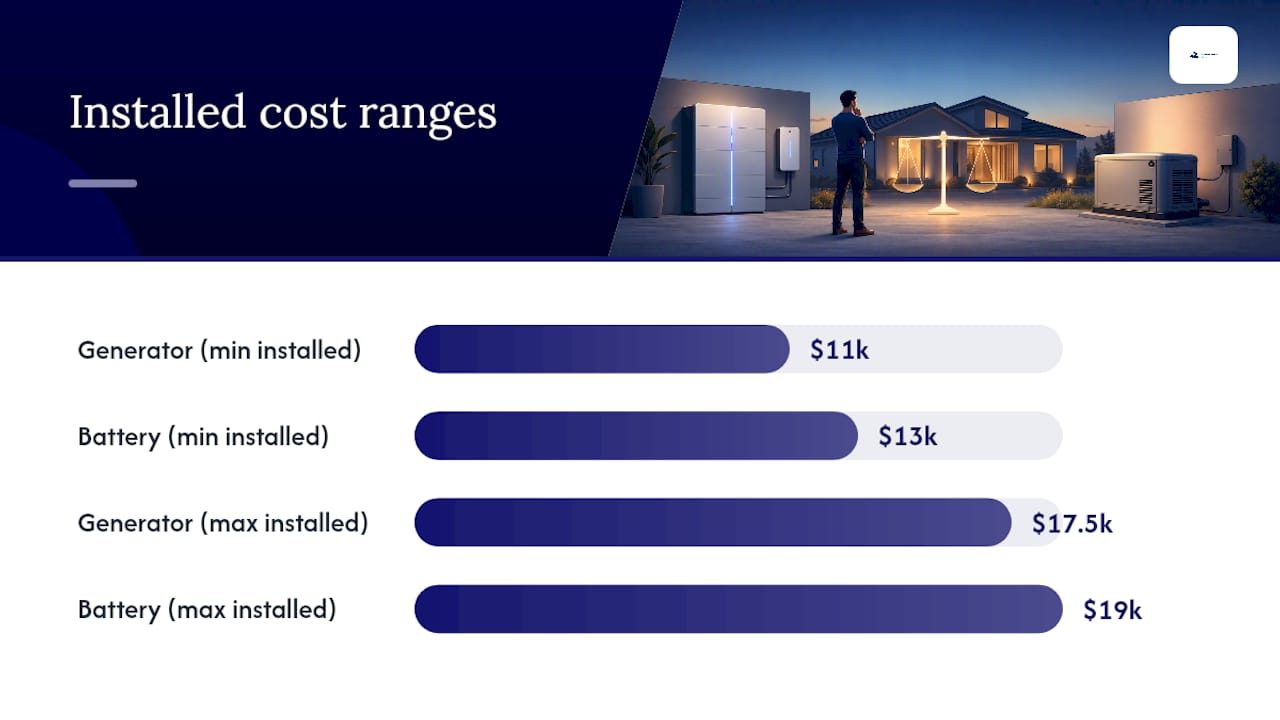
Sticker price tells only part of the story. The real comparison is total cost of ownership across 10–20 years.
Main cost buckets to account for:
Three illustrative scenarios:
State incentive programs and utility rebates can shift these numbers materially. Check your state’s energy office and your utility’s rebate and incentive programs before finalizing your budget.
Pro Tip: If your utility offers time-of-use (TOU) rates, charging your battery during off-peak hours and discharging during peak hours can generate meaningful bill savings every month, not just during outages. Some utilities also offer Virtual Power Plant (VPP) programs that pay you to dispatch stored energy back to the grid. Both programs change the payback math significantly and are worth asking your installer about.
Getting the size right prevents the most common and costly mistake homeowners make: buying a system that cannot handle their actual loads.
Explore the types of home energy storage available in 2026 to understand battery chemistries and form factors before you commit.
Example calculation: A home needing HVAC (3.5 kW running, 7 kW starting), refrigerator (0.15 kW), lights and outlets (1 kW), and a sump pump (0.75 kW starting at 1.5 kW) needs a generator with at least 10 kW continuous capacity and 15 kW surge capacity. A 14–22 kW standby unit covers this with room to spare.
If you are also planning EV charging, factor that load in separately. The EVIQO 48A hardwired Level 2 charger draws up to 11.5 kW, which is a significant load to add to a backup system. The EVIQO 40A plug-in model draws 9.6 kW. The EVIQO 48A NEMA 14-50 plug-in also draws 9.6 kW, because on a NEMA 14-50 outlet it must be set to 40A. The full 48A requires hardwiring on a 60A circuit. None of these should be included in your critical-load backup circuit unless your system is sized specifically to support EV charging during an outage.
Pro Tip: *The most common installer mistake is sizing the inverter to match average load rather than peak starting load. HVAC compressors and well pumps draw two to three times their running watts at startup.
Pros:
Cons:
Pros:
Cons:
Safety warning: Never run a fueled generator indoors, in a garage, or near any opening to your home. Carbon monoxide is odorless and can reach dangerous levels within minutes. The CDC reports that generator-related CO poisoning causes hundreds of deaths in the United States each year. Place your generator at least 20 feet from windows, doors, and vents, and install CO detectors on every level of your home.
On environmental impact: batteries produce no direct emissions during operation, though their manufacturing carries an upstream carbon cost. Generators emit CO2 and CO continuously during use. Over a 10–20 year lifecycle, a battery charged primarily by solar carries a significantly lower carbon footprint. On resale value, homes with solar-plus-storage systems have shown stronger value retention than homes with generators alone, though the data varies by market and system age.
Both systems require permits in most U.S. jurisdictions. Key steps:
A licensed electrician must install the transfer switch for either system. For gas-connected standby generators, a licensed gas contractor handles the fuel line. Check your local authority having jurisdiction (AHJ) for specific requirements before purchasing.
Noise and HOA note: Many HOAs restrict generator noise levels or prohibit permanent outdoor equipment. Verify your HOA rules and local noise ordinances before committing to a standby generator. Batteries have no noise restriction issues.
For safety guidance, the U.S. Department of Energy’s energy.gov resources cover installation best practices for storage systems.
Work through these questions to narrow your choice:
Three mistakes show up repeatedly in real installations, and knowing them in advance saves money and frustration.
Underestimating starting watts is the most common. A 3-ton HVAC compressor may run at 3.5 kW but demands 7–8 kW at startup. An inverter sized to 5 kW will trip every time the AC kicks on. Always size your inverter above your calculated peak, not equal to it.
Confusing daily energy use with peak power leads to undersized batteries. A homeowner who needs 5 kW of power at any moment might assume a 5 kWh battery is enough. It is not. That battery runs out in one hour at full draw. Daily energy need (kWh) and instantaneous power demand (kW) are separate calculations.
Assuming one battery covers whole-home loads for days is a setup for disappointment. A single 13.5 kWh battery covers critical loads for roughly 24 hours under typical conditions. Whole-home coverage for 48–72 hours requires multiple batteries or a generator backstop.
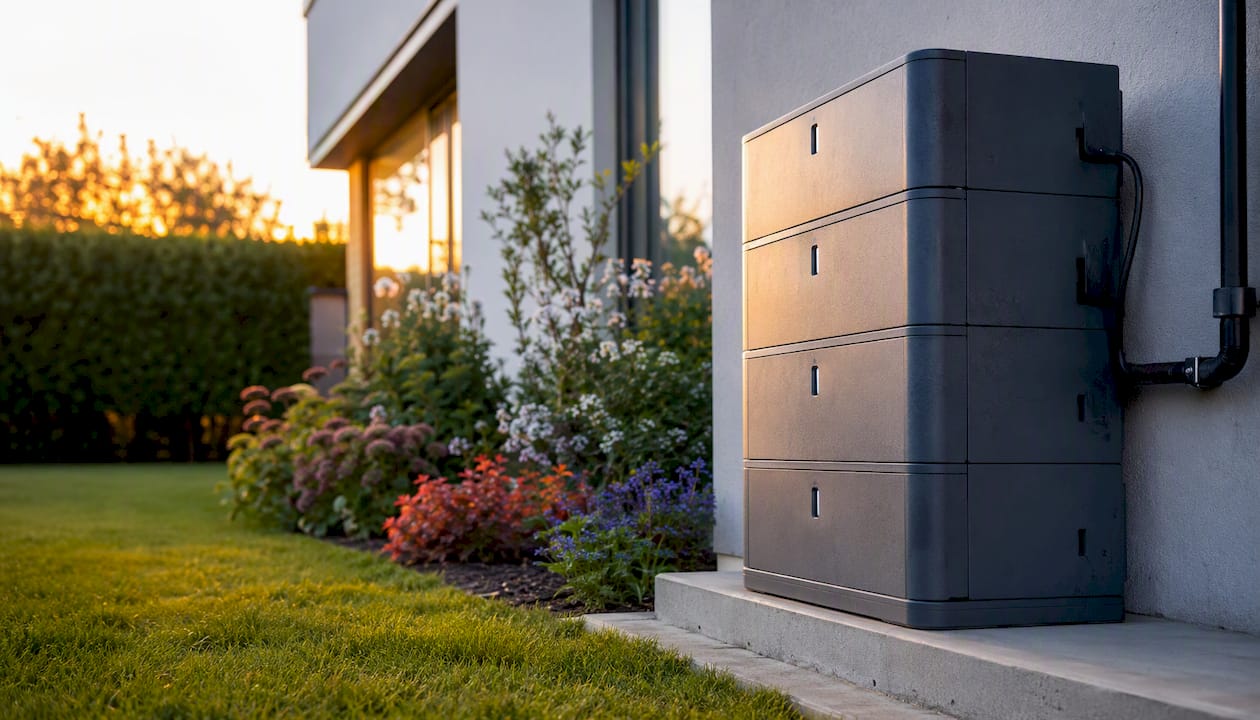
For hybrid systems, installers often configure the generator to auto-start when the battery state of charge drops below a set threshold (commonly 20–30%). This means the generator runs only when truly needed, cutting fuel consumption and wear significantly. The solar generator vs whole-home battery guide at Chargeprodirect walks through how these hybrid configurations work in practice.
Pro Tip: *When integrating a battery and generator behind one automatic transfer switch, ask your installer to set a generator start threshold rather than letting the battery fully discharge.
PV Magazine’s 2025 analysis notes that batteries are quieter and easier to site, while generators offer lower upfront cost and effectively unlimited runtime. The practical answer for high-risk homes is often both.
Geography shapes this decision more than most buyers expect.
Hurricane and Gulf Coast regions experience multi-day outages regularly. A single battery rarely covers the full event. Installers in Florida and Texas commonly recommend a hybrid setup: battery for instant silent coverage during the first 12–24 hours, generator as the automatic backstop for extended outages. Propane tanks are common here because natural gas lines can be disrupted by storm damage.
Northeast and Midwest cold climates face a different challenge: heating loads are enormous. A whole-home battery system large enough to run electric heat for multiple days is prohibitively expensive for most homeowners. A natural gas or propane standby generator handles heating loads more cost-effectively in these regions. Battery systems work well for critical loads (lights, refrigerator, medical equipment) even in cold climates, but they should not be expected to carry whole-home heating.
Western states with high solar irradiance (California, Arizona, Nevada) are the strongest market for solar-plus-storage. Long sunny days mean batteries recharge quickly, and state incentive programs in California add further financial support. The DOE’s solar-plus-storage program resources are particularly relevant for homeowners in these states.
Rural areas with propane or no gas service face fuel logistics as a real constraint. Propane delivery can be delayed after major storms. Batteries with solar become more attractive when fuel supply is uncertain, even for longer outages, because they recharge from a resource that is always available.
Wildfire-prone areas in the West often experience Public Safety Power Shutoffs (PSPS) that can last several days. A battery handles the first day well; a generator or large multi-battery system is needed for extended PSPS events.
Most articles frame this as a binary choice, and that framing leads homeowners to buy the wrong thing. The reality is that the battery vs generator debate is really a question about what kind of outages you face and what you want your backup system to do on a normal day.
A generator sits idle 99% of the time. It does nothing for your electricity bill, earns no incentives, and requires maintenance whether you use it or not. A battery, by contrast, works every day: storing cheap off-peak power, maximizing solar self-consumption, and potentially earning VPP payments from your utility. The outage coverage is almost a side benefit.
That said, a battery has a hard ceiling. If you live somewhere that loses power for five days after a hurricane, a single battery will not get you through it. No amount of solar integration changes that math when the sun is blocked by storm clouds.
The homeowners who get this right are the ones who stop asking “which is better?” and start asking “what does my outage history actually look like, and what do I need powered?” Those two questions, answered honestly, point directly to the right system. In most U.S. metro areas with short, infrequent outages and solar potential, the battery wins on total value. In rural areas, cold climates, and storm-prone coasts, the generator or hybrid approach is the more honest recommendation.
Picking between a battery and a generator is easier when you have the right load data and a clear product path. Charge Pro Direct offers detailed educational content and a broad product selection so you can move from comparison to a confident purchase without second-guessing your numbers.

Whether you are leaning toward a whole-home battery backup system or want to browse solar generators and portable backup options, Chargeprodirect’s product selection covers the full range. If you are also planning EV charging alongside your backup system, the EV charger finder tool helps you match the right Level 2 charger to your panel capacity and backup setup. Residential EV chargers ship free, and flexible payment plans are available at checkout. Start by reviewing your critical loads, then use our sizing guides to compare options before you buy.
A single home battery can run critical loads (refrigerator, lights, medical devices) for roughly 24 hours, but powering all circuits simultaneously requires multiple batteries or a very large system. Most homeowners configure batteries to prioritize essential loads to extend runtime.
For multi-day outages or whole-home coverage without solar, a standby generator is usually the more practical choice.
The best source depends on your outage length, solar ownership, and load size. A battery suits short outages and solar owners; a generator suits extended outages and whole-home needs; a hybrid of both suits high-risk regions like hurricane zones.
It depends on your energy goals. With solar and a favorable utility rate structure, a whole-home battery system can pay back through bill savings and incentives over 10 years. Without solar, the payback period is longer and the generator often wins on pure cost.