
Expert Support
Mon–Fri, 9AM–6PM EST
Available: Mon–Fri, 9AM–6PM EST
Mon–Fri, 9AM–6PM EST
Available: Mon–Fri, 9AM–6PM EST

For nearly every homeowner, home DC fast charging is not a realistic project. Your house runs on single-phase power, and DC fast chargers are built for the industrial-grade three-phase electrical service that most residential meters simply cannot deliver. A handful of exceptions exist (large estates, properties with existing commercial-grade service), but if you’re weighing your options today, a Level 2 charger will serve your daily needs far better and at a fraction of the cost.
TL;DR:
- Home DC fast charging is only feasible on properties with existing three-phase power, which is rare and typically limited to large estates or commercial sites.
- Installing a DC fast charger at home can cost between $50,000 and $200,000 due to hardware, utility upgrades, and site work, making it prohibitively expensive for most homeowners.
- The electrical load for a 20 to 25 kW home DC station can require a new transformer and heavy-gauge wiring, with utility approval potentially taking several months.
- Level 2 chargers offer a practical and cost-effective alternative, delivering sufficient range overnight at a fraction of the cost and demand on infrastructure.
- Utility demand charges and grid impacts make high-power home DC fast charging significantly less economical and more complex to maintain than simple Level 2 solutions.
Home DC fast charging isn’t impossible. It’s just rare, and it tends to happen on properties that don’t look like a typical suburban lot.
A few scenarios make it plausible:
Even in these cases, you’re generally looking at compact DC units in the 20 to 25 kW range, not the 150 to 350 kW chargers you see at a highway rest stop. Compact DC wallboxes in this power class exist and are marketed toward small commercial or residential-adjacent sites, but they still demand serious electrical capacity. Expect a permitting and utility approval process that runs several weeks to a few months, since most jurisdictions treat this as a commercial-grade electrical installation rather than a standard charger swap.
Here’s the electrical reality most homeowners underestimate. Your house runs on single-phase 120/240V service, typically with a 100 to 200A panel. DC fast charging equipment is designed around 480V three-phase power, which is a completely different animal, and most homes simply aren’t wired for it.
The amperage jump is steep once you look at the numbers:
Compare that to your home panel’s 100 to 200A capacity, and you can see why this isn’t a simple upgrade. It usually means a new transformer, a switchgear and metering overhaul coordinated with your utility, and site work for a concrete pad, cooling equipment, and heavy-gauge conduit runs.
Pro Tip: Before you call an electrician, photograph your service panel label, note your main breaker size, and measure the distance from the panel to where you’d want the charger. That handful of details lets an electrician give you a real estimate instead of a rough guess, and it speeds up the utility conversation too.
The price tag is where home DC fast charging usually ends the conversation. A residential DC fast charging project typically breaks down into these components:
Total project costs frequently land between $50,000 and $200,000 once every phase is accounted for, a figure that puts this well outside what most homeowners would consider a reasonable investment for a personal vehicle.
There’s also an ongoing cost trap: many utilities bill high-power connections under commercial demand-charge structures, where you pay based on your peak draw, not just total energy used. A single fast-charging session could spike your demand charge for the entire billing period. Get quotes from at least two licensed electricians and ask your utility directly about demand charge exposure before you commit to anything.
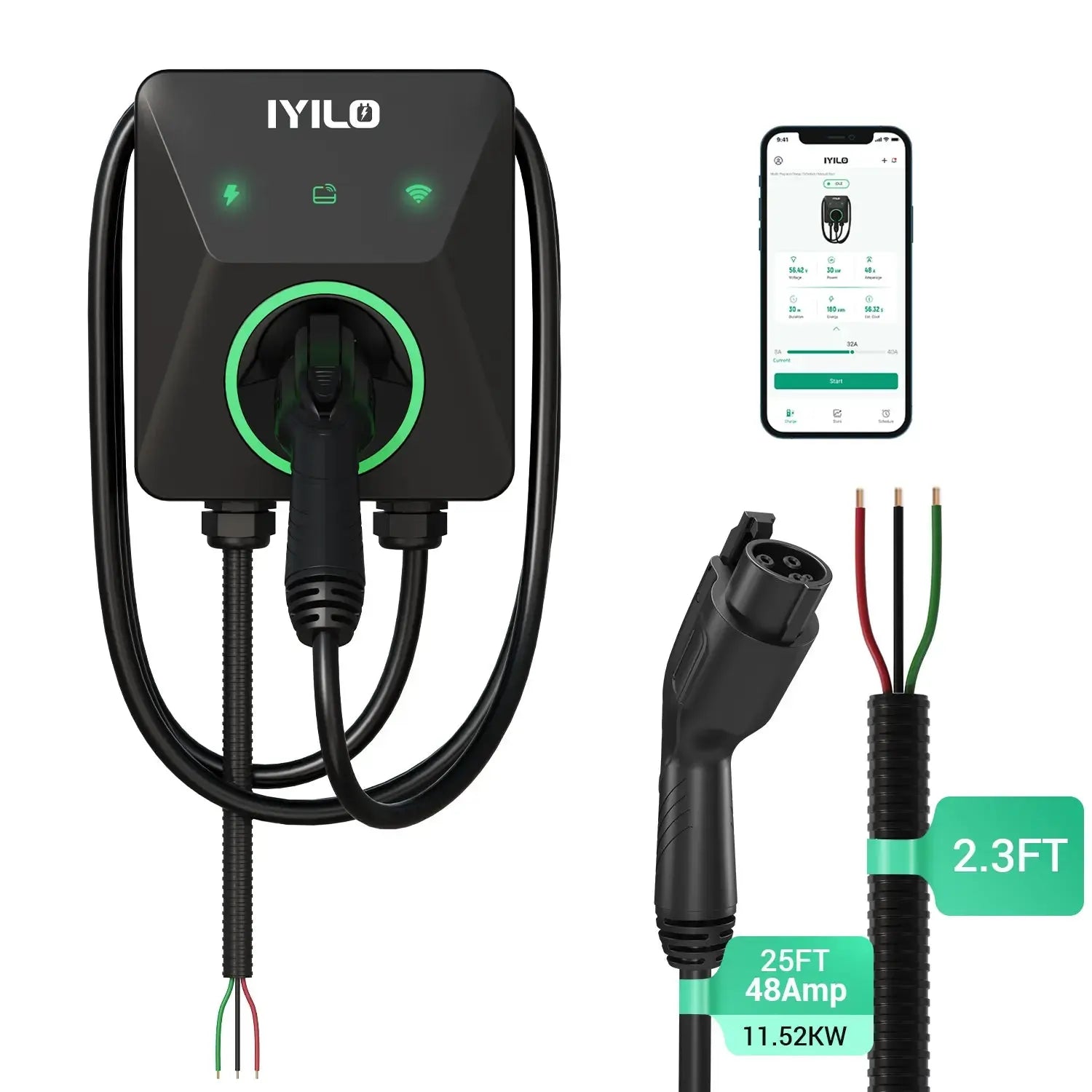
For nearly everyone, the better path is a Level 2 charger paired with smart charging strategy. A Level 2 charger runs on standard 240V residential service and typically costs between $500 and $2,500 installed, delivering 20 to 40 miles of range per hour, which covers a full overnight charge for nearly any daily commute.
A few ways to stretch that further without touching your service panel:
Save DC fast charging for the highway. Use Level 2 at home.
Figuring out the right charger for your electrical situation is exactly the kind of decision that benefits from a second set of eyes. Chargeprodirect’s EV Charger Finder walks you through your home’s panel capacity, daily mileage, and vehicle to match you with a charger that fits, rather than one that overpromises.
If you decide to move forward, Chargeprodirect can also connect you with an installation referral, and your electrician will typically ask for:
That’s the same information worth gathering even if you’re still just comparing options.
Not every EV battery pack is built to handle repeated high-power charging sessions, and that matters more at home than most owners realize. DC fast charging pushes a large current directly into the battery, which generates heat fast. Public fast chargers are engineered with liquid cooling systems and thermal management built into the charging cable itself to handle that load session after session.
A home DC installation, especially a compact 20 to 25 kW unit, may lack the same cooling infrastructure. That’s a real safety and longevity consideration, not just a performance footnote. Repeated DC fast charging accelerates battery degradation compared with the gentler charge curve of Level 2 charging, and manufacturers often note this tradeoff in their vehicle warranties.
Compatibility is another wrinkle. Not every EV supports the same DC charging standard. CCS, CHAdeMO, and NACS connectors aren’t interchangeable, and your home unit needs to match your vehicle’s charging port and onboard software exactly. Get this wrong and you’re looking at an adapter workaround at best, or an incompatible investment at worst.
If you’re seriously considering a home DC unit, ask the manufacturer directly about thermal management specs and confirm compatibility with your exact vehicle trim, since charging hardware compatibility changes yearly across manufacturers.
The speed gap between DC fast charging and Level 2 is real, but it matters less for home use than the marketing suggests. A DC fast charger can take a battery from 20% to 80% in 20 to 40 minutes at a public station. Level 2 charging adds 20 to 40 miles of range per hour, meaning a full overnight session, 8 hours or more, can easily replenish 160 to 320 miles.
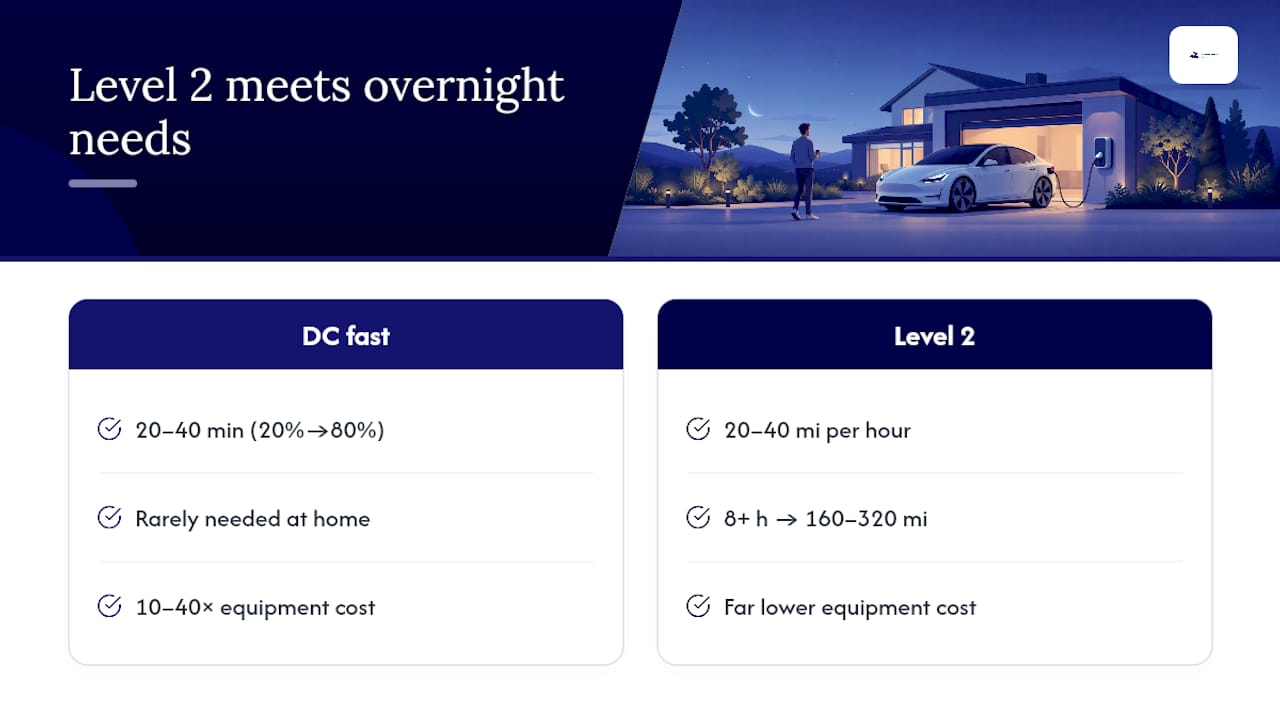
That’s the detail that changes the calculation. Most drivers don’t need to refill their battery in 30 minutes at home. They need it full by morning, and Level 2 does that without breaking a sweat. DC fast charging speed matters when you’re on a schedule mid-trip, stopping at a highway plaza with 200 miles left to drive. It doesn’t matter much when your car sits in the garage for eight hours anyway.
The economics reinforce this. DC fast charging equipment and its supporting electrical infrastructure cost 10 to 40 times more than a Level 2 setup, for a speed advantage you’ll rarely use at home. Unless you’re running a fleet with tight turnaround windows, the extra speed is solving a problem you don’t actually have overnight.
Even setting aside installation costs, the ongoing utility bill for a home DC fast charger looks nothing like your current electric bill. Utilities often place high-power commercial connections onto demand-charge rate structures, where you’re billed not just for total kilowatt-hours consumed but for your highest sustained draw during the billing cycle.
A single 50 kW charging session could set your demand charge for the entire month, even if you only use that power once. That’s a fundamentally different billing model than the flat or time-of-use residential rates most homeowners are used to, and it can make an otherwise moderate energy bill spike unpredictably.
Level 2 charging avoids this trap entirely because it draws power at a level your existing residential rate plan already anticipates. Pairing it with a time-of-use plan, charging overnight when rates drop, or coordinating charging through a managed system can shave meaningful dollars off your monthly bill without ever touching demand-charge territory. If you’re curious what typical home charging actually costs against your existing rate plan, this breakdown of home EV charging costs walks through real numbers.
DC fast charging hardware is mechanically and electronically more complex than a Level 2 unit, and that complexity shows up in maintenance. Power electronics, active cooling systems, and higher-voltage components all mean more parts that can fail and more specialized technicians required to fix them when they do.
Commercial DC fast charging networks employ dedicated maintenance staff and monitoring systems precisely because these units need regular servicing to stay reliable. A homeowner taking on a DC fast charger inherits that same maintenance burden, but without the fleet-scale support network. Finding a technician qualified to service industrial DC charging equipment residentially is far harder than finding someone to service a Level 2 unit, and parts availability can be a real bottleneck.
Level 2 chargers, by contrast, use simpler, well-understood technology that most licensed electricians can diagnose and repair. Fewer moving parts and lower voltages mean fewer failure points, and replacement units are widely stocked. If reliability and long-term ease of ownership matter to you, and for most homeowners they should, that simplicity is a genuine advantage that doesn’t show up in the sticker price comparison.
Installing a DC fast charger at home doesn’t just affect your bill. It puts a meaningfully larger load on your local grid infrastructure. A single 50 kW draw is comparable to the simultaneous electrical demand of several homes, and utilities size local transformers and distribution lines around expected neighborhood loads, not one household suddenly pulling industrial-scale power.
That’s part of why utility approval for high-power residential connections can take weeks to months. The utility often needs to assess whether local infrastructure can handle the additional draw without upgrades of its own, work that can ripple beyond your property line.
Level 2 charging, especially when paired with solar generation or a home battery system, spreads charging load more gently across off-peak hours and reduces strain on the grid rather than adding to it. Dynamic load balancing tools can shift your charging schedule automatically to avoid peak demand periods entirely, which is a more grid-friendly approach than concentrating a huge power draw into a 20 minute burst. If minimizing your household’s grid footprint matters to you as much as minimizing your carbon footprint, Level 2 charging paired with renewable generation is the more coherent strategy.
I’d only consider home DC fast charging if you’re running a fleet with tight turnaround windows, operating a business that depends on rapid vehicle cycling, or sitting on an estate with three-phase power already in place. Outside those specific cases, the math rarely works.
For nearly everyone else, Level 2 paired with smart, managed charging is the lower-risk, lower-cost route that actually solves the problem you have: a full battery by morning.
— Clarissa
If the numbers above convinced you that Level 2 is the smarter home investment, Chargeprodirect makes picking the right unit straightforward instead of overwhelming.
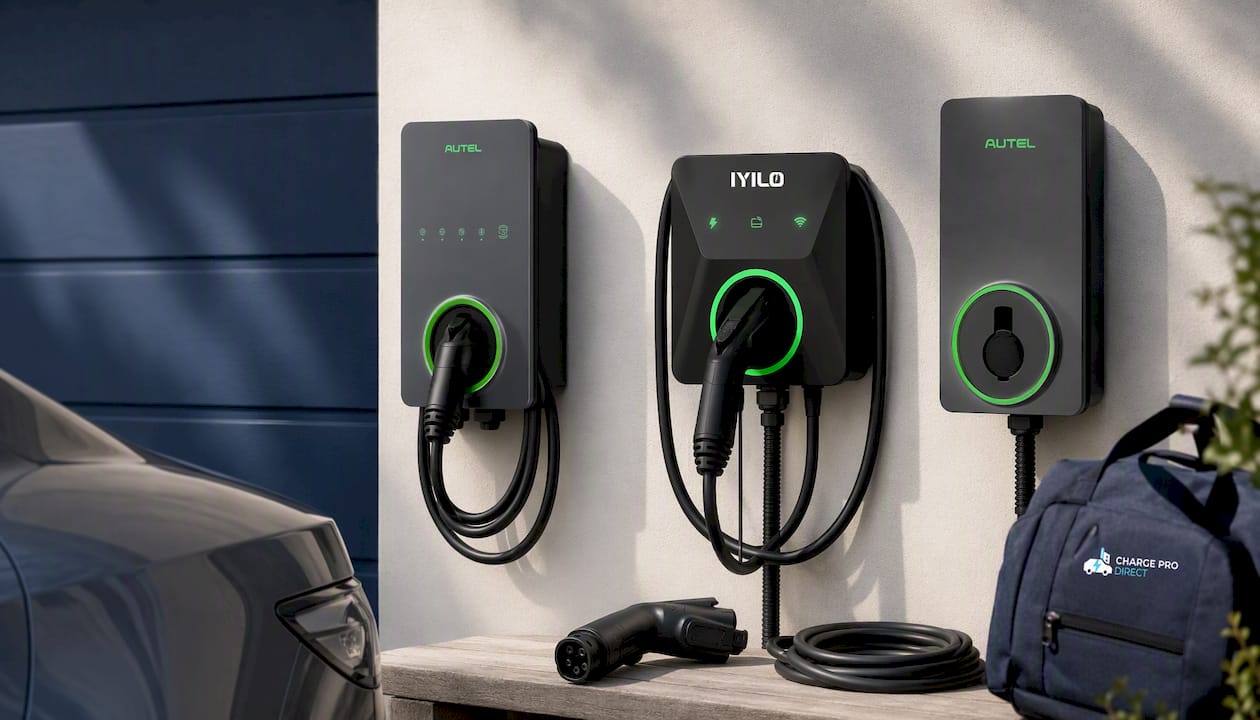
For most single-EV households, the Autel AC Lite 50A 12kW Level 2 EV Charger covers daily charging needs with straightforward installation on standard 240V service. If you want a hardwired option built for durability, the IYILO 48A J1772 wall-mounted charger delivers faster Level 2 charging for homes with heavier daily mileage or multiple drivers. And if your property blends residential and small commercial use, or you’re charging more than one vehicle regularly, the Autel AC Single 50A 12kW Commercial EV Charger is built for that higher-capacity use case.
Not sure which one fits your panel and driving habits? Run your details through the EV Charger Finder or request an installation referral, and get matched with the charger that actually fits your home instead of guessing.
For deeper technical detail on feasibility, wiring standards, and cost ranges, see the electrical explainers and cost guides linked throughout this article, along with Chargeprodirect’s own resources on home charging costs and EV charger placement.
Yes, but only in rare cases where a property already has three-phase electrical service, such as large estates or homes on commercial parcels. For the vast majority of homeowners with standard single-phase service, it isn’t a realistic option.
Total project costs, including the charger, transformer, utility upgrade, and installation, typically range from $50,000 to $200,000 depending on how far your property sits from existing three-phase infrastructure.
Public DC fast chargers reach up to 350 kW, capable of adding significant range in 20 to 40 minutes, though compact home-capable DC units top out around 20 to 25 kW, far slower than commercial equipment.
Compact 20 to 25 kW home-capable DC units and the electrical work to support them still commonly run into the tens of thousands of dollars once utility upgrades are included, making a Level 2 charger the far more affordable home option at $500 to $2,500 installed.